

Planning / 5 min read
How to choose one Skyline Drive section for one day in Shenandoah National Park
Plan one day in Shenandoah National Park by choosing one Skyline Drive section, one main hike or stop, and a backup plan that fits weather and group energy.
August 24, 2026
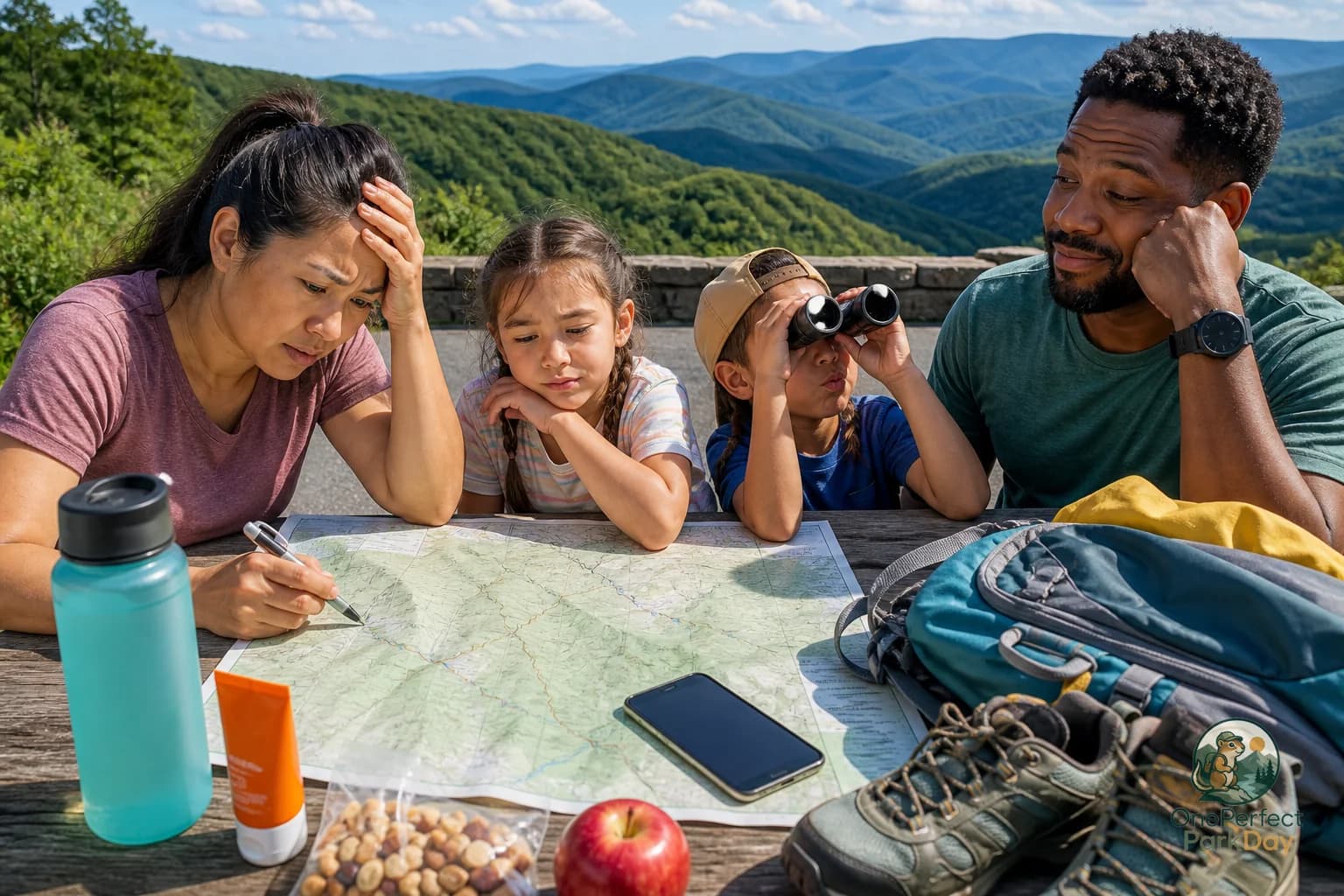
Shenandoah looks simple on a map because Skyline Drive runs like a clean line along the ridge. That simplicity tricks people.
For a one-day visit, the hard part is not finding things to do. It is deciding which part of the drive deserves your limited daylight, attention, and leg strength. If you try to sample the whole park, every overlook starts to feel like a scheduled obligation instead of a place to breathe.
Before you rely on any plan, check current National Park Service alerts, entrance status, Skyline Drive conditions, trail closures, weather, permits or day use rules, campground and lodging operations, and any current shuttle or timed entry details.
The direct answer
For one day in Shenandoah National Park, choose one section of Skyline Drive as your base instead of trying to drive the entire road.
A workable plan is:
- Pick the entrance that makes sense for your lodging or route.
- Choose one nearby Skyline Drive section, not the whole park.
- Anchor the day with one main hike, visitor center stop, picnic area, or cluster of overlooks.
- Add one backup area in the same general section.
- Keep any faraway overlook or trail as optional, not required.
That is the tradeoff. You will leave good places out. That is not failure. That is what keeps the day from turning into a long ridge drive with tired people in the back seat and no real time outside the car.
If you need a broader framework, pair this with How to balance scenic drives and short hikes in a US national park.
Why Skyline Drive changes the planning math
Skyline Drive is the spine of Shenandoah National Park, but it is not an interstate shortcut. It is a mountain road with overlooks, curves, changing weather, wildlife crossings, lower speeds, and plenty of reasons to stop.
That means mileage alone is a bad planning tool. A short distance can still take longer than expected if visibility drops, a parking area is full, your group wants photos at every overlook, or someone needs a real break.
Think in sections instead:
- Northern Shenandoah, often useful for visitors entering near Front Royal
- Central Shenandoah, often popular for classic overlooks, services, and well known trail access
- Southern Shenandoah, often useful for visitors coming from the Waynesboro or Rockfish Gap side
You do not need to label one section as the best. You need the section that fits your starting point, the current conditions, and your group.
Factor 1: Your entrance should do more than look convenient
Many one-day Shenandoah plans break before the first overlook because the entrance choice was treated as a minor detail.
Ask where you are sleeping the night before, where you need to be after the park, and how much backtracking your group can tolerate. If you enter at one end and plan to exit somewhere far away, you are committing to a point to point driving day. That can be great if it matches your road trip. It can be miserable if everyone thought the park day would be mostly hikes and overlooks.
A same entrance in, same entrance out plan usually feels calmer. A different entrance out can work, but only if the drive itself is part of the plan.
Factor 2: Weather can erase the view, not the day
Shenandoah is a ridge park. Fog, rain, wind, heat, and storms can change the feel of a day fast. A view based plan needs a backup that still works when the views are muted.
If the forecast looks hazy or wet, do not build the entire day around distant overlooks. Choose a section with several types of stops close together: a visitor center if open, picnic areas, shorter walks, and multiple overlooks so you can take what the weather gives you.
For a one-day visit, weather flexibility beats scenic purity. You are not trying to win a postcard contest. You are trying to keep the day comfortable enough that people still like the park by late afternoon.
For more on changing conditions, see How to plan a US national park day around changing weather.
Factor 3: One main hike is usually enough
Shenandoah has famous hikes, waterfalls, ridge walks, and short viewpoint trails. The mistake is stacking them like errands.
Pick one main physical activity. Then decide what kind of day you are actually planning:
- View heavy: more overlooks, shorter walks, easier pacing
- Hike heavy: one bigger trail, fewer stops, more water and snack discipline
- Family paced: short walks, picnic stop, bathrooms, flexible turnaround time
- Weather cautious: lower commitment stops with easy retreat options
If your main hike has limited parking, a steep climb, water crossings, exposed sections, or a permit or day use requirement under current rules, treat that as the fragile piece of the plan. Build the rest of the day around it, not on top of it.
Factor 4: Food and water decide the mood
A one-day Shenandoah plan should not depend on finding food exactly when everyone gets hungry. Services can be seasonal, hours can change, and your chosen section may not line up with open dining when you need it.
Bring enough water, salty snacks, and a simple meal plan to survive a slower than expected day. Even if you plan to buy food, pack a backup lunch or at least enough substantial snacks that a closed counter or crowded stop does not derail the group.
This is especially important if you are hiking, traveling with kids, or visiting during hot weather. Hunger turns scenic drives into negotiations.
Common mistakes to avoid
The biggest mistake is planning Skyline Drive as if every overlook deserves equal time. It does not. Some stops will be quick photos. Some will be skipped. A few should be allowed to breathe.
Other common mistakes:
- Starting too late and expecting the same calm experience
- Driving too far before the first meaningful stop
- Choosing a difficult hike without a weather or energy backup
- Forgetting that mountain weather can be different from nearby towns
- Treating visitor services as guaranteed without checking current operations
- Saving the main thing for the end of the day
- Planning a full park traverse when the group mostly wants short walks
Put the most important choice early enough that you still have energy and daylight. Leave the optional add ons for later.
Questions to check before you commit
Before you lock the plan, ask these out loud:
- Which entrance are we using, and does it fit where we are sleeping?
- Are we trying to drive one section or the whole road?
- What is our one main stop or hike?
- What will we do if fog, storms, heat, or poor visibility changes the day?
- Where are bathrooms, food, picnic areas, and water likely to fit?
- What is our turnaround time?
- What is the easiest thing to cut if the day runs long?
- Do current NPS alerts change roads, trails, permits, parking, or services?
If nobody can answer the cut question, the itinerary is probably too packed.
A simple one-day Shenandoah checklist
Use this as a planning pass, not a rigid script.
- Choose one Skyline Drive section
- Choose one entrance that fits your real route
- Check current NPS alerts, road status, trail status, weather, and operating rules
- Pick one main hike, overlook cluster, or visitor area
- Pick one nearby backup option
- Mark bathrooms and picnic options before you arrive
- Pack water, snacks, layers, rain protection, sun protection, and a basic first aid kit
- Download or carry an offline map
- Set a turnaround time before the day starts
- Keep one optional add on, not three
- Recheck conditions the morning of your visit
A realistic way to end the day
A good Shenandoah day does not need to cover every mile of Skyline Drive. It needs a section that makes sense, one main experience that gets enough time, and a backup plan that does not feel like punishment.
If the views are clear, take the overlooks slowly. If the ridge is foggy, lean into shorter walks, forests, visitor stops, and a calmer pace. If parking or energy does not cooperate, cut the optional stop before the day turns sour.
One day is enough to enjoy Shenandoah, but not if you make the whole park compete for it.
Want help turning a national park day into a calmer plan? Start with One Perfect Park Day at oneperfectparkday.com.
Practical note
This article is general US National Park planning information. Park rules, hours, weather, trail conditions, road closures, shuttle service, accessibility procedures, permits, and crowd levels can change. Check the official National Park Service site or app before relying on any plan.