
Planning / 8 min read
How to plan one day in White Sands National Park around heat and glare
Plan one day in White Sands National Park around heat, glare, wind, water, short walks, Dunes Drive, and a smart backup if conditions change.
September 1, 2026

White Sands National Park can trick people because the map looks almost too easy. One road, bright dunes, short named stops, done. That is the trap.
The hard part of a one-day White Sands plan is not distance. It is exposure. Heat, glare, wind, blowing sand, limited shade, road closures, and group energy can change the day faster than your itinerary app will admit.
Before you rely on any plan, check current NPS alerts, park hours, road and trail status, weather, missile range closure notices, operating rules, and any entry, permit, shuttle, or timed entry details that apply to your date. White Sands is usually a self drive visit, but current rules beat old memory every time.
Short answer
For one day in White Sands National Park, build the plan around one main dunes session, not a long list of stops.
A sane structure looks like this:
- Start with the visitor center and current conditions.
- Drive Dunes Drive while the group is fresh.
- Choose one main dunes experience based on weather and energy.
- Keep one shorter backup ready if heat, wind, closures, or fatigue take over.
- Save any optional add-on for the end, not the core of the day.
That means your main plan might be a short dunes walk, sledding time, photography, or a more ambitious marked trail. It should not be all of those unless the weather is gentle, the group is strong, and everyone understands the exposure.
If you want a broader framework for mixing road stops and walking, use How to balance scenic drives and short hikes in a US national park. White Sands is a perfect place to apply that idea because the scenic drive and the walking zones sit close together, but the sun still charges full price.
The White Sands factors that change the day
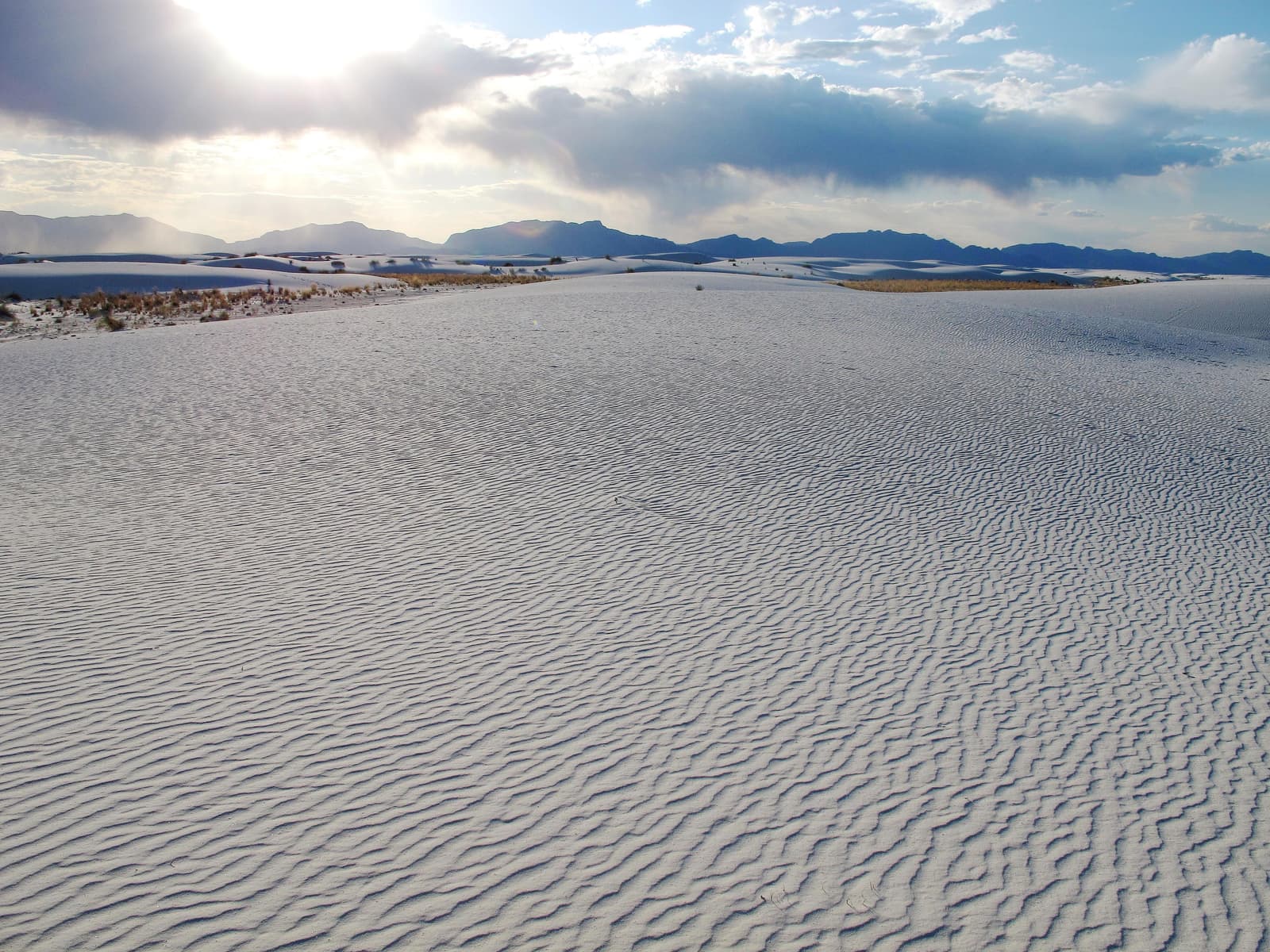
The first factor is glare. The gypsum dunes are bright, and that brightness can wear people down even when the temperature does not sound extreme. Sunglasses, sun protection, and breaks are not bonus items here. They are part of the route.
The second factor is heat. In warmer months, the middle of the day can turn a fun dunes stop into a slow energy leak. If you only have one day, protect the cooler parts of the day for the thing you care about most. Do errands, meals, and low effort stops when the light is harsher.
The third factor is wind. A breezy day may be fine. A blowing sand day can make wandering farther into the dunes a bad tradeoff, especially with kids, older adults, contact lens wearers, or anyone who already dislikes gritty conditions.
The fourth factor is navigation. Open dunes feel playful until every direction starts looking similar. Marked trails and obvious turnaround points matter. Alkali Flat Trail, for example, is not a casual flat sidewalk just because the name sounds harmless. Treat longer routes as a real desert outing.
The fifth factor is road access. Dunes Drive is the spine of most one-day visits, but White Sands can have temporary closures, including closures connected to nearby missile range activity. Check before you drive out, and do not make your entire day depend on one exact time slot without a fallback.
Common mistakes that make this park feel harder
The first mistake is arriving with a normal hiking mindset. White Sands is not about stacking mileage. It is about picking the right exposure level for the conditions in front of you.
The second mistake is saving the dunes for when everyone is already tired. If the dunes are the reason you came, give them the best energy window you have.
The third mistake is treating water like a convenience item. Carry more than you think you will want, and do not count on finding water once you are out in the dunes. Refill before you leave developed areas.
The fourth mistake is letting sledding take over the whole plan. Sledding can be a blast, especially for kids, but it is also repetitive, sunny, and surprisingly tiring. Put a time boundary around it before everyone turns crispy and cranky.
The fifth mistake is having no bad weather version of the day. Wind, storms, heat, road closures, or poor visibility can make a dunes heavy plan less appealing. That does not mean the day is ruined. It means the plan needs a shorter setting.
For a deeper template, read How to build a backup plan for one day in a US national park.
Questions to check before you commit
Ask these before you lock in your White Sands day:
- Is Dunes Drive fully open for the time we plan to visit?
- Are there missile range closures, weather alerts, or special operating rules today?
- What are the forecast temperature, wind, storm chances, and sunset time?
- Does anyone in the group struggle with heat, glare, loose sand, or longer walking?
- Are we planning a marked trail, a short wander, sledding, photography, or mainly viewpoints?
- Where will we refill water before leaving developed areas?
- What is our meal plan if park food options are limited or not convenient?
- What is our turnaround time if the dunes feel hotter, windier, or slower than expected?
- Do we need to confirm any permit, reservation, shuttle, or timed entry detail for our specific date, even if it is not the usual planning issue here?
The point is not to make the day complicated. The point is to stop pretending that a white dune field behaves like a shaded city park.
A simple White Sands one-day checklist
Use this as a practical starting plan, then adjust to current conditions.
- Check current NPS alerts, hours, road status, trail status, weather, and closure notices before leaving.
- Arrive with a full gas tank or enough range for the day.
- Start at the visitor center for bathrooms, water, maps, and current conditions.
- Pack sunglasses, sun hat, sunscreen, layers, and wind protection if needed.
- Carry more water than a short stop seems to require.
- Bring salty snacks or a simple meal plan so hunger does not drive the schedule.
- Choose one main dunes activity before entering the dunefield.
- Pick one backup stop, such as a shorter boardwalk style view or roadside dunes stop, if the main plan feels wrong.
- Set a turnaround time before starting any longer walk.
- Keep shoes, eyes, and electronics in mind if the sand is hot or blowing.
- Use marked trails and obvious visual references instead of wandering blindly.
- Save sunset photos, extra sledding, or a longer trail as optional, not mandatory.
A good one-day version might be visitor center, Dunes Drive, Interdune Boardwalk or another short interpretive stop, then one chosen dunes session. If conditions are mild and the group still has energy, add sunset time or a longer marked walk. If conditions are rough, shorten the dunes time and leave while everyone still likes each other.
A realistic way to end the day
The best White Sands plan leaves room for the park to be what it is: bright, exposed, beautiful, and occasionally inconvenient.
If the day goes smoothly, you may get time for photos, sledding, short walks, and golden light. If it does not, you can still have a strong visit by protecting the main experience and cutting the add-ons without guilt.
Do not measure the day by how many named stops you touched. Measure it by whether your group saw the dunes, stayed comfortable enough to enjoy them, and left with energy for the drive out.
Planning one national park day and want a calmer starting point? One Perfect Park Day helps you turn one day, one real group, and changing conditions into a plan you can actually use: https://oneperfectparkday.com/?utm_source=mdx
Practical note
This article is general US National Park planning information. Park rules, hours, weather, trail conditions, road closures, shuttle service, accessibility procedures, permits, and crowd levels can change. Check the official National Park Service site or app before relying on any plan.