
Planning / 7 min read
How to plan one day in Theodore Roosevelt National Park without unit hopping
Plan one day in Theodore Roosevelt National Park by choosing one main unit, building a backup, and avoiding a long unit-hopping drive.
August 26, 2026
Theodore Roosevelt National Park looks simple until you notice the units are not sitting beside each other. The South Unit, North Unit, and Elkhorn Ranch area ask for different kinds of days. With one day, the mistake is trying to make the map behave like a single loop.
If your group wants scenery, short walks, wildlife watching from a safe distance, and a sane pace, build the day around one main unit. Treat everything else as optional, not owed.
Direct answer
For most one-day visitors starting near Medora or Interstate 94, the South Unit should be the anchor. It gives you the easiest access, a strong scenic drive structure, visitor services nearby, Painted Canyon as a useful add-on, and enough overlooks and short walks to fill the day without forcing a long relocation.
Choose the North Unit instead if you are staying closer to Watford City, want a quieter-feeling badlands day, or have already seen the South Unit. Do not casually stack South Unit plus North Unit plus Elkhorn Ranch into one day unless your group genuinely wants a road-heavy day with fewer stops and less margin.
The hard choice belongs before the trip, not at 2:30 p.m. when everyone is hot, hungry, and pretending one more drive sounds fine.
Why Theodore Roosevelt National Park needs a unit-first plan
This park is not one compact sightseeing circuit. The units are separated by real driving distance, and the experience changes depending on where you start and where you need to sleep that night.
The South Unit is the simplest default for a classic one-day visit. You can use the scenic drive or whatever sections are open during your visit as the spine of the day. Then add short walks, overlooks, prairie dog town stops if accessible, a visitor center pause, and a meal break outside the park if that fits your timing.
The North Unit can make an excellent one-day plan, but it is not a casual bonus after a full South Unit day. Its scenic road, overlooks, and trails work best when they are the main event. If you tack it on late, you are trading better light, patience, and flexibility for windshield time.
Elkhorn Ranch is a different decision. It is meaningful, quieter, and more remote, but it can involve gravel roads and more logistics. For most first-time one-day visitors, it belongs in the “only if this is the point of the day” category, not the “maybe after lunch” category.
Before relying on any route, check current National Park Service alerts, road and trail status, weather, operating rules, construction updates, fire or smoke conditions, and any access details for the date you are visiting.
The context factors that should decide your day
Start with your lodging, not the prettiest photo you saw online. If you wake up near Medora, the South Unit is usually the lower-friction choice. If you wake up closer to the North Unit, forcing the South Unit may burn the calmest part of the morning in transit.
Next, look at heat and wind. Theodore Roosevelt’s open prairie and badlands terrain can feel exposed. A short trail at noon can feel very different from the same trail in the morning. Put walks earlier when possible, keep overlook stops flexible, and do not make your longest walk the final test of the day.
Daylight matters too. Long summer evenings create options, but they do not erase fatigue or wildlife driving cautions. In shorter daylight seasons, a unit-hopping plan gets squeezed fast.
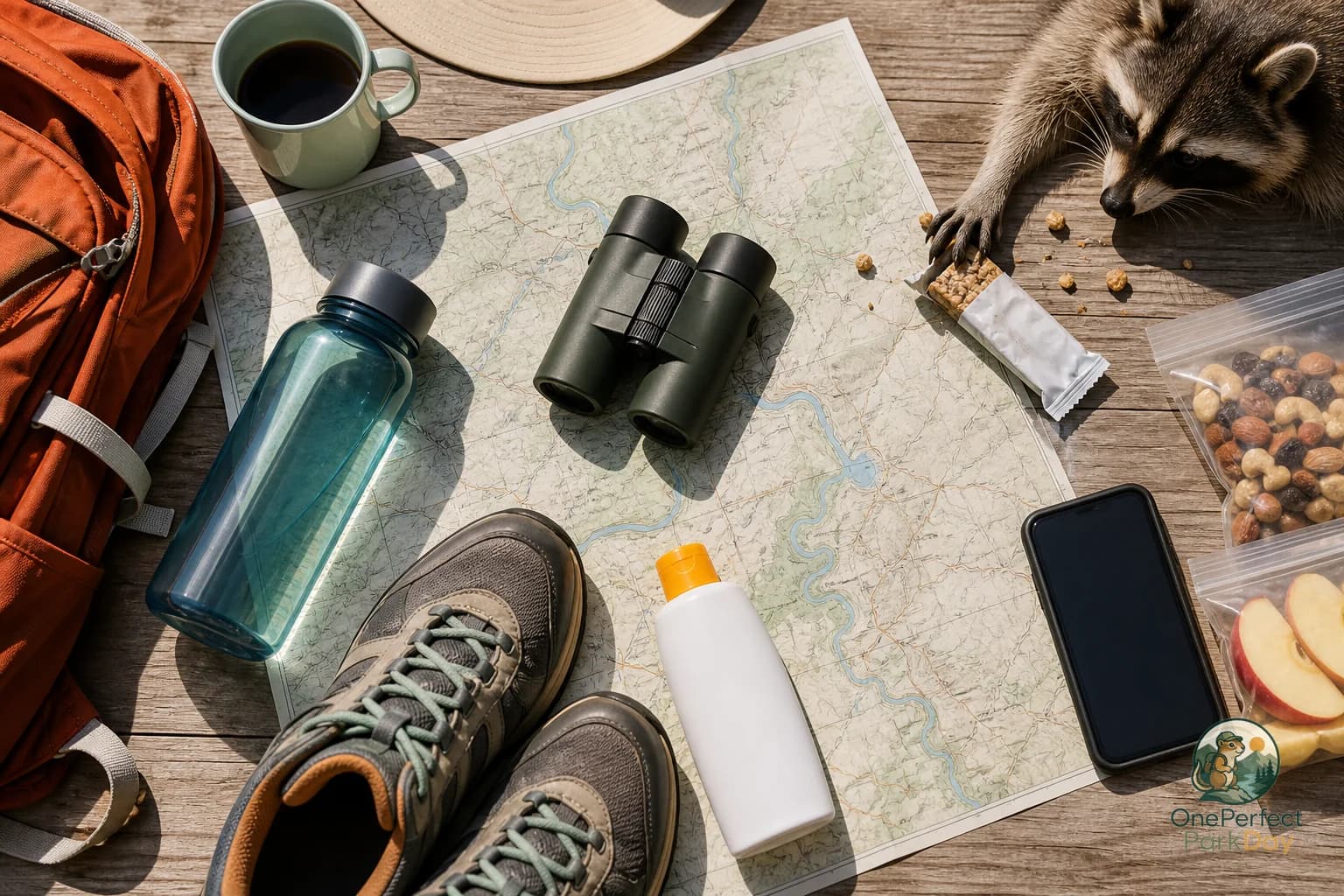
Food and water deserve more attention than they usually get. Do not assume the park itself will solve lunch for you. Pack more water than feels polite, bring real snacks, and know where your group can eat before hunger turns every overlook into a negotiation.
Parking and access are also variable. Popular overlooks, trailheads, visitor centers, and road sections can be affected by crowding, maintenance, weather, or temporary closures. Plan as a self-driven day unless current official information for your date says otherwise, and keep a second stop ready if the first one is full or closed.
If you want a broader method for narrowing stops, use the same thinking from How to choose must-see stops for one national park day. For this park, “must-see” should mean “fits the unit we chose,” not “looks good somewhere on the map.”
Common mistakes that make the day harder
The first mistake is treating all three park areas as one itinerary. They share a name, not a parking lot.
The second mistake is saving the North Unit as a late-day maybe. That turns a beautiful area into a tired obligation. If the North Unit matters to you, give it the day.
The third mistake is overloading the scenic drive with too many hikes. Theodore Roosevelt is good for a drive plus short walks, but every added trail has a cost: heat, water, time, parking, and group patience.
The fourth mistake is underestimating how much time wildlife can add. You should never approach wildlife, and you should expect traffic or stops to slow down when animals are visible near roads. A safe, respectful pause is part of the day, not a delay you can fully control.
The fifth mistake is building the plan around an ideal weather day. Wind, storms, smoke, heat, mud, or winter conditions can change what feels reasonable. A good one-day plan can shrink without feeling like it failed.
Questions to check before you commit
Ask these before you decide between South Unit, North Unit, or a road-heavy split:
- Where are we waking up, and where do we need to end the day?
- Which unit is closest to that real route?
- Are any scenic roads, overlooks, trails, visitor centers, or access roads affected by current alerts?
- What does the hourly weather look like, not just the daily high?
- Who in the group needs shorter walks, shade breaks, accessible stops, or fewer car hours?
- Do we have lunch, snacks, and enough water before entering the park?
- What is our turnaround time if we are tempted to add a second unit?
- What will we drop first if parking, heat, weather, or energy goes sideways?
A simple rule helps: if adding another unit makes you cut lunch, skip breaks, or drive near dark when you did not intend to, it is probably not an add-on. It is a different day.
A practical one-day checklist
Use this as a planning filter, not a fixed itinerary:
- Pick one main unit: South Unit for most Medora and I-94 based visits, North Unit for a northern or quieter-focused day.
- Choose one scenic drive structure based on what is open and reasonable that day.
- Mark three to five priority stops, not ten.
- Put walks early if heat, wind, or storms are a concern.
- Pack water, salty snacks, sun protection, layers, and any kid or medical supplies your group needs.
- Plan lunch before hunger becomes the loudest person in the car.
- Choose one backup stop inside the same unit.
- Set a turnaround time before considering another unit or remote add-on.
- Check current NPS alerts, weather, road status, trail conditions, and operating details before leaving service.
- Let the final hour be easy: one overlook, one short stop, or a calm exit.
For help thinking through drive-versus-walk tradeoffs, read How to balance scenic drives and short hikes in a US national park. Theodore Roosevelt rewards that balance more than a checklist sprint.
A realistic closing
One day in Theodore Roosevelt National Park does not need to cover every unit to be a strong day. It needs one clear anchor, enough margin for weather and road changes, and a group that still likes each other at dinner.
Pick the unit that fits your start point, protect the middle of the day from overreach, and keep the optional pieces truly optional. The park will feel bigger, quieter, and more enjoyable when you stop trying to prove you can touch every corner.
Want help narrowing a national park day into a calm, usable plan? Start with One Perfect Park Day.
Practical note
This article is general US National Park planning information. Park rules, hours, weather, trail conditions, road closures, shuttle service, accessibility procedures, permits, and crowd levels can change. Check the official National Park Service site or app before relying on any plan.