
Planning / 6 min read
How to sanity check a one-day US national park itinerary before you go
A practical way to check whether your one-day US national park itinerary is realistic before you commit to it, including drive time, breaks, food, weather, and backup stops.
August 27, 2026
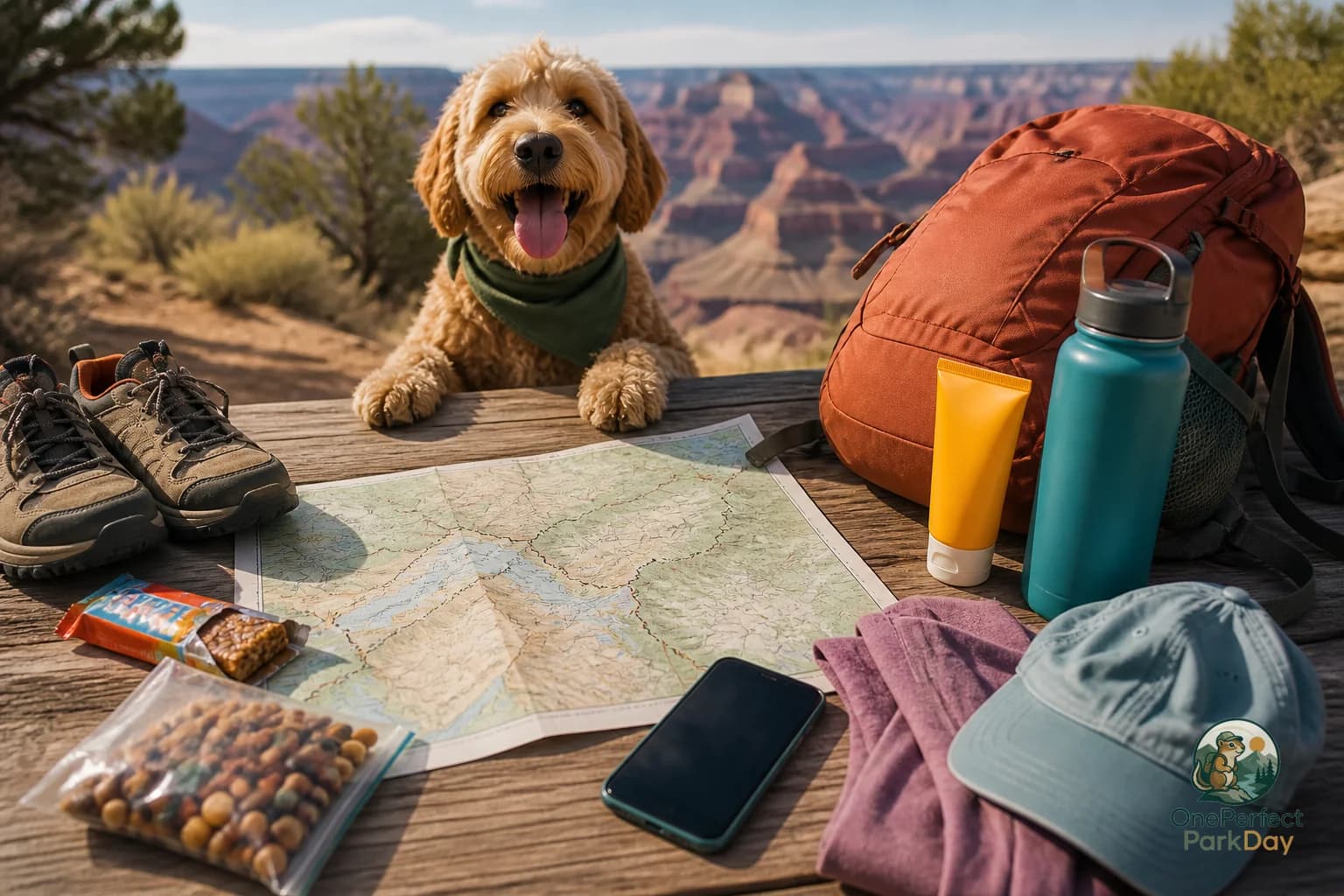
A one-day park plan can look tidy in a notes app and still be wildly unrealistic once you add parking, bathrooms, heat, kids, road pullouts, shuttle timing, and the very human need to sit down for a minute.
The goal is not to squeeze every famous stop into one day. The goal is to catch the weak parts of the plan before you are inside a US National Park with spotty service, tired people, and a scenic overlook you somehow still cannot find.
The short answer
A realistic one-day US National Park itinerary should pass five checks before you go:
- It has one main reason for the day, not six competing priorities.
- The driving route makes geographic sense.
- The hardest activity is not saved for the very end.
- Food, water, bathrooms, and breaks are built in.
- There is a clear backup plan if weather, access, crowds, or energy change.
If your plan fails one of those checks, it does not mean the day is ruined. It means the plan is probably pretending you are faster, luckier, or less hungry than you will be.
For a deeper stop count gut check, use How many stops to plan for one day in a US national park alongside this review.
What changes the answer
The same itinerary can be reasonable in one US National Park and a mess in another. Before you trust your plan, look at what kind of park day you are actually building.
Park shape matters. Some parks are built around a main scenic road. Others have separate districts, long dead-end roads, shuttle corridors, or trailheads that look close on a map but take real time to reach. A plan that hops between far corners is usually the first one to crack.
Daylight matters. A summer day gives you more flexibility, but also more heat in many parks. A shoulder season or winter day may feel calmer, but shorter daylight can make a late hike or long scenic drive less appealing.
Elevation and exposure matter. A short trail at high elevation, in desert heat, or on exposed terrain can feel much harder than the mileage suggests. Do not judge the day by distance alone.
Your group matters. Adults who hike often, grandparents, toddlers, teens, and first-time visitors do not move through a park the same way. The itinerary should fit the slowest realistic version of the group, not the most optimistic one.
Current conditions matter. Road work, trail closures, smoke, storms, shuttle rules, timed entry, and seasonal services can change the day. Always check current National Park Service alerts and operating details before you rely on any plan.
What people get wrong
The most common mistake is planning from a highlight list instead of a route. A list says, "These are the famous places." A route says, "This is how the day will actually unfold." Those are not the same thing.
Another mistake is treating every stop as equal. A roadside viewpoint, a visitor center, a two-mile walk, and a scenic drive segment all use different kinds of energy. If you stack too many medium-effort stops, the day can feel heavier than one bigger hike plus a few easy pullouts.
People also forget the non-scenic parts of the day. Finding parking, refilling water, eating lunch, changing layers, waiting for a shuttle, applying sunscreen, and talking someone out of buying another magnet all take time. None of that sounds like itinerary content, but it is the stuff that keeps the day from falling apart.
The sneakiest mistake is saving the best thing for last. If there is one view, trail, drive section, ranger stop, or family photo spot that would make the day feel worth it, do not bury it after five other stops. Put the anchor early enough that weather, fatigue, or delays do not steal it.
Questions to check before you go
Run your itinerary through these questions the night before, preferably with the map open.
What is the one stop we would be disappointed to miss? That is your anchor. Protect it.
Are we crossing the same park twice for no good reason? Backtracking is not always bad, but accidental backtracking burns daylight fast.
Where is lunch happening? Not a vague "somewhere in the park." Name the area, picnic spot, lodge, town, or car snack plan.
Where is the first bathroom after arrival? This is especially worth knowing with kids, older travelers, or anyone who drank coffee on the drive in.
What is the latest time we should start the final major activity? If the answer is fuzzy, set a turnaround time. You can use How to set a turnaround time for one day in a US national park for that piece.
What gets cut first if the day runs slow? Decide this before emotions get involved.
What is the weather version of this plan? A rain shower, heat warning, wind, smoke, or cold front can change what feels smart. Your backup does not need to be glamorous. It just needs to be usable.
A simple itinerary sanity check
Use this checklist before you leave cell service, or the night before your park day.
- Pick one anchor experience for the day.
- Group the day by one area, one corridor, or one logical loop.
- Put the most important stop in the first half of the day when possible.
- Limit the number of major activities.
- Add drive time between areas, not just trail time.
- Confirm current park alerts, road status, timed entry rules, shuttle details, and seasonal services.
- Choose a realistic arrival window.
- Pack water, snacks, layers, sun protection, and any needed kid or medication items.
- Name the lunch plan.
- Name the first bathroom or visitor center stop.
- Build in at least one real break where no one has to perform enthusiasm.
- Set a latest-start time for the final big activity.
- Choose one optional add-on, not three.
- Choose one easy backup if weather, access, or energy changes.
- Tell everyone what can be skipped without drama.
That last item matters more than people admit. A good park day usually has some editing in it.
A realistic way to close the plan
Before you call the itinerary done, say it out loud like a real day:
"We arrive around this time, start with this main thing, eat here, do these two easier stops, and if we are tired or the weather turns, we switch to this shorter option."
If that sentence sounds calm, you probably have a usable plan. If it sounds like a race, it probably is one.
One day in a US National Park does not need to cover everything. It needs to give your group a clear path through the day, enough room to adapt, and a way to leave feeling like you chose well instead of chased too much.
If you want help shaping that kind of day, start with the free planner at One Perfect Park Day.
Practical note
This article is general US National Park planning information. Park rules, hours, weather, trail conditions, road closures, shuttle service, accessibility procedures, permits, and crowd levels can change. Check the official National Park Service site or app before relying on any plan.