
Weekly Review / 4 min read
Weekly Review: Stop Building Park Days Like Wish Lists
Protect the must-do, soften the middle, and stop letting lunch become the villain.
August 16, 2026
Park Day Plan
This week’s theme: stop treating a one-day park visit like a scavenger hunt.
The better plan is simpler:
- Pick the one thing the day is really about.
- Do it early, before heat, parking, shuttles, and group patience start taxing every decision.
- Keep the middle of the day easier than your morning.
- Leave one optional stop for the end, not three.
People usually get the first part right and the middle wrong. They choose a great hike, viewpoint, grove, lake, or scenic drive. Then they stack too much around it because the map makes everything look close.
That is how a good park day turns into a low grade family negotiation in a hot parking lot.
A cleaner one-day rhythm:
- Morning: your anchor experience
- Late morning: one nearby win, not a detour across the park
- Midday: food, water, shade, bathrooms, and fewer decisions
- Afternoon: flexible stop or scenic exit
- End: leave before everyone is cooked, not after
If you want a deeper version, the newest guide is here: How to pace one day in a US national park without wearing everyone out.
Packing Tip
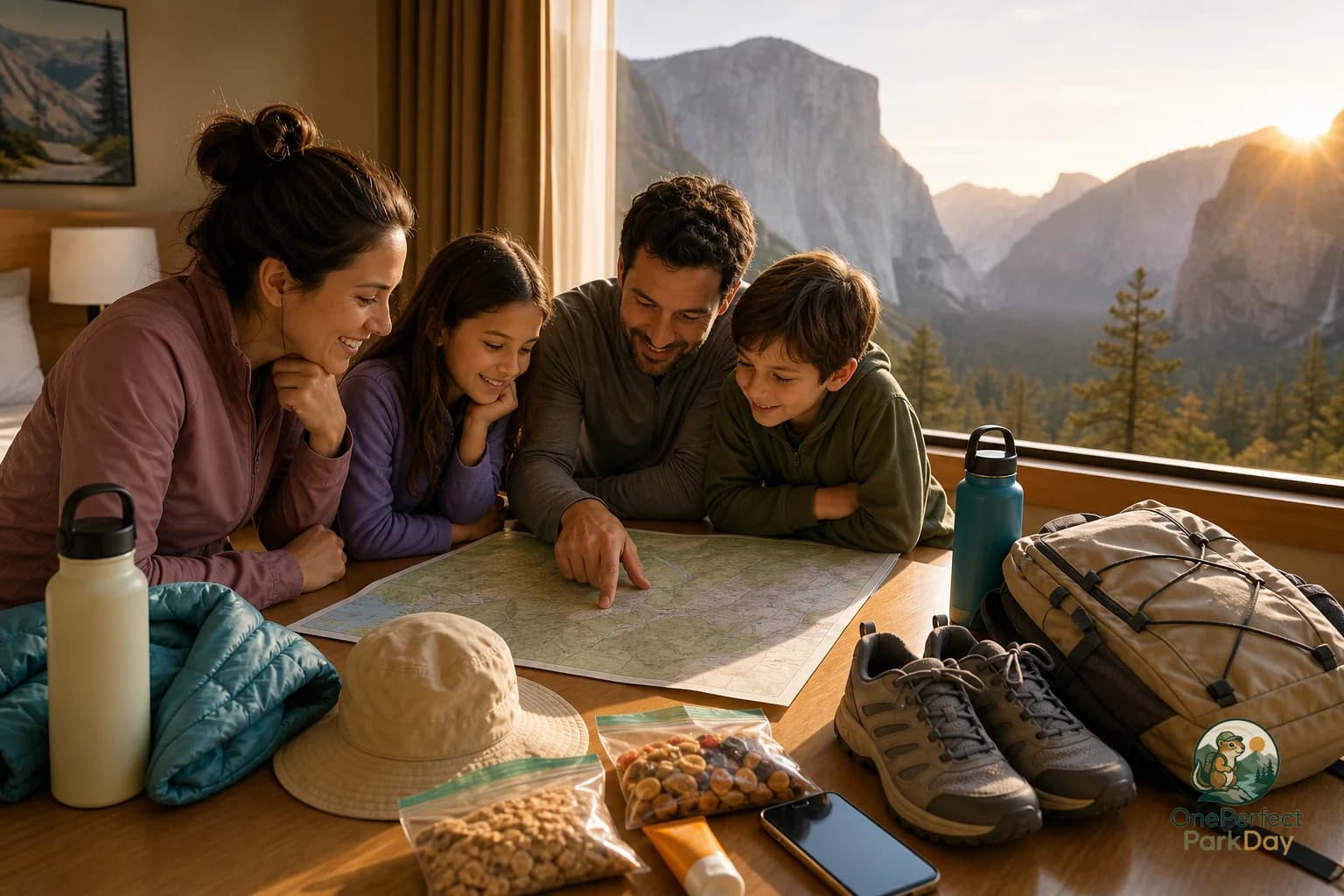
Pack for the part of the day you are most likely to underrespect: the middle.
Morning gets all the planning attention. People pack for the hike, the photos, the famous overlook, the chilly start, or the shuttle line. Then midday arrives with sun, hunger, tired kids, damp socks, no table, and a car that feels farther away than it should.
A useful midday reset kit can be boring and still save the day:
- Extra water beyond what you think looks reasonable
- Salty snacks, not just sweet ones
- A real lunch plan, even if it is simple
- Sunscreen that is easy to reapply
- Hats or light layers for exposed stops
- A towel or dry layer if rain or creek spray is possible
- Small trash bag for wrappers, wet clothes, or muddy shoes
- A backup activity for kids that does not require a signal
The move is not to pack the whole garage. It is to pack for the moment when the group still has three hours left, but nobody is charming anymore.
Crowd & Weather Note
Crowds and weather do not ruin most one-day plans by themselves. They ruin plans that have no slack.
Timed entry, shuttle waits, full parking lots, heat, afternoon storms, smoky skies, wet trails, and road work all punish the same kind of itinerary: the one with no room to bend.
Before you leave the hotel, check:
- Current National Park Service alerts
- Timed entry or reservation rules
- Shuttle status and first realistic boarding time
- Road and trail closures
- Hourly weather, not just the daily high
- Sunset time
- Food and water availability inside the park
Then make one honest choice: what gets cut first if the day slows down?
That answer should be decided before the park makes the decision for you.
From One Perfect Park Day
New articles this week focused on building calmer one-day national park plans that survive normal friction: driving, heat, hunger, parking, weather, and overambitious maps.
Build a simpler US National Park day plan before you leave the hotel: One Perfect Park Day.
Question of the Week
What is the first thing you should cut from a one-day park plan?
Not the main reason you came. Cut the thing that is farthest away, most weather dependent, least unique, or easiest to replace with a calmer nearby stop.
A good park day does not need to prove you used every minute. It needs to get your group to the best part of the day with enough energy left to enjoy it.