

Weekly Review / 4 min read
Weekly Review: Stop Letting the Map Plan Your Park Day
Pick the real anchor, pack for delays, and stop treating every scenic stop like it is free.
August 23, 2026
Park Day Plan
This week’s planning theme is simple: the map is not your itinerary.
A map makes every overlook, trailhead, visitor center, scenic drive, and picnic stop look equally possible. Real park days are messier. Parking fills. Heat builds. Kids slow down. A short detour eats half an hour. The group that was excited at 8 a.m. may be very done by 2 p.m.
For a smoother one-day national park visit, build the day around three choices:
- One anchor experience
- One decision point before lunch
- One easy exit path
A good one-day plan should feel a little underfilled on paper. That is not laziness. That is how you leave room for the park to actually happen.
Packing Tip
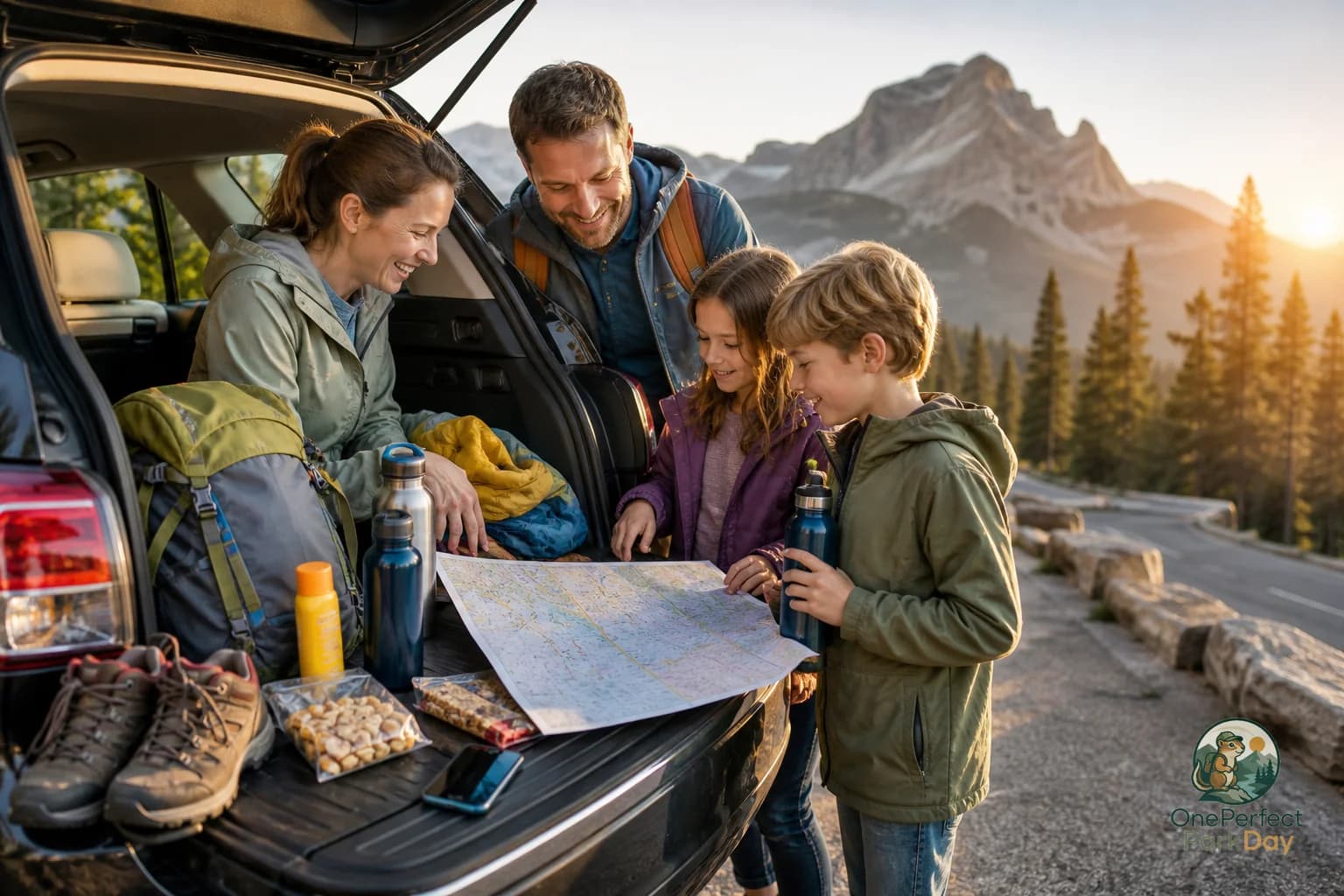
Pack your food and comfort items by access, not by category.
Most people pack like they are organizing a pantry: snacks in one bag, layers in another, sunscreen somewhere, water bottles wherever they fit. Then the first real stop turns into a parking lot excavation project.
Try this instead:
- Front seat or top of day bag: water, sunscreen, sunglasses, lip balm, quick snack, map or downloaded plan
- Easy grab bag: kid snacks, wipes, hand sanitizer, trash bag, light layer, simple first aid
- Cooler or trunk: lunch, backup drinks, extra snacks, post hike food
- Emergency comfort stash: dry socks, extra shirt, towel, rain layer, warmer layer if elevation changes are part of the day
The point is not to bring your whole house. The point is to avoid making every small need cost ten minutes.
Food especially deserves a plan. The better move is a lunch window, not a fantasy lunch location. If the picnic area is full, the trail takes longer, or storms roll in, you still eat before everyone gets weird. More on that here: How to plan meals for one day in a US national park.
Crowd & Weather Note
Late summer park days punish overconfidence.
Heat can make a short walk feel longer than it looked online. Afternoon storms can make exposed viewpoints and higher elevation stops less appealing. Smoke, fire restrictions, road work, shuttle changes, and trail closures can also change the day fast.
Before leaving the hotel, check current NPS alerts, road status, weather, smoke or fire conditions, operating hours, shuttle details, timed entry rules if relevant, and any permit requirements. Do not build the day around yesterday’s conditions.
The crowd move is the same as the weather move: give the day a pivot.
If the main lot is full, where do you go next? If the exposed trail feels too hot, what shaded or shorter option replaces it? If the scenic drive is moving slowly, what stop gets cut first?
That is the heart of this week’s featured guide: How to plan one national park day around decision points. The plan does not need to predict everything. It needs to stop acting surprised when normal park stuff happens.
From One Perfect Park Day
New planning guides from the past week:
Want the shorter version? Build a simpler US National Park day plan before you leave the hotel: One Perfect Park Day.
Question of the Week
What is the one stop you would cut first if the day started running 45 minutes behind?
Not the dream stop. Not the reason you came. The first cut.
If you cannot answer that before you enter the park, the plan is probably too fragile. Pick the cut while everyone is calm, fed, and still optimistic. Future you will be less diplomatic.