
Weekly Review / 4 min read
Weekly Review: The Bookends That Save a Park Day
A simpler one day national park plan starts with the opening move, the exit plan, and a realistic turnaround time.
August 2, 2026
Park Day Plan
Plan the bookends first.
That sounds backward if you are staring at a park map covered in overlooks, trails, visitor centers, scenic drives, and picnic spots. But for a one day US National Park visit, the first hour and the last hour do more work than people give them credit for.
Before you leave the hotel, decide:
- Your first stop. Not your first five options. One place you are driving to first.
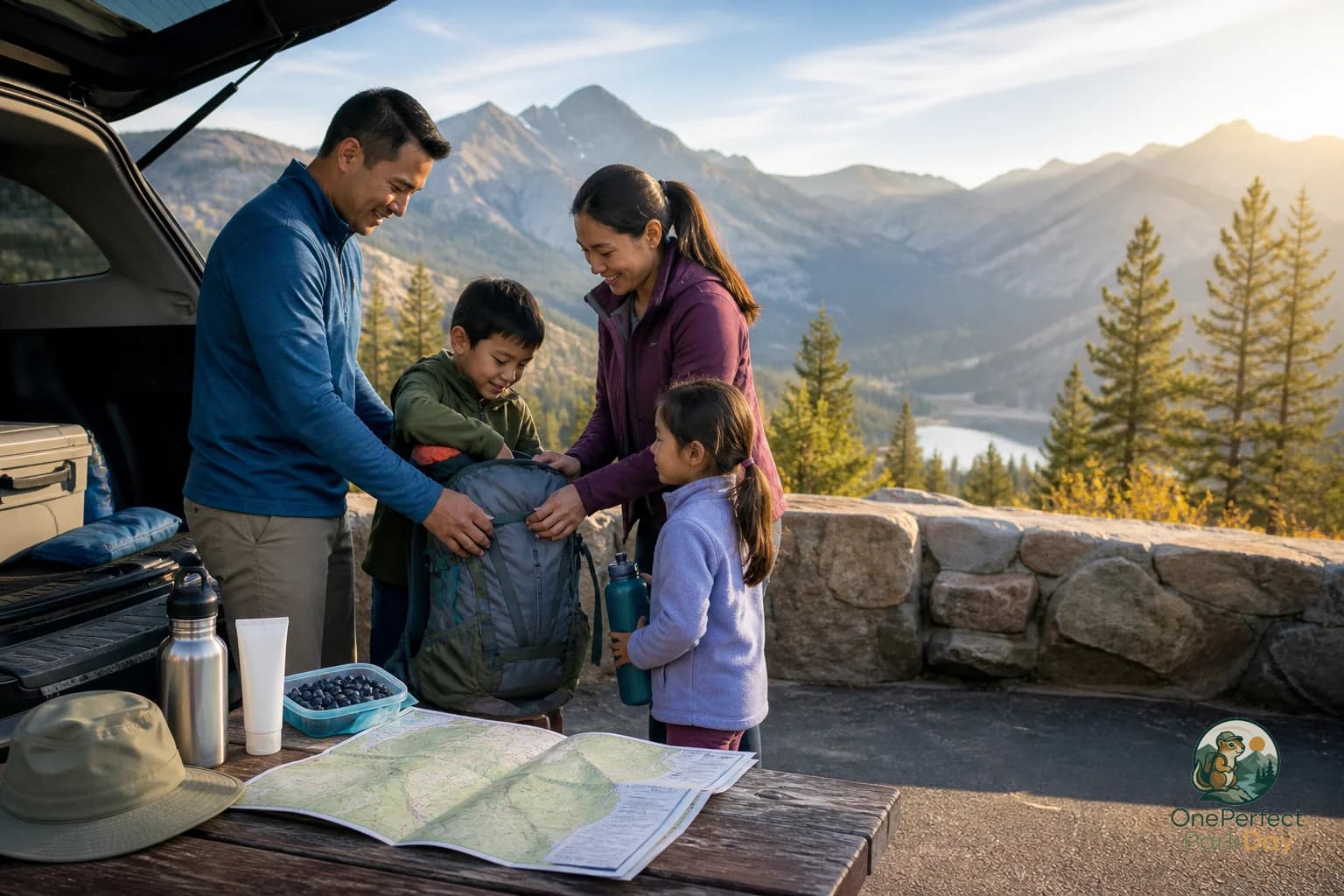
- What needs to leave the car with you. Water, snacks, layers, sunscreen, kid gear, camera, pass, reservation details.
- Your turnaround time. The time when you stop adding more park and start protecting the exit.
- Your reset spot. A visitor center, picnic area, lodge, shuttle stop, or easy overlook where the group can pause without negotiating from scratch.
- Your last hour. Where you want to be when the day starts winding down, not where you hope to be if everything goes perfectly.
The tradeoff is obvious: you may skip a few small stops that looked tempting on the map. Good. The small stops are usually what turn a decent plan into a late afternoon mess.
A better one day plan is not packed tighter. It has cleaner decisions.
Packing Tip
Pack for the transitions, not just the trail.
A lot of national park packing lists focus on the big items: shoes, water, sun protection, rain layer. Those matter. But the day usually gets annoying in the handoffs: leaving the car, boarding a shuttle, getting kids out after a scenic drive, changing weather, eating later than planned.
A simple setup:
- Front pocket: park pass, timed entry info, sunscreen, lip balm, hand sanitizer, small snacks.
- Main bag: water, layers, lunch or bigger snacks, rain shell, basic first aid, charger.
- Car stash: extra water, dry socks, backup snacks, towel, change of clothes for kids, anything you do not want to carry all day.
Do not carry the whole hotel room. Do make sure the thing you need at 9:10 a.m. is not buried under six emergency items you packed out of guilt.
Crowd & Weather Note
Crowds and weather punish vague plans.
If parking is likely to fill, make the first stop the one with the tightest parking or shuttle pressure. If heat builds fast, put the exposed walk earlier and save shaded viewpoints, visitor centers, or scenic pullouts for later. If storms are possible, stop pretending the longest trail is still the anchor unless you have a clean shorter version.
For families, this is where the day often turns. Kids can handle a lot when the plan has food, shade, bathrooms, and a real pause built in. They do worse when every break is treated like a delay.
A useful rule: if the weather or crowd situation changes, do not ask, “What else can we still cram in?” Ask, “What is still worth doing without making the exit ugly?”
From One Perfect Park Day
This week’s strongest planning idea: bookend the day.
Start with How to plan the first and last hour of a US national park day. It is a practical guide to making the day feel calmer before you even decide every middle stop.
Also worth keeping close:
- How to set a turnaround time for one day in a US national park: for anyone who keeps saying yes to “one more quick stop.”
- How to build a backup plan for one day in a US national park: for full parking, heat, closures, tired kids, and plans that need a softer landing.
- How to plan a US national park day with kids without overdoing it: for families who want a good day, not a grown-up checklist with children dragged through it.
- How to balance scenic drives and short hikes in a US national park: for editing the day down to one main walk, one scenic drive segment, and a few easy stops.
- How to plan a national park day around shuttles and timed entry: for parks where the schedule is partly decided before you arrive.
Build a simpler US National Park day plan before you leave the hotel.
Question of the Week
What time will you stop pushing farther into the park?
Pick the turnaround time before the day starts. Not when everyone is already tired. Not after the parking lot is full. Not when the last shuttle line looks longer than expected.
One clear sentence is enough: “At 2:30, we stop adding new stops and start working back toward the exit.”
It may feel restrictive in the morning. By late afternoon, it feels like someone in the group knew what they were doing.