
Planning / 5 min read
A simple one-day US national park itinerary formula
Use this simple one-day US national park itinerary formula to choose an anchor stop, nearby wins, food breaks, weather pivots, and a realistic exit plan.
August 11, 2026
Most one-day US national park itineraries are built like wish lists. That is why they fall apart by lunch.
A smoother plan is less glamorous on paper and much better in the park. You need a structure that protects the part you care about most, leaves room for normal delays, and gives you permission to skip things without feeling like the day failed.
Direct answer
Use this five-part formula for a one-day US national park itinerary:
- Start with an arrival buffer.
- Choose one anchor experience.
- Add two nearby secondary stops.
- Schedule one real food and water reset.
- Set an exit plan before the day starts stretching.
That is the plan. Not eight overlooks, three hikes, a visitor center, a scenic drive, sunset, and dinner 90 minutes away. That kind of itinerary looks efficient until one full parking lot, one slow shuttle line, one bathroom stop, or one tired kid knocks it sideways.
Your anchor is the thing you would regret missing most. It might be a short trail, a scenic viewpoint, a ranger area, a historic site, a lake shore, a canyon overlook, or a drive segment. The rest of the day should support that choice, not compete with it.
If you are still deciding what belongs in the top tier, start with How to choose must-see stops for one national park day.
Context factors that change the formula
The same formula works in many US National Parks, but the details should change by park, season, weather, and group.
Park shape matters. A compact park with several short stops near one road can handle more small add ons. A spread out park with long drives between areas needs a tighter plan. Distance on a map is not the same as easy movement, especially on winding roads, narrow pullouts, or popular corridors.
Access rules matter. Some parks use timed entry, shuttle systems, seasonal road openings, parking limits, or area specific restrictions. Do not build the day from old screenshots or random social posts. Check current National Park Service alerts and the park's current operating rules before you lock anything in.
Group energy matters more than ambition. Adults can be just as guilty as kids here. A plan that requires everyone to be cheerful, fast, hydrated, hungry at the right time, and immune to heat is not a plan. It is a fantasy with trail shoes.
Weather matters. Heat, wind, rain, smoke, snow, and afternoon storms can change what feels reasonable. Put the most exposed or strenuous part of the day where conditions are likely to be most comfortable, then keep lower effort stops in reserve.
Food and water matter because decision making gets worse when people are thirsty and underfed. If you have not thought through meals, snacks, and refills, the itinerary is unfinished. For a deeper planning pass, use How much food and water to bring for one day in a US national park.
Common mistakes
The first mistake is planning by pins instead of blocks of time. Five saved map locations can look close together until you add parking, walking, bathrooms, photos, sunscreen, layers, and the time it takes a group to get back in the car.
The second mistake is treating every stop as equal. A 10 minute overlook, a visitor center, a scenic drive, and a 3 mile trail do not belong in the same mental bucket. Give each stop a job. Is it the anchor, a bonus, a rest, a bad weather option, or a quick leg stretch?
The third mistake is saving the best thing for late in the day. Sometimes sunset is the point, and that is fine. But if your main reason for visiting depends on a late arrival, you are giving every earlier delay permission to steal it.
The fourth mistake is refusing to cut the plan. Skipping a secondary stop is not failure. Dragging everyone through the last three stops while nobody cares anymore is the actual waste.
The fifth mistake is ignoring the exit. A national park day does not end at the final viewpoint. You still have to drive out, find food, get back to lodging, and keep everyone functional. That last hour counts.
Questions to check before you go
Ask these before the itinerary feels final:
- What is the one thing we most want to protect?
- What is close to that anchor and easy to add if the day is going well?
- What gets cut first if parking, weather, shuttles, or energy changes?
- Where will we eat something real?
- Where can we refill water or confirm we are carrying enough?
- What part of the day is most exposed to heat, cold, wind, or storms?
- What is our latest sensible turnaround or exit time?
- What current park alerts, road notices, timed entry rules, or shuttle details do we need to check?
If you cannot answer those questions, the itinerary probably has too many assumptions hiding inside it.
Practical checklist
Use this as a quick build sheet for one day in a US National Park:
- Pick one main park area or corridor.
- Choose one anchor experience.
- Add no more than two nearby secondary stops.
- Keep one optional stop in reserve, not in the core plan.
- Put the hardest or most important activity at the best time of day for your group.
- Check current NPS alerts, access rules, road conditions, and weather.
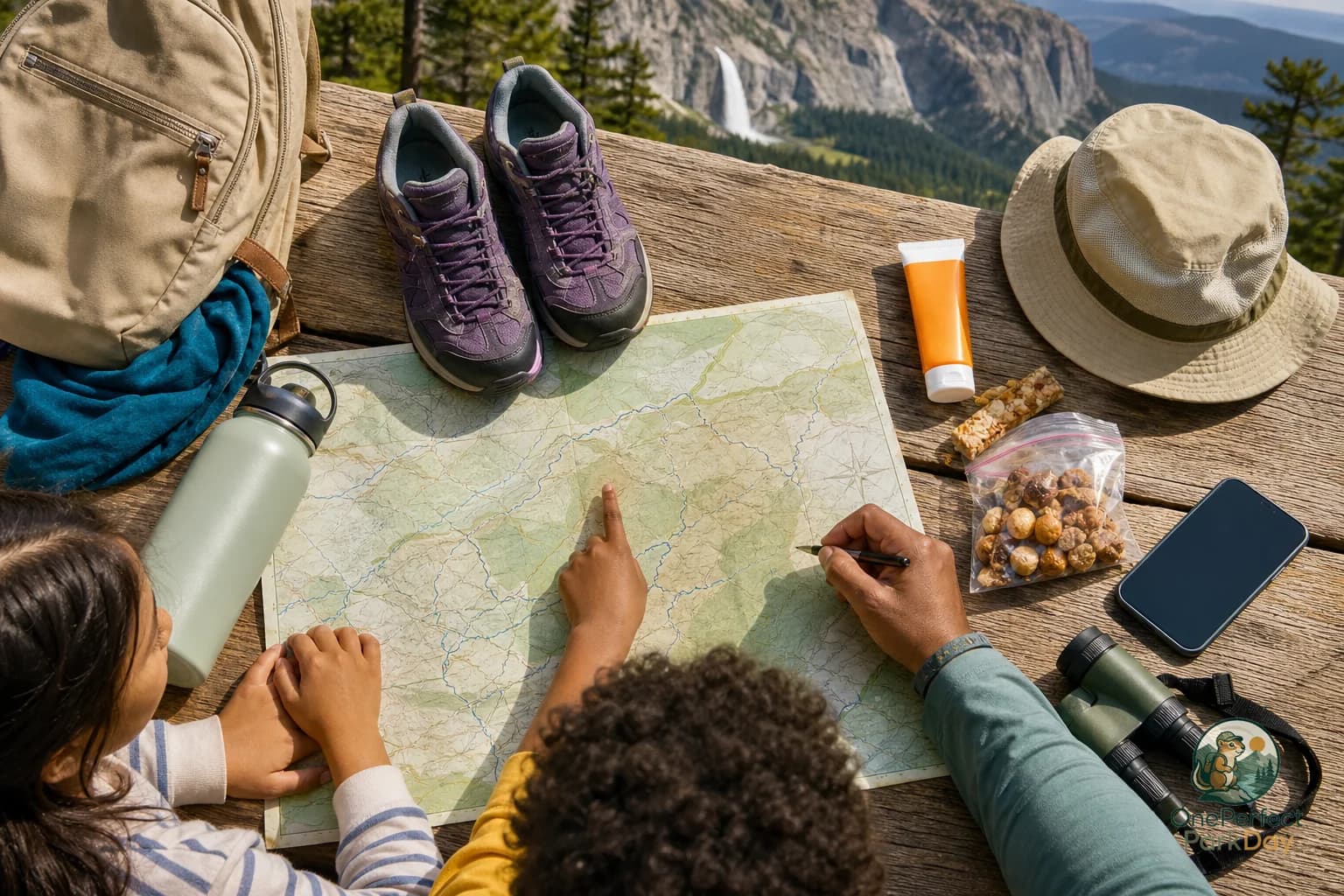
- Pack water, snacks, sun protection, layers, and any group specific essentials.
- Decide where the real break happens before everyone needs it.
- Set a cut point for dropping bonus stops.
- Set an exit time that leaves room for the drive out.
The goal is not to make the day small. It is to make the day sturdy.
A realistic way to think about the day
A strong one-day national park itinerary should feel a little underbooked when you leave home. That is the point. The extra space is not wasted. It is where the good stuff happens: the longer look at a canyon, the unplanned picnic, the quiet pullout, the slower walk back because the light got better.
You are not trying to win the park. You are trying to have one day that holds together in real conditions.
If you want help shaping a practical park day around your timing, group, and priorities, start with One Perfect Park Day at https://oneperfectparkday.com/?utm_source=mdx.
Practical note
This article is general US National Park planning information. Park rules, hours, weather, trail conditions, road closures, shuttle service, accessibility procedures, permits, and crowd levels can change. Check the official National Park Service site or app before relying on any plan.