
Planning / 5 min read
How to build a US national park day kit without packing for every disaster
Build a practical US national park day kit around weather, water, food gaps, comfort, and your group instead of overpacking for every possible problem.
September 30, 2026
Most one day US national park packing lists get weirdly dramatic. They either tell you to bring half a garage, or they pretend a water bottle and good vibes will cover a full day outside.
Neither version is useful.
A good day kit is not about being ready for every imaginary survival scenario. It is about avoiding the predictable little problems that wreck an otherwise good park day: thirst, sunburn, cold overlooks, hungry kids, wet socks, dead phones, no shade, and the slow collapse of group morale at 2:30 p.m.
Check the current park alerts, weather, road conditions, trail information, and operating rules before you go. Then build the kit around your actual day.
The short answer
For one day in a US National Park, your day kit should cover six jobs:
- Water and electrolytes
- Food that works between real meals
- Weather protection
- Sun protection
- Basic comfort and first aid
- Navigation and backup power
That does not mean everything has to ride on your back all day. Some items belong in the daypack. Some belong in the car. Some should stay at your lodging because they are just fear weight.
The tradeoff is simple: if you pack too little, the day gets brittle. If you pack too much, every overlook and short trail starts feeling like a chore. The sweet spot is a kit that protects the plan without taking over the plan.
What changes your packing list
Start with time away from the car. A scenic drive day with frequent stops needs a different kit than a shuttle day or a longer hike where you may not easily return to extra supplies. If you will be away from your vehicle for hours, water, layers, snacks, and sun protection need to come with you.
Next, look at weather range, not just the high temperature. A sunny 72 degree forecast can still mean chilly morning viewpoints, windy ridges, sudden rain, or hot exposed trails. Mountain parks, desert parks, coastal parks, and high elevation parks can all swing faster than casual visitors expect.
Then be honest about your group. Adults who drink coffee instead of water need more water than they think. Kids may need snacks before they admit they are hungry. Older relatives may care more about shade, seating, and temperature than another half mile of trail. A good kit supports the people you actually brought, not the imaginary version of the group that never complains.
Finally, match the kit to the day shape. If meals are uncertain, snack planning matters more. If your itinerary is packed, comfort items matter more because breaks will be harder to protect. For meal planning, see How to plan meals for one day in a US national park.
Mistakes that make a park day heavier than it needs to be
The first mistake is packing for the park name instead of the plan. A giant park does not automatically require a giant backpack. A short day near visitor services might need less than a remote trailhead day in a smaller park.
The second mistake is packing duplicates without a reason. Three jackets, four camera accessories, and a pile of just in case gear can make everyone slower. If you cannot name when you will use an item, question it.
The third mistake is putting everything in one person’s backpack. That person becomes the supply closet and eventually gets annoyed. Spread water, layers, and snacks across the group when possible.
The fourth mistake is forgetting the boring stuff. Sunscreen, lip balm, a small trash bag, hand wipes, a spare layer, and a phone battery are not exciting, but they solve real problems. The boring items usually save the day more often than the fancy gear.
The fifth mistake is ignoring pacing. Packing more snacks does not fix a schedule with no breaks. If your group tends to wear down, pair this kit with a calmer plan. How to pace one day in a US national park without wearing everyone out is a good companion read.
Questions to ask before you zip the bag
Ask these before you leave, not after everyone is standing in a windy parking lot:
- How long will we be away from the car at the longest stretch?
- Will we depend on a shuttle, boat, tour time, or limited parking area?
- Are we doing short paved stops, unpaved trails, stairs, sand, snow, or elevation gain?
- What is the coldest part of the day likely to feel like?
- What is the hottest or most exposed part likely to feel like?
- Where will lunch actually happen if the picnic area is full or the weather turns?
- Who in the group gets hungry, cold, tired, or frustrated first?
- What will we do if one planned stop is closed, crowded, smoky, wet, or too much for the group?
Those answers tell you what belongs in the kit better than any generic list.
A simple one-day national park day kit checklist
Use this as a starting point, then adjust for the specific park, season, weather, and group.
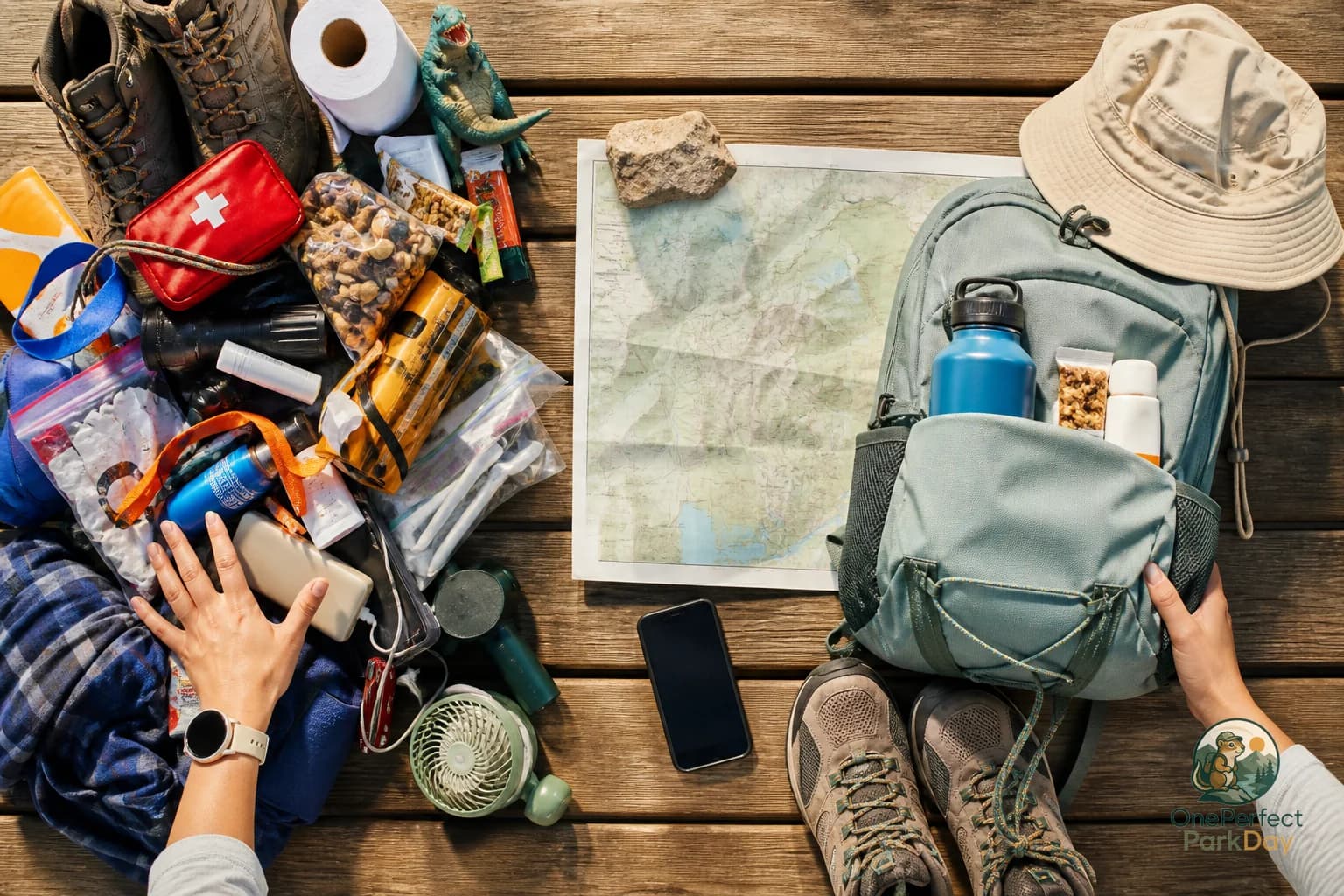
Carry in the daypack
- Water for the time you will be away from refills
- Electrolytes or salty snacks for hot or active days
- Easy snacks: bars, nuts, crackers, fruit, or sandwiches that tolerate the day
- Sun protection: sunscreen, sunglasses, hat, and lip balm with SPF
- Light rain layer or wind layer when the forecast is uncertain
- Warm layer for mornings, overlooks, boats, caves, or elevation changes
- Small first aid basics: blister care, bandages, pain reliever, personal medications
- Hand wipes or sanitizer
- Small trash bag for wrappers and wet items
- Downloaded map or paper map
- Charged phone and small battery pack
- Headlamp or small flashlight if there is any chance the day runs late
Keep in the car if you have one
- Extra water
- Extra snacks or lunch backup
- Dry socks or shoes after wet, sandy, or muddy stops
- Change of clothes for kids or messy conditions
- Larger cooler if meals are part of the plan
- Extra layers that are too bulky to carry all day
- Towel or blanket for wet seats, beach stops, or dusty gear
Usually skip for a normal casual day
- Full camping gear unless your plan actually requires it
- Multiple heavy camera setups if photography is not the main point
- Big books, games, or bulky extras that never leave the car
- Too many clothing options when one smart layer would do
- Anything packed because a list scared you, not because your day calls for it
A realistic way to use the list
Do a five minute pack check the night before. Put everything on a table and sort it into three piles: carry, car, and leave behind.
Then say the day out loud. Not the fantasy version. The real version.
“We arrive in the morning, do two overlooks, take one short trail, eat lunch near the car, drive to the far viewpoint, and keep a rain backup.”
That sentence will expose the gaps. Maybe you need more water. Maybe you need fewer layers. Maybe the lunch plan is weak. Maybe the whole kit is fine, but your day has too many stops and not enough breathing room.
A US national park day kit is not supposed to make you feel invincible. It is supposed to make the normal bumps easier to handle. Pack for the day you are actually planning, check current conditions before you go, and leave enough room in the schedule for people to be human.
Want help turning the kit into a calmer day plan? Start with One Perfect Park Day.
Practical note
This article is general US National Park planning information. Park rules, hours, weather, trail conditions, road closures, shuttle service, accessibility procedures, permits, and crowd levels can change. Check the official National Park Service site or app before relying on any plan.