Planning / 7 min read
How to plan one day in gateway arch national park around the tram decision
Plan one day in Gateway Arch National Park around the tram, museum, riverfront weather, downtown parking, security screening, breaks, and backup options without overloading the day.
October 21, 2026
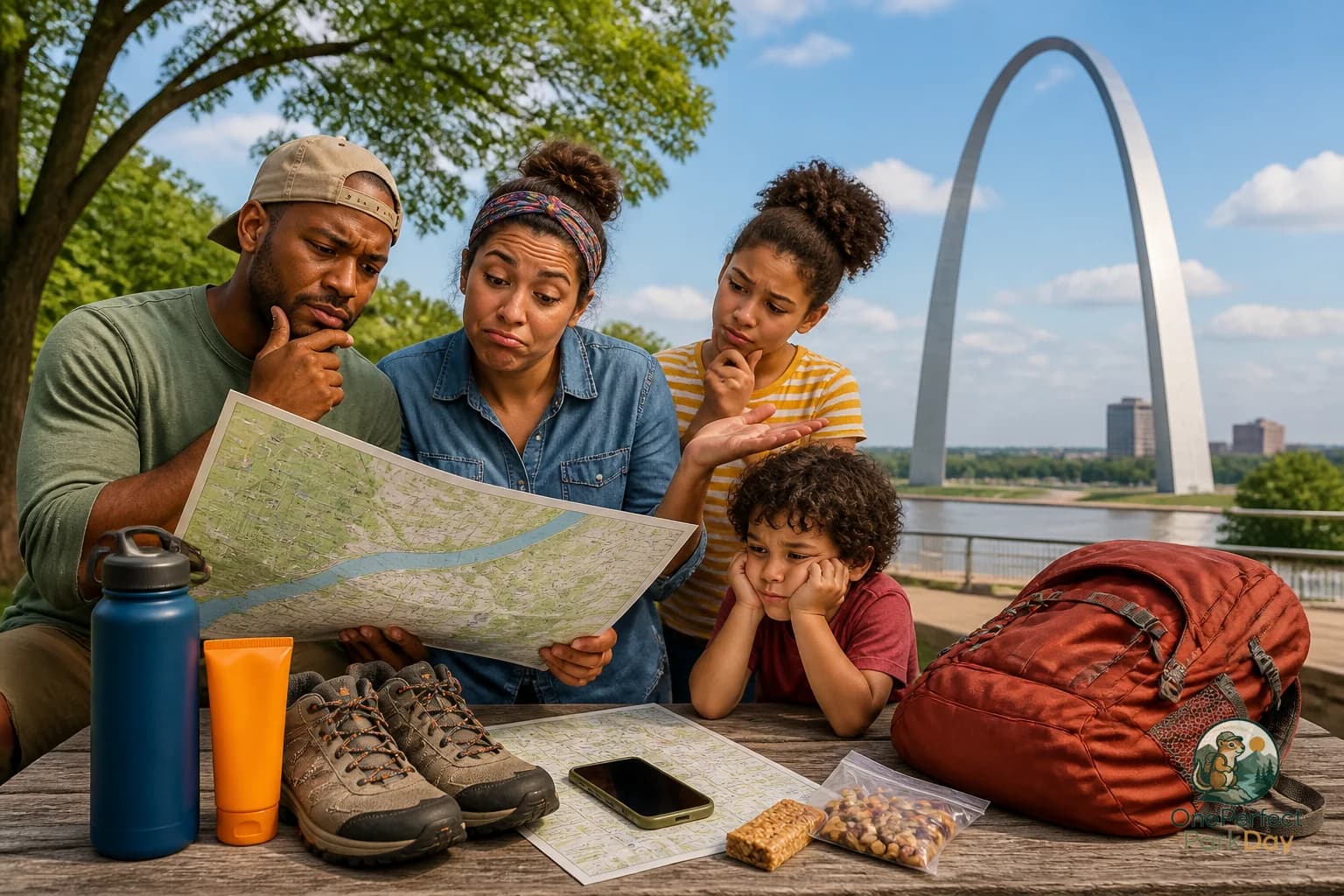
Gateway Arch National Park is not a sprawling wilderness day. That is exactly why people underestimate it.
You are not managing a 40 mile scenic drive or a stack of trailheads. You are managing a timed tram choice, indoor security screening, downtown parking, riverfront weather, museum time, food breaks, and a group that may not all feel the same way about small enclosed tram capsules.
For one day, the question is not how to see everything near the Arch. It is where to put the tram decision so the rest of the day stays calm.
The short answer
Treat the tram to the top as the anchor if your group really wants it and current tickets, operating rules, and conditions make sense. Put it in the middle of the visit, not at the fragile edge of the day.
A good one-day shape looks like this:
- Arrive with parking and security time built in.
- Start with the museum and visitor center area so everyone understands what they are looking at.
- Use the tram reservation as the main timed decision.
- Walk the grounds or riverfront when weather and energy cooperate.
- Keep one optional add-on, not three.
If the tram is sold out, delayed, not comfortable for your group, or not worth the tradeoff that day, the visit can still work. The museum, Arch grounds, riverfront views, and nearby historic context can carry a shorter, easier day.
Before you rely on any version of this plan, check current National Park Service alerts, operating rules, security guidance, road and sidewalk conditions, weather, ticket details, and accessibility information.
What makes Gateway Arch different from a typical one-day park plan
The park is compact, urban, and deceptively scheduled.
At many national parks, the hard choice is distance. At Gateway Arch, the hard choice is timing. You may spend more of your planning energy on parking, ticket windows, entry screening, meal timing, and weather exposure than on route distance.
A few factors matter more than people expect:
Timed tram access. If going to the top is important, check ticket availability before you build the day. Do not assume you can casually decide after lunch.
Security screening. Build in a buffer before timed plans. A tight arrival can make the first hour feel annoying for no good reason.
Downtown parking. Plan where you will park before you arrive. Gateway Arch is not a drive-up overlook with a simple trailhead lot. Expect urban parking decisions, walking distance, payment, and event traffic to matter.
Weather on open grounds. The Arch grounds and riverfront can feel exposed in heat, rain, wind, or cold. A compact park can still wear people down if you stand around outside too long.
Group comfort. The tram experience uses small enclosed capsules. Some visitors may find that exciting. Others may find it unpleasant or inaccessible. Decide as a group before the day gets emotional.
If you like building trips around a few clear decision points, the same approach in How to plan one national park day around decision points fits this park well.
Put the tram in the middle, not at the edge
The worst place for the tram decision is usually first thing with no buffer or late in the day when everyone is tired.
Early can work if you are staying nearby, already have tickets, know the parking plan, and have a group that moves well in the morning. But for many visitors, a first-slot plan turns small delays into stress.
Late can work if you are deliberately having a slow day downtown. But if your group includes kids, older relatives, or anyone who fades after lunch, a late tram time can hang over the whole visit.
Middle of the day is often the most forgiving. You can arrive, orient, use restrooms, see part of the museum, make the tram your anchor, then decide how much walking and riverfront time still makes sense.
The tradeoff: midday may not be the quietest or coolest time. But it gives the day a spine. For a one-day visitor, that is usually more valuable than chasing theoretical efficiency.
Common mistakes that make the day feel harder than it is
Mistake 1: treating the Arch like a quick photo stop only. A quick photo may be enough for some groups, but if you also want the museum, tram, grounds, and riverfront, the visit needs real time.
Mistake 2: assuming the tram is the whole park. The ride is memorable, but it is not the only reason to visit. If tram timing does not work, do not write off the day.
Mistake 3: stacking too many nearby attractions. Downtown St. Louis has plenty around it, but a one-day national park plan gets messy when every nearby option becomes mandatory.
Mistake 4: ignoring weather because much of the visit is indoors. You may still walk from parking, cross exposed grounds, wait outside, or spend time along the riverfront.
Mistake 5: bringing the wrong load. You do not need a backcountry pack. You do need water, weather layers, snacks if your group gets cranky, and a realistic bag for security and walking.
For a broader way to keep the day adjustable, see How to build a flexible one-day US national park plan.
Questions to check before you lock the plan
Ask these before you buy tickets, park the car, or promise the group a specific order:
- Is the tram operating on the date and time we want?
- Are timed tickets available, and what arrival guidance applies?
- Are there current NPS alerts, closures, construction notes, or security rules that affect the visit?
- Is anyone in the group uncomfortable with small enclosed spaces or stairs?
- What is the forecast for the hours we expect to be outside?
- Where will we park, and how long will it take to walk from there?
- Do we need a real meal nearby, or will snacks carry us until after the park visit?
- What is our one optional add-on if the day is going well?
- What gets cut first if weather, tickets, or energy do not cooperate?
That last question is the one people skip. It is also the one that saves the day from turning into a forced march.
A simple one-day Gateway Arch checklist
Use this as a planning pass, not a promise.
- Check current NPS alerts and operating rules.
- Check tram ticket availability and timing before building the day.
- Confirm security screening guidance and bag limits.
- Pick a parking option before arriving downtown.
- Build in extra time between parking, walking, screening, and any timed ticket.
- Start with the museum or visitor center area if your group needs context.
- Put the tram in the middle of the plan if it is your anchor.
- Carry water, compact snacks, weather layers, and any needed medications.
- Watch heat, wind, rain, and riverfront conditions.
- Choose one optional add-on, such as extra grounds time, riverfront photos, or nearby historic context.
- Decide in advance what you will skip if the group gets tired.
A realistic closing plan
A strong Gateway Arch day does not need to be packed. It needs to be intentional.
If the tram is the reason you are going, protect it with parking time, security time, and a realistic buffer. If the tram is optional, do not let it bully the whole day. Spend more time with the museum, the grounds, the riverfront view, and a slower pace.
The compact footprint is the gift. Use it to make fewer decisions, not more.
For more calm one-day national park planning help, start with One Perfect Park Day at oneperfectparkday.com.
Practical note
This article is general US National Park planning information. Park rules, hours, weather, trail conditions, road closures, shuttle service, accessibility procedures, permits, and crowd levels can change. Check the official National Park Service site or app before relying on any plan.