
Planning / 6 min read
Where to put Glacier Point in a one-day Yosemite National Park plan
Planning one day in Yosemite? Learn when Glacier Point belongs in the plan, when to skip it, and how to protect Yosemite Valley time, meals, breaks, and backups.
September 9, 2026
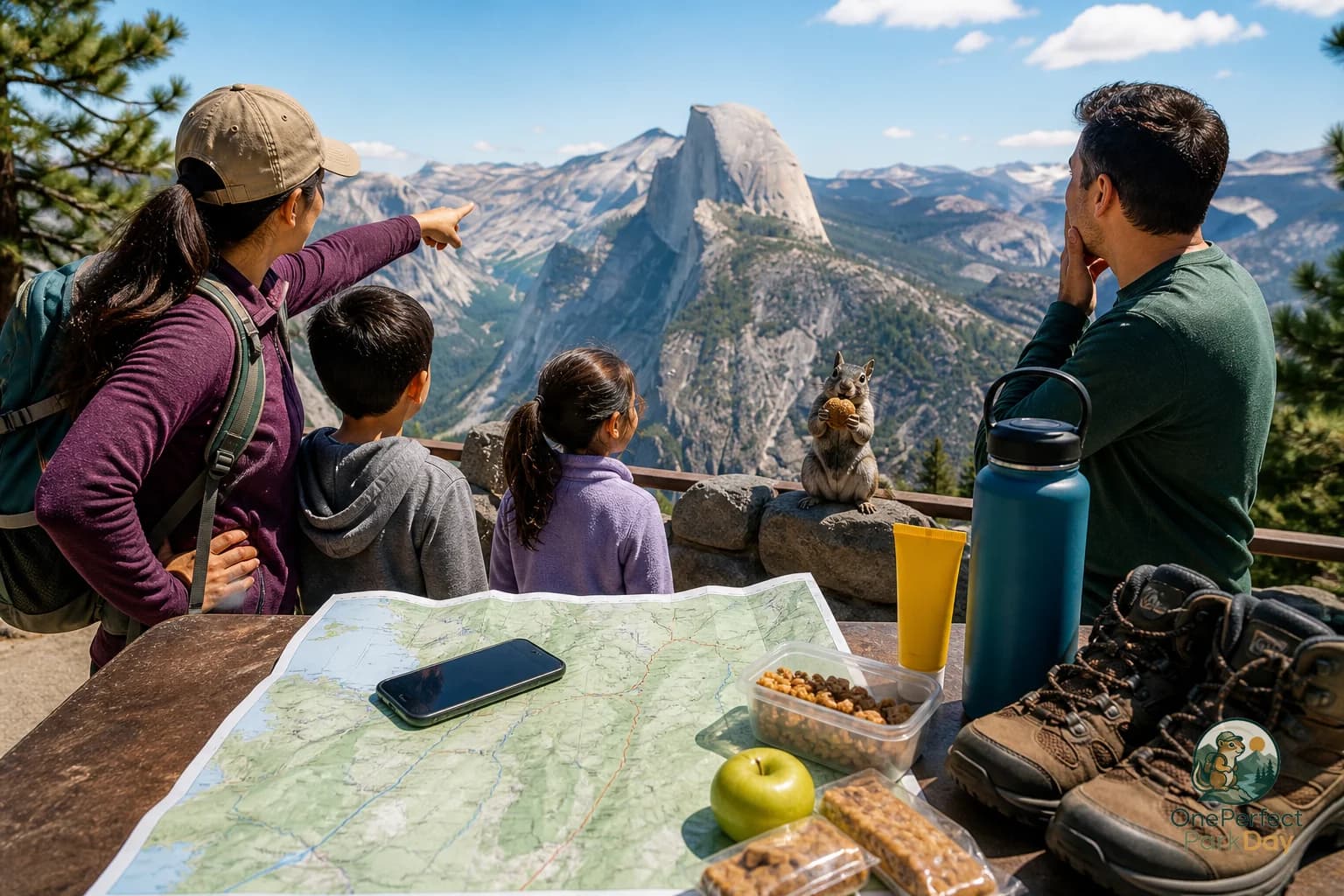
Glacier Point is one of the big temptations in Yosemite National Park. The view is famous, the photos are convincing, and it looks simple on a map until the day starts running late.
If you only have one day, the question is not whether Glacier Point is worth seeing. It is where it belongs in the plan, and what you are willing to give up to make room for it.
The direct answer
For most first time one-day visitors, Yosemite Valley should be the main area. Glacier Point should be treated as a conditional add-on or a deliberate swap, not something you casually tack onto the end of an already full Valley day.
A calmer structure looks like this:
- Main area: Yosemite Valley
- Backup area: more Yosemite Valley, with shorter walks, viewpoints, food, and rest
- Optional add-on: Glacier Point, only if the road is open, weather is reasonable, daylight is on your side, and your group still has energy
That sounds less ambitious than a greatest hits route. Good. Yosemite punishes overstuffed plans. The Valley has parking friction, shuttle timing, crowds, heat in warmer months, icy or wet conditions in colder periods, and enough short walks and viewpoints to fill a day without moving the car five times.
If Glacier Point is your top priority, flip the logic. Make it the main event and accept a lighter Valley visit. Do not pretend you can give both areas unlimited time.
What makes this choice tricky in Yosemite
Yosemite is not one compact loop where every stop stacks neatly after the next. The park has separate zones, seasonal roads, changing access rules, and long drives that can look harmless until everyone is hungry.
Yosemite Valley is dense. You can link classic views, short walks, picnic time, visitor services, and shuttle-accessible stops without constantly relocating. That is a huge advantage for a one-day group. Once you find legal parking, there is real value in staying put and using your feet or the shuttle when it is operating.
Glacier Point is different. It can be spectacular, but it depends heavily on access. Glacier Point Road is seasonal and can be affected by closures, weather, construction, fire activity, or other conditions. Even when it is open, the drive takes time, parking can be limited, and the weather up high may not match what you felt in the Valley.
This is why area planning matters more than a long stop list. If you need a broader framework, read How to group one US national park day by area. Yosemite is exactly the kind of park where grouping saves the day from becoming a windshield tour.
Common mistakes with Glacier Point on a one-day visit
The first mistake is treating Glacier Point as an afterthought. A vague plan like maybe we will go after lunch usually means you have not accounted for the drive, parking, bathroom stops, food, weather, and the energy cost of adding a second major area.
The second mistake is moving the car too much in Yosemite Valley. If you bounce between trailheads and viewpoints by car, you can burn the best part of the day trying to re-park. For many groups, one Valley parking decision plus walking or shuttle use is calmer than chasing every viewpoint by vehicle.
The third mistake is planning around postcard conditions. Waterfall flow changes by season. Smoke, storms, snow, heat, clouds, and road status can change the feel of the day. Glacier Point with poor visibility may not be worth the tradeoff if your group would be happier with a shorter Valley walk and a slow meal break.
The fourth mistake is ignoring the weakest traveler in the group. Yosemite plans often get built for the most excited adult, then tested on tired kids, grandparents, altitude-sensitive visitors, or someone who skipped breakfast. The route needs to work for the actual group, not the fantasy version of the group.
For stop count sanity, the article How many stops to plan for one day in a US national park pairs well with Yosemite planning.
Questions to check before you commit
Before you leave your lodging or drive into the park, check current National Park Service alerts, operating rules, road status, trail status, weather, air quality, permit requirements, shuttle details, and any timed entry or reservation rules that apply to your date. Do not build the day from old screenshots.
Then ask these questions:
- Is Glacier Point Road open for private vehicles or available by whatever current access system applies?
- Are there entrance reservations, timed entry rules, road restrictions, or shuttle changes for this date?
- How much daylight do we realistically have after arrival, parking, meals, and bathroom stops?
- Is the Valley already enough for our group today?
- Are we comfortable making a longer drive late in the day?
- What happens if clouds, smoke, storms, snow, or heat make the viewpoint less appealing?
- Who in the group needs a real break before we add another area?
The most useful move is setting a decision point before the day starts. For example: if we have eaten, refilled water, seen our top Valley priorities, and still feel good by our chosen cutoff time, we consider Glacier Point. If not, we stay in the Valley and have a better day instead of a bigger one.
A practical one-day checklist
Use this as a flexible planning check, not a guarantee of access or conditions.
- Pick one main area before arrival: for most groups, Yosemite Valley
- Choose two or three Valley priorities, not eight
- Check current NPS alerts, road status, trail status, weather, shuttle details, and reservation or timed entry rules
- Pack water, salty snacks, layers, sun protection, and any needed medications
- Bring food or have a meal plan that does not depend on perfect timing
- Arrive with a parking strategy and patience
- Avoid moving the car repeatedly once you are settled in the Valley
- Build in one real sit-down break, especially with kids or mixed energy levels
- Set a Glacier Point cutoff time before the day starts
- Skip Glacier Point if the road is closed, visibility is poor, daylight is tight, or the group is fading
- Have a Valley backup: meadow walk, river stop, viewpoint, visitor services, or a slower scenic loop
- Save Tioga Road, Mariposa Grove, or another distant area for a different day unless your whole plan is built around that choice
A realistic way to end the day
A strong Yosemite day does not need to include every famous place in the park. It needs one clear center of gravity, enough food and water, room for weather, and a group that is not silently falling apart by midafternoon.
Glacier Point belongs in a one-day Yosemite plan when it is chosen on purpose. If it fits, great. If it does not, skipping it is not a failure. It is how you protect the part of Yosemite you actually came to experience.
If you want help turning that kind of tradeoff into a calmer national park day, start with One Perfect Park Day.
Practical note
This article is general US National Park planning information. Park rules, hours, weather, trail conditions, road closures, shuttle service, accessibility procedures, permits, and crowd levels can change. Check the official National Park Service site or app before relying on any plan.