
Planning / 5 min read
Build your one-day US national park packing list around three decisions
A calmer way to make a US national park packing list for one day: start with your route, your walking plan, and your weather exposure before adding gear.
November 11, 2026
Most packing lists get bossy too fast.
They tell you to bring the jacket, the backup jacket, the second snack strategy, the emergency everything, and somehow you are still standing at the trailhead wondering where your sunscreen went.
For one day in a US National Park, the better move is not to pack more. It is to pack from the shape of the day.
The short answer
Build your one-day US national park packing list from three decisions:
- Where are you actually going in the park?
- How much walking are you really doing?
- How exposed will you be to sun, wind, rain, heat, cold, or long gaps between services?
That is the list. Not every item you have ever seen in an outdoor store. Not a fantasy version of yourself who hikes six miles before lunch and still has cheerful children in the back seat.
Pick the day first. Then pack for that day.
You still need to check current National Park Service alerts, weather, road status, trail conditions, shuttle rules, and any permits or timed entry requirements for the park you are visiting. A packing list is a planning tool, not permission to ignore what is happening on the ground.
The context factors that change the list
The same backpack can be perfect in one national park and annoying in another. The difference is usually not the brand of the pack. It is the plan.
Your route decides what needs to stay handy
A day built around overlooks, a visitor center, and a few short stops needs a different setup than a day built around one longer trail or a shuttle corridor.
If you will be returning to your car often, you can leave some comfort items there and keep the daypack light. If you will be away from the car for several hours, water, layers, snacks, medication, sun protection, and rain protection need to come with you.
If you have not chosen your main stops yet, start there before you shop your closet. This guide on how to choose anchor stops for one day in a US national park is a good place to slow the plan down.
Your walking plan decides how much comfort matters
A half mile viewpoint stroll and a three hour hike are not the same day. Your feet know that, even if your itinerary pretends otherwise.
For a mostly scenic driving day, think easy access: water in the door pocket, sunglasses where you can reach them, snacks that do not require unpacking the trunk, and a light layer for windy overlooks.
For a walking heavy day, think friction reduction: shoes you already trust, socks that will not punish you, enough water for the actual trail time, salty snacks, blister care, and a small trash bag. If kids are coming, add the kind of food they will eat when tired, not the food you wish they liked.
Exposure decides what becomes non negotiable
Exposure is the part casual visitors underestimate.
A short walk can feel huge in full sun. A windy overlook can make a warm day feel cold. A shaded canyon, forest trail, beach walk, desert basin, alpine road, or open boardwalk can all ask for different choices.
Before packing, ask what the day will do to your body:
- Will glare be a problem?
- Will wind make eating or layering harder?
- Will rain turn a short stop into a cold stop?
- Will heat change when you should walk?
- Will elevation or stairs slow the group down?
- Will services be spread out?
For a broader baseline list, use what to pack for one day in a US national park without carrying too much, then trim it to fit your route.
What people usually get wrong
The classic mistake is packing for fear instead of packing for use.
That is how a simple park day turns into a heavy bag full of things nobody can find. The sunscreen is buried. The snacks are in the car when the group is on the trail. The rain jacket exists, but it is under three souvenir sweatshirts in the trunk.
A few other common misses:
- Packing the same list for every park, every season, and every group.
- Carrying too much water for a two minute viewpoint, then too little for a long exposed walk.
- Putting all layers in the car when the coldest part of the day is away from the car.
- Bringing snacks but no real lunch plan.
- Forgetting that kids and older adults may need breaks before they look desperate.
- Treating the visitor center, shuttle stop, restroom, or picnic area as guaranteed without checking current conditions.
- Packing the bag so tightly that useful items become annoying to reach.
The goal is not to be impressively prepared. The goal is to keep the day moving without turning every stop into a rummage sale.
Questions to check before you zip the bag
Run through these before you leave your lodging, not after everyone is buckled in:
- What are our top two or three stops today?
- How long might we be away from the car at one time?
- Are we relying on a shuttle, boat, tour, timed entry window, or parking area?
- What is the warmest part of the day likely to feel like?
- What is the coldest or windiest stop likely to feel like?
- Where will lunch happen if the first plan is crowded, closed, wet, or unappealing?
- Who in the group needs medication, special snacks, mobility support, or extra breaks?
- What item needs to be reachable in the first five minutes of a stop?
- What can stay in the car without creating a problem?
If you cannot answer the route questions, the packing list is not ready. That is not a failure. That is the plan telling you where it is still vague.
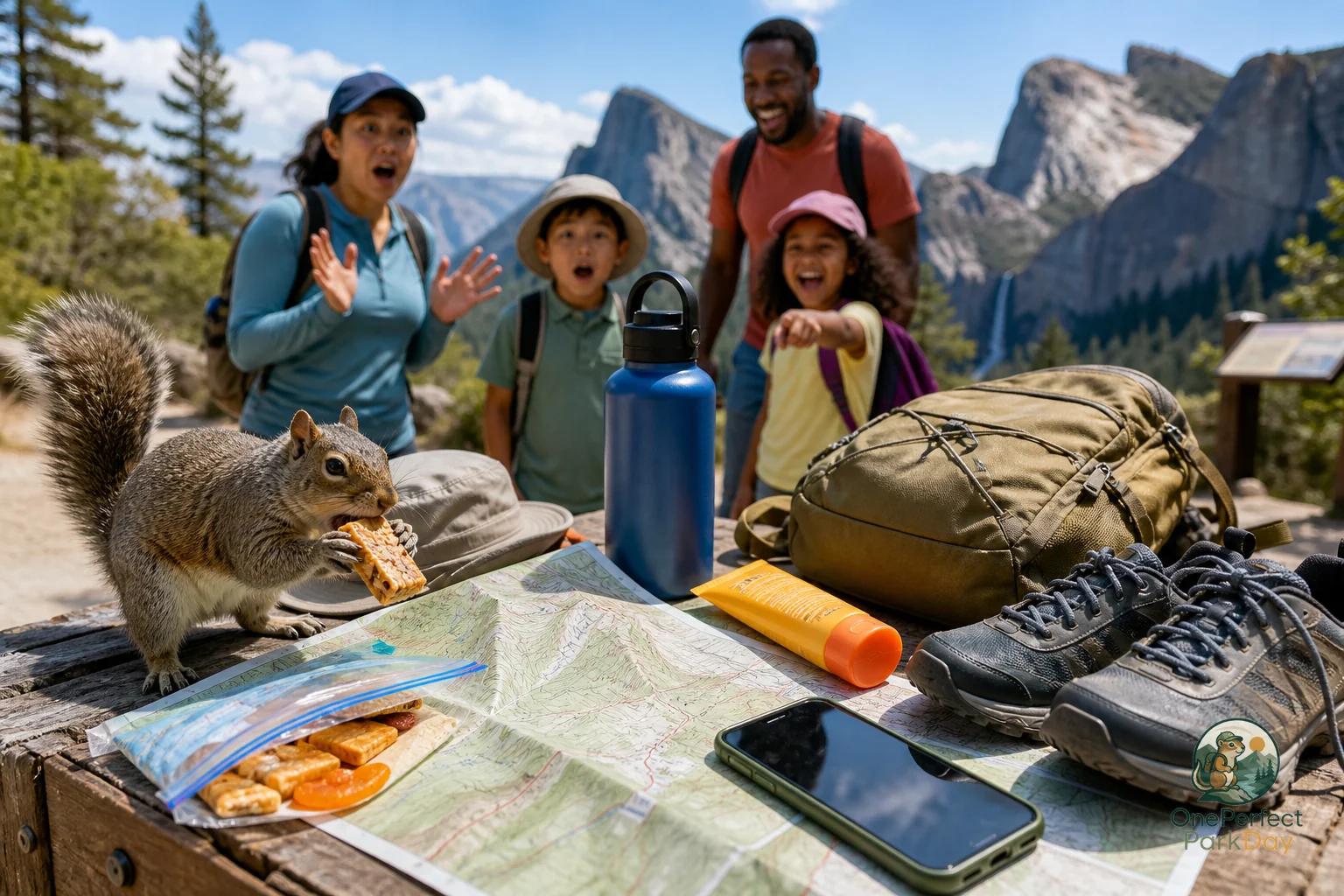
A simple one-day national park packing checklist
Use this as a starting point, then adjust for the specific park, season, weather, route, group, and current alerts.
Keep handy in the daypack
- Water for the time you will actually be away from the car
- Snacks with salt and calories
- Sun protection: sunglasses, hat, sunscreen, lip balm
- Light layer or rain layer, depending on the forecast and exposure
- Map, downloaded route, or offline notes
- Phone and backup power if you will depend on it
- Any needed medication
- Small first aid basics and blister care
- Tissues or toilet paper and hand sanitizer
- Small trash bag
- Park pass, ID, reservation proof, or permit if required for your plan
Consider leaving in the car
- Extra water for refills
- Extra layers
- Backup shoes or socks
- Larger first aid supplies
- Cooler or lunch supplies
- Extra kid clothes
- Towels or cleanup wipes
- A dry bag or bin for muddy, sandy, or wet items
Do not forget the boring comfort items
- A real lunch plan
- A backup lunch plan
- Easy snacks for the ride out
- A place to put trash
- A plan for the first bathroom stop
- A planned break before everyone gets cranky
Boring items save more national park days than fancy gear does.
A realistic finish
You do not need to pack like you are crossing a continent to spend one good day in a US National Park.
You need a clear plan, a realistic walking estimate, a weather check, and a bag that supports the day instead of weighing it down.
Start with the three decisions: where you are going, how much you are walking, and what the exposure will feel like. Then pack what helps with those choices.
If the plan changes, the list changes. That is not messy. That is how a sane park day works.
For help shaping the whole day before the bag comes out, use One Perfect Park Day to build a calmer one-day national park plan.
Practical note
This article is general US National Park planning information. Park rules, hours, weather, trail conditions, road closures, shuttle service, accessibility procedures, permits, and crowd levels can change. Check the official National Park Service site or app before relying on any plan.