
Planning / 6 min read
How early to arrive for one day in a US national park
A practical guide to choosing your arrival time for one day in a US national park, with timing factors, common mistakes, questions to ask, and a simple checklist.
July 24, 2026
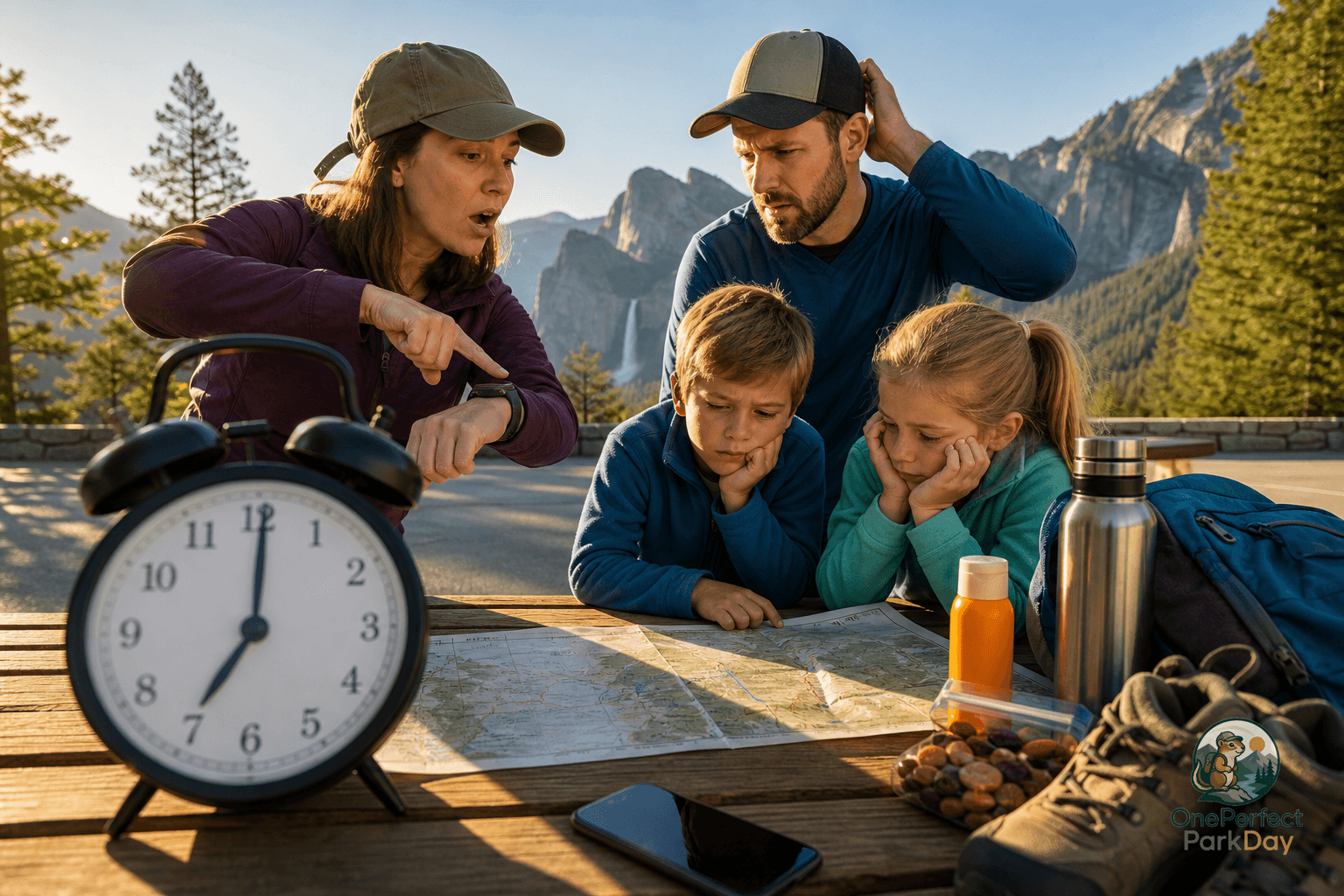
Arriving early at a US national park is not about proving you are more serious than everyone else. It is about buying options before the day starts making decisions for you.
For a one day visit, arrival time affects parking, shuttle timing, heat, trail comfort, photo stops, meal breaks, and how much patience your group still has by lunch. Start too late and the whole day can feel like you are catching up. Start too early with the wrong group and you may burn through everyone’s goodwill before the first overlook.
The short answer
For most one day US national park visits, aim to be inside the park or at your first major decision point 30 to 60 minutes before your first important stop needs to happen.
That may mean reaching the entrance area near sunrise at very popular parks, during peak season, or when your first priority depends on limited parking or shuttle access. At quieter parks, shoulder seasons, or drive heavy itineraries, midmorning can still work.
Do not copy a random 5 a.m. plan unless it fits your group. The better question is not how early can we arrive? It is what part of this day gets worse if we arrive late?
If your first priority is a famous trailhead, a small parking lot, a timed entry window, or a shuttle connection, arrive earlier. If your first priority is a scenic drive with flexible pullouts, you may have more room.
What changes your arrival time
A smart arrival plan depends on the park and the kind of day you are trying to have.
First, look at the entrance itself. Some parks have long drives from nearby towns before you even reach the gate. If you say you are arriving at 8 a.m. but that means leaving your hotel at 8, you are not arriving at 8. You are starting the approach.
Second, look at your first stop. A big visitor center, popular trailhead, scenic overlook, or shuttle hub can all have different pressure points. The entrance sign is not the finish line. Your useful arrival time is when you are parked, packed, bathroom done, and ready to move.
Third, check current operating rules before you build the day. Some parks use timed entry, reservations, seasonal road changes, shuttle systems, construction detours, or temporary closures. Do not rely on last year’s blog post, a friend’s old trip, or a screenshot from social media. Check current National Park Service alerts and the park’s operating pages before you commit.
Fourth, think about weather. In summer, earlier often means cooler hiking and fewer afternoon storm problems. In colder seasons, arriving too early can mean icy roads, limited visibility, or a first stop that is not pleasant yet. For a deeper planning pass, read How to plan a US national park day around changing weather.
Fifth, be honest about your group. Adults who enjoy sunrise starts are one thing. Kids, grandparents, nervous drivers, and people adjusting to altitude are another. A plan that looks efficient on paper can be miserable if everyone is hungry and quiet by 9:30 a.m.
What people get wrong
The biggest mistake is treating early arrival as a personality trait instead of a planning tool.
Some visitors wake everyone up brutally early, then waste the advantage by wandering without priorities. Others sleep in, assume the park will absorb the delay, and spend the best part of the morning circling for parking or renegotiating the plan.
Another common mistake is making the first stop too ambitious. If your opening move is a long hike, no breakfast, and no backup bathroom plan, the day has a narrow path to success. A short trail, overlook loop, or visitor center stop can be a smarter first move for families and mixed energy groups.
People also underestimate the time between car seat and trail. Sunscreen, layers, water bottles, snacks, restrooms, maps, and one missing hat can easily turn a 10 minute stop into 30 minutes. Build that into the morning instead of pretending your group teleports.
The final mistake is arriving early but packing the schedule too tightly. Early does not mean every hour should be filled. It means you have more choices when something changes.
Questions to ask before you choose a time
Before setting an alarm, answer these questions:
- What is our first true priority: a trail, overlook, scenic drive, visitor center, shuttle, or picnic spot?
- Does that priority depend on limited parking, timed access, or a shuttle schedule?
- How long is the drive from our lodging to the park entrance?
- How long is the drive from the entrance to our first stop?
- What time does heat, wind, rain, or afternoon storm risk usually become a problem for our plan?
- Does anyone in our group need a slower breakfast, medication timing, mobility buffer, or extra bathroom stops?
- What will we cut if we arrive 45 minutes later than planned?
That last question is the one many people skip. Every one day itinerary needs a first thing to protect and a first thing to drop. If you have not picked those, your arrival time is just a guess.
For help deciding what deserves protection, use How to choose must-see stops for one national park day.
A simple arrival timing checklist
Use this the night before your park day.
- Check current park alerts, road status, timed entry rules, shuttle details, and weather.
- Pick one first priority stop and one backup first stop.
- Estimate lodging to entrance drive time.
- Estimate entrance to first stop drive time.
- Add 20 to 30 minutes for parking, bathrooms, sunscreen, layers, and water.
- Pack snacks, water, layers, sun protection, and any medication before bed.
- Decide what you will skip if the morning starts late.
- Set a realistic departure time, not just an ideal one.
- Put breakfast into the plan, even if it is simple.
- Recheck conditions in the morning before leaving.
A useful formula:
First priority time minus drive time minus setup buffer equals lodging departure time.
If that result is painful, do not ignore it. Change the first priority, simplify the morning, or accept a later start with a lighter plan.
A realistic closing
Early arrival will not guarantee parking, empty trails, shuttle access, wildlife, clear skies, or a flawless day. National parks are too weather exposed, seasonal, and popular for that kind of promise.
But a thoughtful arrival time can make the day feel less brittle. You get a calmer first choice, more room for delays, and a better chance of enjoying the park instead of negotiating with it all morning.
Plan the start around your first important stop, your actual group, and current park conditions. That is much better than blindly chasing the earliest possible alarm.
Want help turning that into a calmer one day plan? Start with One Perfect Park Day and build around the choices that actually shape your visit.
Practical note
This article is general US National Park planning information. Park rules, hours, weather, trail conditions, road closures, shuttle service, accessibility procedures, permits, and crowd levels can change. Check the official National Park Service site or app before relying on any plan.