
Planning / 7 min read
How much food and water to bring for one day in a US national park
Plan food and water for a one day US national park visit with practical amounts, snack ideas, refill checks, kid considerations, and a simple checklist.
July 21, 2026
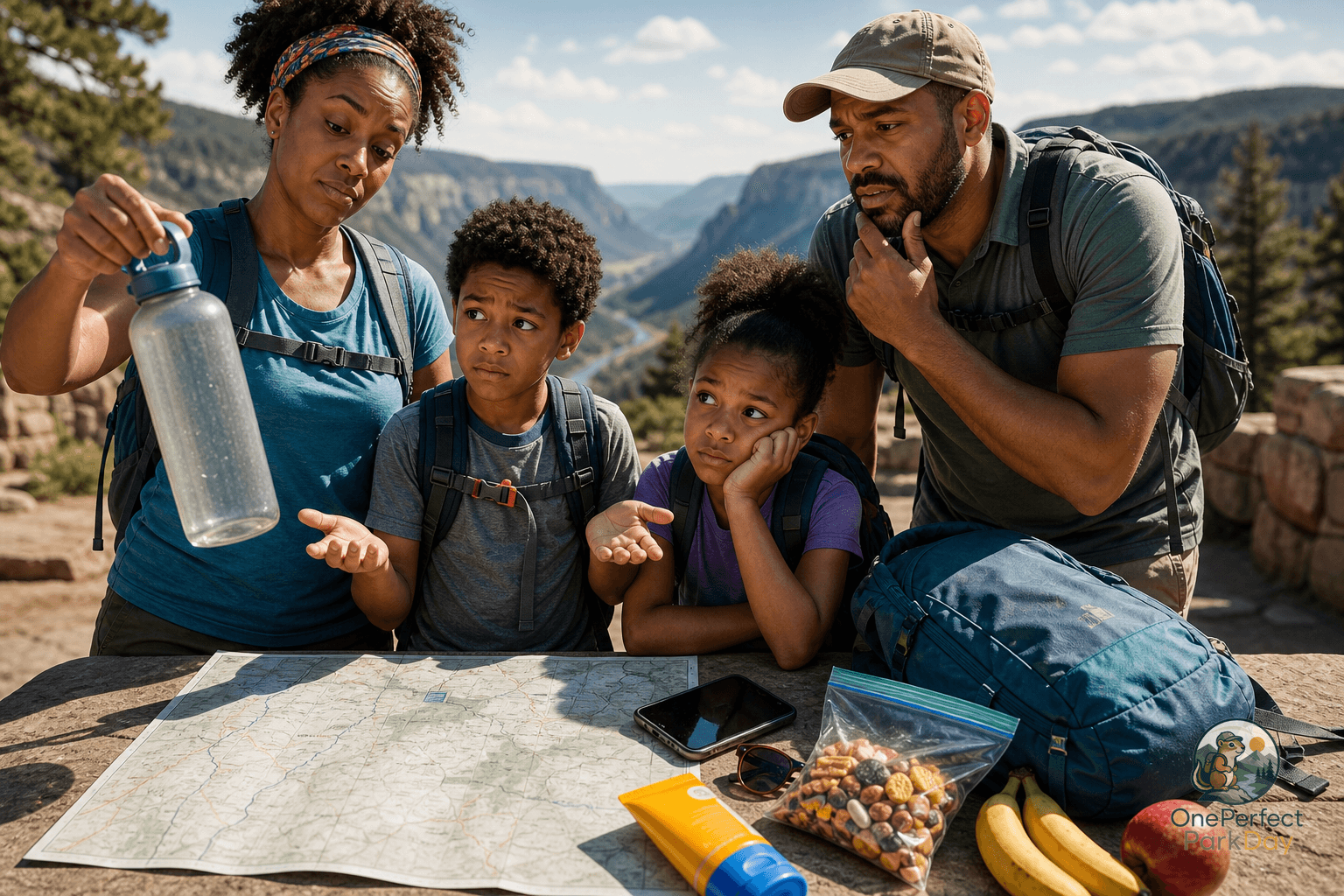
Food and water planning sounds basic until you are three overlooks away from the car, the kids are fading, and the only snack left is a melted granola bar nobody wants.
For a one day US national park visit, you are not packing for an expedition, but you are also not running errands around town. Distances are bigger, services can be spread out, weather can swing fast, and a short walk can feel very different in heat, sun, wind, or elevation.
The direct answer
For many casual one day visits, start with at least 2 liters of water per adult for a light day of viewpoints, visitor centers, and short walks. Bring more if the day includes heat, exposed trails, higher elevation, longer hikes, limited refill stops, or anyone in your group who drinks a lot.
For food, pack one real lunch or meal replacement per person, plus two to three snack moments. That does not mean three candy bars. Build the snacks around salt, protein, and steady energy: trail mix, jerky, cheese sticks in a small cooler, nut butter packets, crackers, fruit, bars people actually like, and something salty for hot days.
For kids, assume snacks are not optional. A hungry child in a national park does not become more reasonable because the view is famous.
This is a planning baseline, not a safety guarantee. Check current park alerts, weather, refill availability, trail conditions, and food storage rules before you go.
Factors that change the amount
Heat is the obvious one. A mild morning can turn into a rough afternoon fast, especially in desert parks, canyon country, open meadows, beaches, and exposed alpine areas. If shade is limited, your water plan needs margin.
Elevation and dry air are sneakier. You may not feel sweaty, but you can still be losing fluid. Parks with high overlooks, mountain roads, or long stair sections can make a short walk feel less casual than it looked on the map.
Distance from the car matters too. If your cooler and extra bottles are in the trunk, that only helps when your plan loops back to the trunk. A scenic drive day can work well with a car-based refill stash. A shuttle day or longer out-and-back walk needs more carried with you.
Refill certainty is another big one. Do not build the day around a water fountain you vaguely remember seeing in a photo. Look at current park information before you leave lodging, and treat seasonal closures, maintenance, winterization, or remote trailheads as real possibilities.
Group pace changes everything. Adults may be fine with a late lunch. Kids, grandparents, pregnant visitors, people with medical needs, and anyone who gets cranky when underfed need a more conservative plan.
Common mistakes that make the day harder
The first mistake is packing only sweet snacks. Sugar is fine, but a bag full of sweet bars can get old by the second stop. Add salt and protein so people are not bouncing between wired and wiped out.
The second mistake is leaving most of the water in the car. A backup stash in the car is smart. Depending on it while you are a mile or two away is not.
The third mistake is counting on food service. Some US national parks have multiple dining options. Others have limited hours, seasonal service, long lines, or nothing near the part of the park you are visiting. Even when food is available, your group may be hungry before you get there.
The fourth mistake is packing a lunch that needs a kitchen. If it requires assembly, utensils, perfect temperature control, and a clean picnic table, it may be too fussy for the middle of a park day. Simple wins: sandwiches, wraps, hummus packs, hard boiled eggs in a cooler, crackers, fruit, and easy hand wipes.
The fifth mistake is forgetting food storage and trash. In some parks, wildlife rules are strict for a reason. Keep food secured, do not feed animals, and pack out wrappers, peels, and crumbs where required.
Questions to check before you pack
Ask these before you zip the daypack:
- How many hours will we be away from lodging or the car?
- Are we doing mostly scenic stops, short hikes, or one longer trail?
- What is the hottest part of the day expected to feel like?
- Will we be in sun, wind, elevation, or dry air for long stretches?
- Where are the reliable refill points, if any, according to current park information?
- Where will we probably be at lunch?
- Is anyone in the group picky, young, older, pregnant, nursing, diabetic, or prone to headaches?
- Are there food storage rules for the park or area we are visiting?
- What snack would still sound good if everyone is tired?
If you cannot answer the refill question clearly, carry more water than you think you need.
A simple one day food and water checklist
Use this as a starting point and adjust for the park, season, trail plan, and your group.
- Refillable water bottles or hydration bladders for each person
- Extra water in the car if your route returns to it during the day
- One real lunch or meal replacement per person
- Two to three snack moments per person
- At least one salty snack
- At least one protein or fat-based snack
- A kid-friendly backup snack that is not part of the main lunch
- Electrolyte packets or tablets if heat, sweat, or long walks are likely
- Small cooler or insulated lunch bag if bringing cheese, meat, eggs, or other temperature-sensitive food
- Hand wipes or sanitizer
- Napkins or a small bandana
- Trash bag or zip bag for wrappers and food waste
- Any infant, toddler, medical, or allergy-specific food needs
- Food storage plan that matches current park rules
A small daypack should carry what you need until the next reliable break. The car can carry the comfort extras: backup water, a cooler, spare snacks, and the food you do not want to haul to every overlook.
A realistic way to think about it
You are trying to prevent the boring problems: thirst, headaches, cranky kids, a late lunch, and the sad moment when everyone is staring at a beautiful view but thinking about pretzels.
Pack enough that your day has breathing room. Keep the food easy. Keep water reachable. Check current park conditions before you go. Then adapt as the day unfolds, because national park days rarely follow the exact plan on paper.
If you want help turning food, water, timing, stops, and breaks into a calmer one day plan, start with One Perfect Park Day.
Practical note
This article is general US National Park planning information. Park rules, hours, weather, trail conditions, road closures, shuttle service, accessibility procedures, permits, and crowd levels can change. Check the official National Park Service site or app before relying on any plan.