
Theme Parks / 7 min read
How to make a flexible one-day theme park itinerary
Build a flexible one-day theme park itinerary with must-do priorities, smart breaks, backup plans, and room for real-life delays.
July 20, 2026
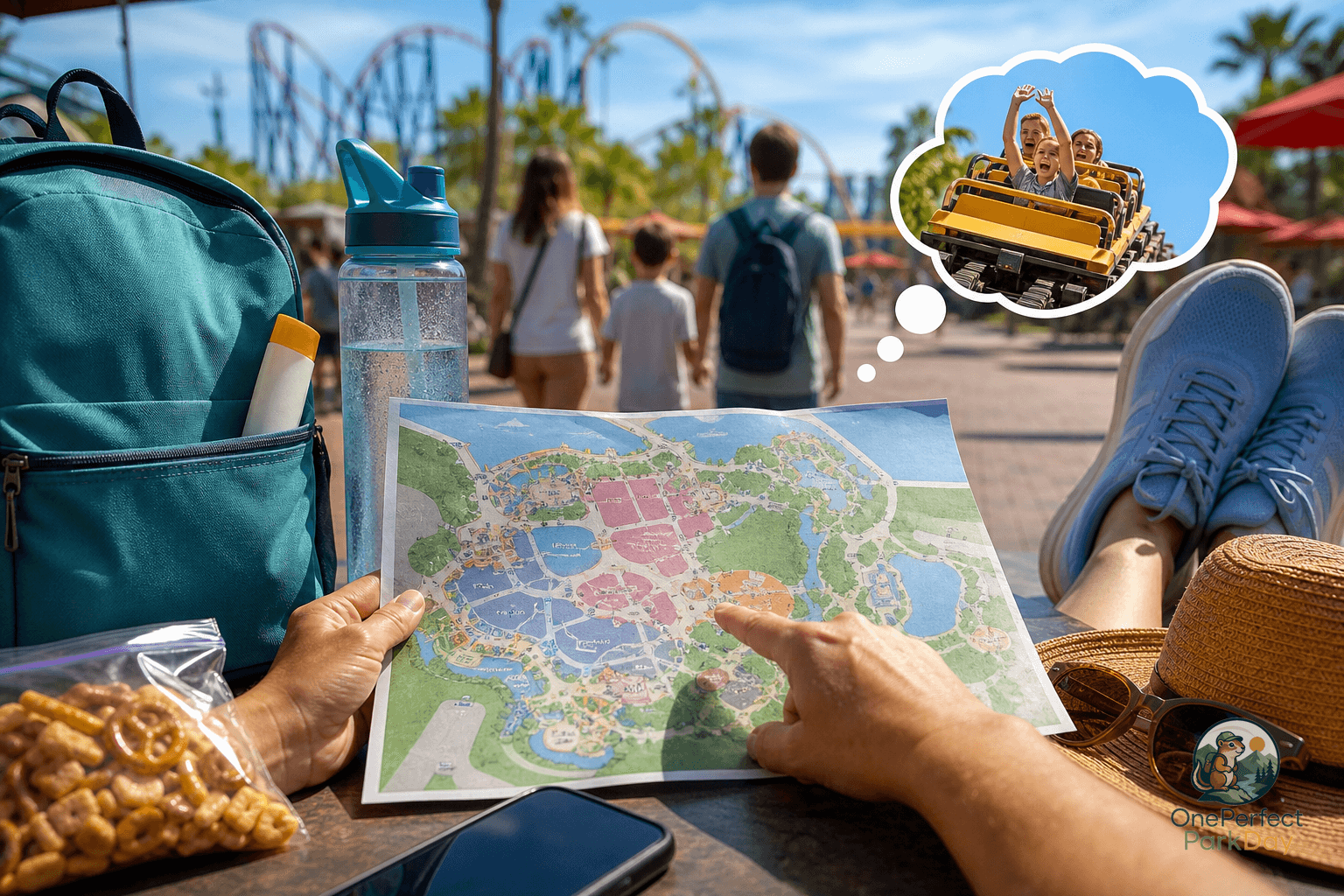
A one-day theme park itinerary can help a lot. It can also ruin the day if you treat it like a military operation with churros.
The goal is not to control every minute. Parks are too busy, too weather dependent, and too full of tiny human needs for that. The goal is to decide what matters before the day starts, then build a plan loose enough to survive reality.
The plain English answer
A flexible one-day theme park itinerary should have three parts:
- A strong opening plan for the first 60 to 120 minutes.
- A short must-do list that everyone agrees on.
- A recovery plan for food, rest, weather, and skipped attractions.
That is enough structure to keep you from wandering in circles. It is also loose enough to adjust when someone gets tired, a ride is down, the sky opens up, or lunch takes longer than expected.
Do not plan every 15 minutes. That looks organized at home and feels fragile in the park. Instead, plan in blocks: arrival, morning priorities, lunch and reset, afternoon flexible time, evening favorites or exit.
Start with the shape of the day
Before choosing rides, decide what kind of day you are actually trying to have.
Some groups want the biggest rides. Some want character photos, shows, snacks, and atmosphere. Families with young kids may need a slower pace than adults who can walk all day. Multi-generation groups often need more seating, shade, and bathroom flexibility than the most excited planner wants to admit.
A useful one-day itinerary usually looks like this:
- Arrival block: parking, security, entry, first attraction choice.
- Morning priority block: one to three important rides or experiences.
- Midday reset: lunch, indoor time, shade, stroller break, hotel break if realistic.
- Afternoon flex block: lower pressure attractions, shows, play areas, snacks, shopping.
- Evening decision: repeat favorites, catch nighttime entertainment, or leave before everyone melts down.
That last part matters. Leaving before the group is miserable is not failure. It is strategy.
Context factors that change the plan
A good itinerary depends on the park and your group. These are the factors that should shape your day:
Arrival timing. Getting there near opening can make the first part of the day smoother, especially if your group can move quickly. But early arrival only helps if everyone is fed, dressed, and ready. A tired family sprinting through the entrance is not winning.
Park layout. Zigzagging burns energy. Group attractions by area when you can. Crossing the park for one ride may be worth it for a true must-do, but doing that all day turns the itinerary into a walking punishment.
Height limits and ride tolerance. Check who can and wants to ride before the day. Nothing slows momentum like discovering at the entrance that half the group is too short, too nervous, or suddenly uninterested.
Weather. Heat, storms, wind, and cold change the pace. Build in indoor options, shade, water breaks, and a rain backup. Weather does not have to wreck the day, but pretending it will not happen is how people end up cranky and soaked.
Meals. Food takes time. If your plan assumes lunch is a five minute event, the plan is lying to you. Decide whether you want quick snacks, mobile ordering where available, table service, or a packed food strategy that follows the park's current rules.
Bag strategy. Carrying too much makes the day slower. Carrying too little makes every small problem expensive or annoying. For a lighter setup, see What to pack in a small theme park backpack.
Common mistakes that make the day harder
The biggest mistake is making everything a priority. If the list has 18 must-do attractions, it is not a must-do list. It is a disappointment generator.
Another common mistake is building the itinerary around perfect conditions. No delays, no bathroom lines, no tired kids, no ride downtime, no weather, no meal indecision. That version of the day almost never shows up.
People also underestimate walking. A ride across the park may show a reasonable wait, but the real cost includes walking there, parking the stroller, finding the entrance, regrouping afterward, and deciding what comes next.
And watch out for the late afternoon crash. Many groups plan the morning carefully and then act surprised when everyone fades around 2 or 3 p.m. That is not bad luck. That is normal. Put the reset in the plan before the day demands it.
Questions to check before you finalize it
Ask these before you lock in your plan:
- What are the top three experiences we would be sad to miss?
- Which rides or shows are nice to do, but not worth fighting the whole day for?
- Who needs naps, shade, slower walking, or quieter breaks?
- What is our lunch plan if the first choice is packed?
- What indoor options work if it rains or gets brutally hot?
- Are we trying to stay until close, or would a strong shorter day be better?
- What will we skip if the park feels busier than expected?
That last question saves the day. You are not deciding what to skip because you are pessimistic. You are deciding because a real plan needs an escape valve.
A practical one-day itinerary checklist
Use this as a simple planning pass:
- Pick one arrival target, then add buffer time for parking, entry, and bathrooms.
- Choose three must-do attractions or experiences for the whole group.
- Choose two backup attractions in the same general areas.
- Group your morning plan by location, not just popularity.
- Schedule a midday reset before everyone is desperate for one.
- Decide whether lunch is quick service, snacks, packed food, or a reserved meal if available.
- Identify indoor or shaded options for heat and rain.
- Pack only what your group will actually use.
- Set a realistic evening plan: final ride, show, snack, shopping, or exit.
- Agree that skipping something is allowed.
If you are planning with kids, tell them the plan in simple terms: first we do our top ride, then a snack, then another fun thing, then a break. Kids usually handle changes better when the day has a rhythm, not a secret adult spreadsheet.
Keep the closing plan realistic
The best one-day park itineraries are calm on purpose. They do not pretend you can do everything. They help you spend your best energy on the things your group cares about most.
Make the plan, then let the park day breathe. If a ride is unavailable, move to the backup. If the group is hot, pause sooner. If everyone is having a great time in one area, do not leave just because a spreadsheet said to.
A flexible itinerary is not a weaker plan. It is the plan that still works after the first surprise.
Want a calmer way to sketch your park day before you go? Visit One Perfect Park Day and build a simple plan around your priorities, pace, and backup options.
Practical note
This article is general theme park planning information. Park rules, hours, weather, ride availability, accessibility procedures, and crowd levels can change. Check the official park app or website before relying on any plan.