
Planning / 6 min read
How to adapt a one-day national park itinerary without chasing every stop
A practical guide to adapting a one-day US national park itinerary to your group, weather, timing, energy, meals, and backup options without trying to do everything.
August 4, 2026
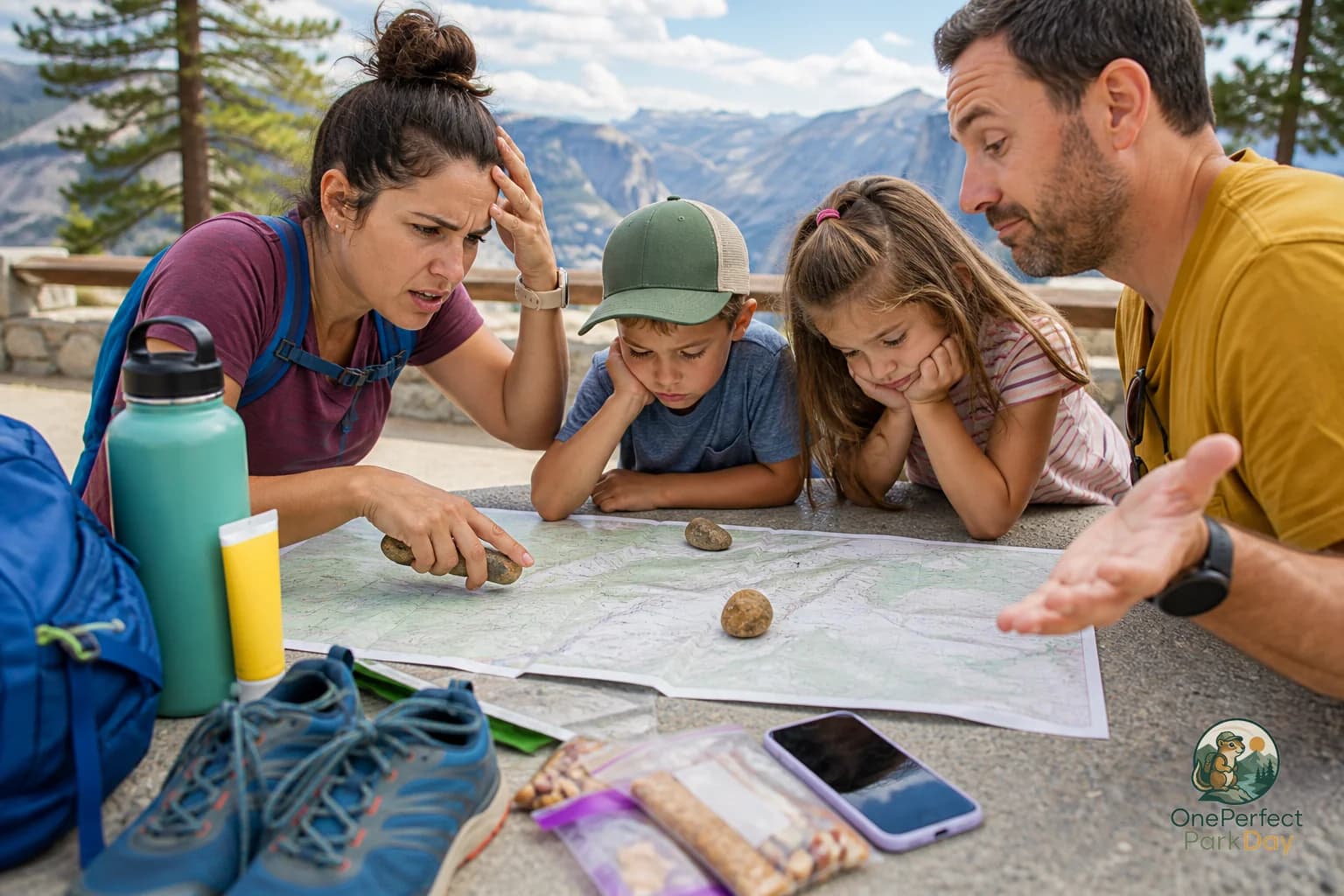
A one-day national park itinerary can be helpful. It can also turn into a weird little prison if you treat every stop like a required assignment.
That is where many casual visitors get into trouble. They find a route online, save twelve stops, assume the timing will work, then spend the day sprinting between parking lots instead of actually enjoying the park.
Use an itinerary as a starting point. Then adjust it around the park you are visiting, your group, current National Park Service alerts, weather, road conditions, shuttle rules, and how everyone is doing in real life.
The direct answer
The best way to adapt a one-day national park itinerary is to split it into three layers:
- Your must do stops
- Your nice if it works stops
- Your easy cuts
Protect the first layer. Be flexible with the second. Drop the third without guilt.
For most one-day visitors, the goal is not to complete the internet's version of the park. The goal is to have a smoother day with fewer bad tradeoffs: less backtracking, fewer rushed meals, fewer late starts on trails, and fewer arguments in a crowded parking area.
If you only make one change, make this one: decide what you are willing to skip before the day starts. Future you will be less dramatic in the moment.
What changes an itinerary fastest
A national park day rarely falls apart because of one huge decision. It usually gets bent out of shape by a bunch of small realities.
Arrival time matters. A plan that works at 7:30 a.m. may feel completely different at 10:45 a.m., especially in parks with limited parking near popular trailheads or overlooks. If you are already starting later than planned, do not pretend the original schedule is still alive. Trim it.
Weather matters too. Heat, storms, wind, smoke, ice, and poor visibility can change what feels worth doing. A scenic overlook may be a quick win in light rain. A longer exposed trail may be a bad bargain in afternoon heat. For more help with that kind of pivot, use How to plan a US national park day around changing weather.
Group energy is the quiet one. Adults overestimate it. Kids hide it until they do not. Grandparents may be fine on flat paths but not on steep stairs. Someone may sleep badly, forget breakfast, or get carsick on a winding road. Build the day for the actual people in the car, not the fantasy group that exists when everyone is packing the night before.
Access rules matter. Some parks use timed entry, shuttle systems, seasonal road closures, or limited services. Always check current NPS information for the park before you commit to a route. An old itinerary can still have good ideas, but stale access details can waste a lot of time.
What people get wrong
The biggest mistake is treating a one-day itinerary like a checklist.
That mindset creates dumb pressure. You stop at a viewpoint, take a rushed photo, jump back in the car, and call it progress. Technically you saw more. Practically, you experienced less.
Another mistake is putting the hardest thing in the middle of the day without thinking about heat, food, or energy. A short trail can feel twice as long when everyone is hungry and the sun is high. If a hike is your main priority, consider placing it when your group is freshest and conditions are more comfortable.
People also forget transition time. Parking, restroom stops, shuttle waits, walking from the lot, changing layers, filling bottles, and getting kids out of the car all count. They are not failures. They are the day.
And then there is the classic overcorrection: cutting all breaks to save time. That usually backfires. A ten minute snack stop can protect the next two hours. If your group tends to fade, read How to plan breaks during one day in a US national park before you build the schedule.
Questions to check before you follow the plan
Before you use any one-day national park itinerary, run it through these questions:
- What is the one stop we would be most disappointed to miss?
- What stop only works if parking, shuttles, weather, and energy cooperate?
- What can we cut without damaging the day?
- Where are the realistic restroom and water refill points?
- When will we eat something more useful than trail mix dust?
- Is there a point where turning around makes the day better, not worse?
- Are we driving the route in a sensible order, or zigzagging because a list told us to?
- Does the plan still work if we arrive 60 to 90 minutes later than expected?
That last question is brutal, which is why it is useful. If the whole day collapses after one late start, the plan is too fragile.
A practical way to rebuild the day
Take the itinerary you found or drafted and mark every stop with one of three labels.
Must do: This is the reason you came, or the most important experience for your group. Limit this category. If everything is a must do, nothing is.
Nice if it works: These are good stops that fit naturally if timing is kind. Scenic pullouts, short walks, visitor center time, and extra overlooks often belong here.
Easy cut: These are the first things to drop when the day gets tight. Not because they are bad, but because they cost time, energy, or backtracking you may want for something better.
Then build your route around the must do stops, not around maximum coverage. Put the highest value experience where it has the best chance of working. Add nearby extras only if they do not make the day brittle.
A good one-day plan has some slack in it. Not empty hours, just breathing room. Enough time to find parking, eat lunch, stare at the view, change a wet sock, or let a kid watch a chipmunk from a safe distance instead of dragging everyone to the next scheduled overlook.
Simple itinerary adaptation checklist
Use this the night before, then again in the morning.
- Check current NPS alerts, road status, shuttle details, timed entry rules, and weather
- Pick one to three true priorities for the day
- Label the rest as nice if it works or easy cut
- Put harder walks earlier if heat, storms, or fatigue could be an issue
- Choose a lunch plan before everyone is hungry
- Identify restroom and water refill options where available
- Set a rough turnaround time for any longer walk or drive segment
- Keep one easier backup stop in mind
- Cut backtracking unless the stop is genuinely worth it
- Give yourself permission to stop improving the plan and enjoy the park
A realistic closing
A one-day national park itinerary should reduce decisions, not create a race.
You may not see every famous stop. You may change the order. You may skip something that looked essential from your couch and feel completely fine about it in the park. That is not a failed day. That is a plan doing its job.
Pick the few things that matter most, protect your group's energy, and let the rest stay flexible.
If you want help turning a crowded list of park ideas into a calmer one-day plan, start with One Perfect Park Day at https://oneperfectparkday.com/?utm_source=mdx.
Practical note
This article is general US National Park planning information. Park rules, hours, weather, trail conditions, road closures, shuttle service, accessibility procedures, permits, and crowd levels can change. Check the official National Park Service site or app before relying on any plan.