
Planning / 7 min read
How to balance scenic drives and short hikes in a US national park
Plan one US national park day that mixes scenic drives, short hikes, overlooks, meals, and rest without turning the day into a rushed checklist.
July 28, 2026
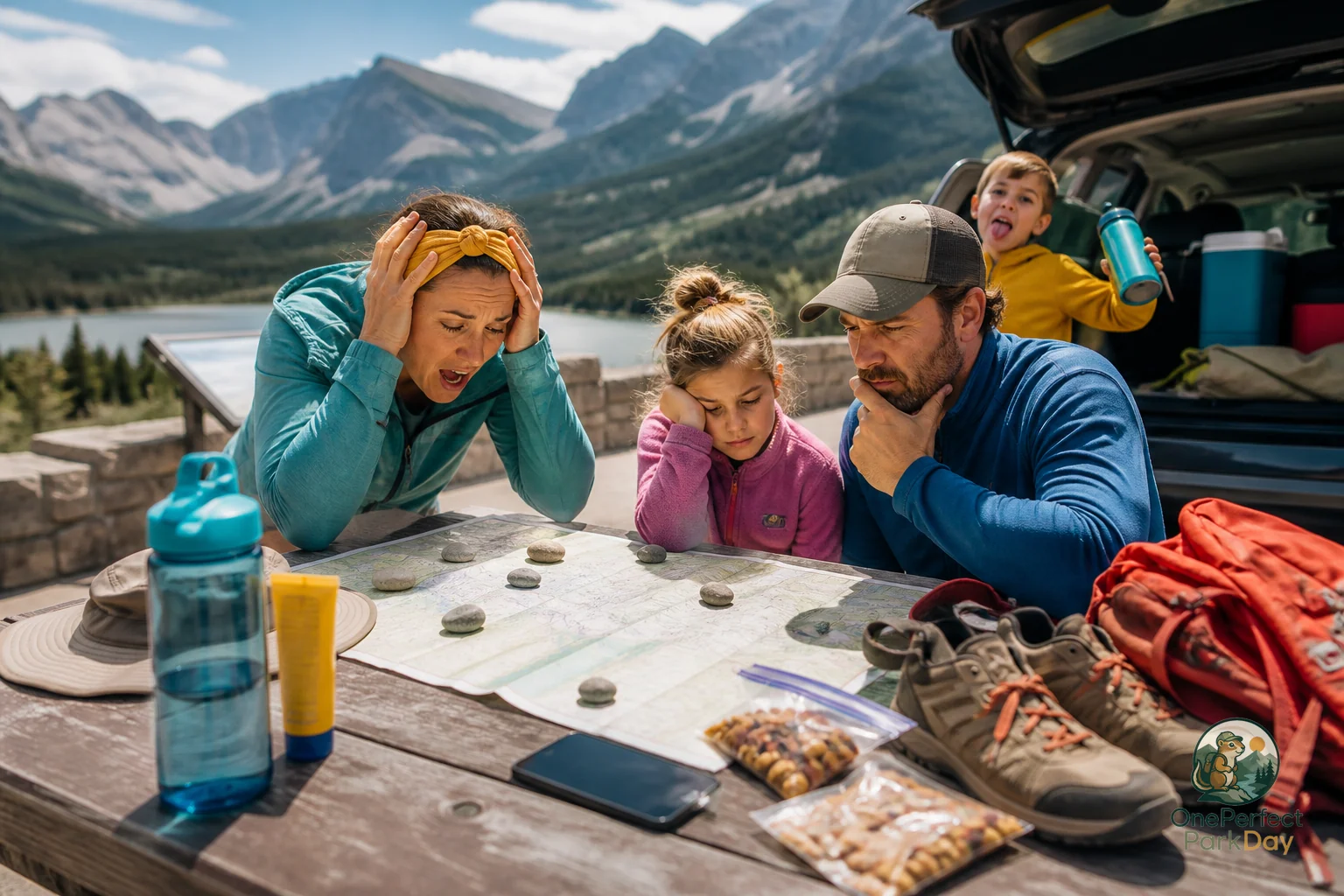
Most US National Park days get messy for one simple reason: people try to do two different trips at once. They want the big scenic drive, the famous overlook, the short trail, the picnic spot, the visitor center, the sunset view, and maybe one more hike because it looks close on the map.
That can work. It just needs editing.
The short answer
For one day in a US National Park, plan around one anchor hike or walk, one main scenic drive segment, and two to four easy stops. Treat everything else as optional.
That sounds almost too simple, but it protects the day from the classic trap: spending the morning jumping in and out of the car, then realizing the hike everyone cared about now starts during the hottest, busiest, or crankiest part of the day.
A good balance usually looks like this:
- Start with the stop that has the biggest parking, heat, or energy risk.
- Add a scenic drive section before or after it.
- Choose short walks that are truly short for your group.
- Leave one open block for weather, crowds, lunch, or a surprise view.
If you already know your must see list is too long, use this with the sorting method in How to choose must-see stops for one national park day.
What changes the right balance
The right mix depends less on ambition and more on friction. A two mile trail can feel easy in cool weather with shade and a rested group. The same trail can feel like a bad idea after a long drive, limited sleep, full sun, and a kid who already finished the good snacks.
Think through these factors before you decide how much hiking belongs in the day.
Drive distances inside the park. Some park maps make scenic routes look compact. In reality, slow roads, pullouts, wildlife slowdowns, construction, and full parking areas can stretch the day. A scenic drive is not just mileage. It is time outside the car, bathroom stops, photo stops, and the mental load of deciding where to pull over.
Trail effort, not just trail length. Short does not always mean easy. Elevation, exposure, footing, stairs, sand, altitude, and heat can turn a short hike into the main event. Read recent conditions from the park before you treat a trail as a quick add on.
Group energy. Adults often plan the day based on what they can physically do. Families and mixed groups need to plan around the slowest recovery time. If someone needs a real lunch break, shade, or fewer transitions, that should shape the route.
Weather timing. In summer, exposed walks often work better earlier. In storm prone areas, higher elevation viewpoints or open trails may be better earlier too, depending on current forecasts and park alerts.
Parking and shuttle pressure. Some trailheads and viewpoints are harder to access later in the day. Do not assume you can simply circle back. Check current National Park Service alerts, road updates, and operating rules before you commit.
A simple way to build the day
Start with three buckets.
Bucket one is your anchor: the one hike, boardwalk, viewpoint walk, or scenic area you would be disappointed to miss.
Bucket two is your drive: the road section that gives you the strongest scenery for the least planning drama.
Bucket three is your flex list: small stops that are nice if the day is going well and easy to cut if it is not.
For example, your plan might be:
- Morning: anchor short hike while the group is fresh.
- Late morning: scenic drive with two overlooks.
- Midday: lunch, bathrooms, water refill, shade, or visitor center.
- Afternoon: one easy walk or viewpoint.
- Late day: final scenic stop if weather and energy cooperate.
That is not a lazy day. It is a day with a spine.
The drive keeps the group moving through the park. The hike gives the day texture. The easy stops make it feel like you saw more than one thing. The open space keeps the plan from snapping when reality shows up.
Common mistakes
Counting every pullout as five minutes. Almost no stop is five minutes once you park, gather people, take photos, check the view, answer bathroom questions, and get everyone back in the car.
Stacking short hikes back to back. Three short hikes can feel harder than one moderate hike because each one has a restart cost. Shoes, packs, sunscreen, water, navigation, and motivation all reset.
Driving past the best light. If a scenic drive is a major reason you came, do not bury it during the group’s worst hour. A beautiful road is less fun when everyone is hungry and done talking.
Letting the map bully you. Close together does not always mean easy together. A cluster of nearby stops can still mean full lots, slow roads, exposed trails, and too many decisions.
Saving the anchor hike for later. Sometimes this works. Often it means the hike happens when heat, crowds, weather, or fatigue are worse. If the hike matters most, give it a protected spot.
Treating breaks as wasted time. Breaks are what let the second half of the day happen. If your group tends to fade, read How to plan breaks during one day in a US national park before you overload the route.
Questions to check before you lock the route
Ask these before the day starts, not in the parking lot while everyone is staring at you.
- What is the one stop we would most regret missing?
- Which road section gives us the best scenic payoff?
- Which short hike is actually realistic for our group today?
- Where are the bathrooms, water, shade, or meal options?
- What gets cut first if parking, weather, or energy is worse than expected?
- Is any stop affected by current park alerts, timed entry, road work, closures, or seasonal access?
- Are we planning a day for the group we have, or the group we wish we had?
That last question is rude but useful.
Practical checklist
Use this quick checklist when you are choosing between more driving and more hiking.
- Pick one anchor hike, walk, or viewpoint area.
- Pick one scenic drive segment, not every road in the park.
- Add two to four easy stops that do not require major effort.
- Put the highest friction stop earlier in the day.
- Check current National Park Service alerts and operating rules.
- Confirm bathrooms, water, meals, and shade options.
- Limit backtracking unless the payoff is obvious.
- Keep one open block for weather, parking, fatigue, or a longer than expected stop.
- Decide what you will skip before the day gets stressful.
- Recheck the plan against your group’s real pace.
A realistic way to think about the day
A strong one day US National Park plan is not about doing the maximum. It is about choosing the right mix so the day still feels good at 3 p.m.
Scenic drives are great because they let you cover ground and see big landscapes with less physical effort. Short hikes are great because they make the park feel more personal than a windshield view. The mistake is pretending you can keep adding both without a cost.
Choose the tradeoff on purpose. Give the best hike enough room. Give the scenic drive enough time. Let the smaller stops earn their place.
If you want help shaping a calmer one day park plan, start with One Perfect Park Day: https://oneperfectparkday.com/?utm_source=mdx
Practical note
This article is general US National Park planning information. Park rules, hours, weather, trail conditions, road closures, shuttle service, accessibility procedures, permits, and crowd levels can change. Check the official National Park Service site or app before relying on any plan.