
Planning / 5 min read
How to build a backup plan for one day in a US national park
Build a simple one-day US national park backup plan for closures, heat, full parking, late starts, weather, tired kids, and changed trail conditions.
July 30, 2026
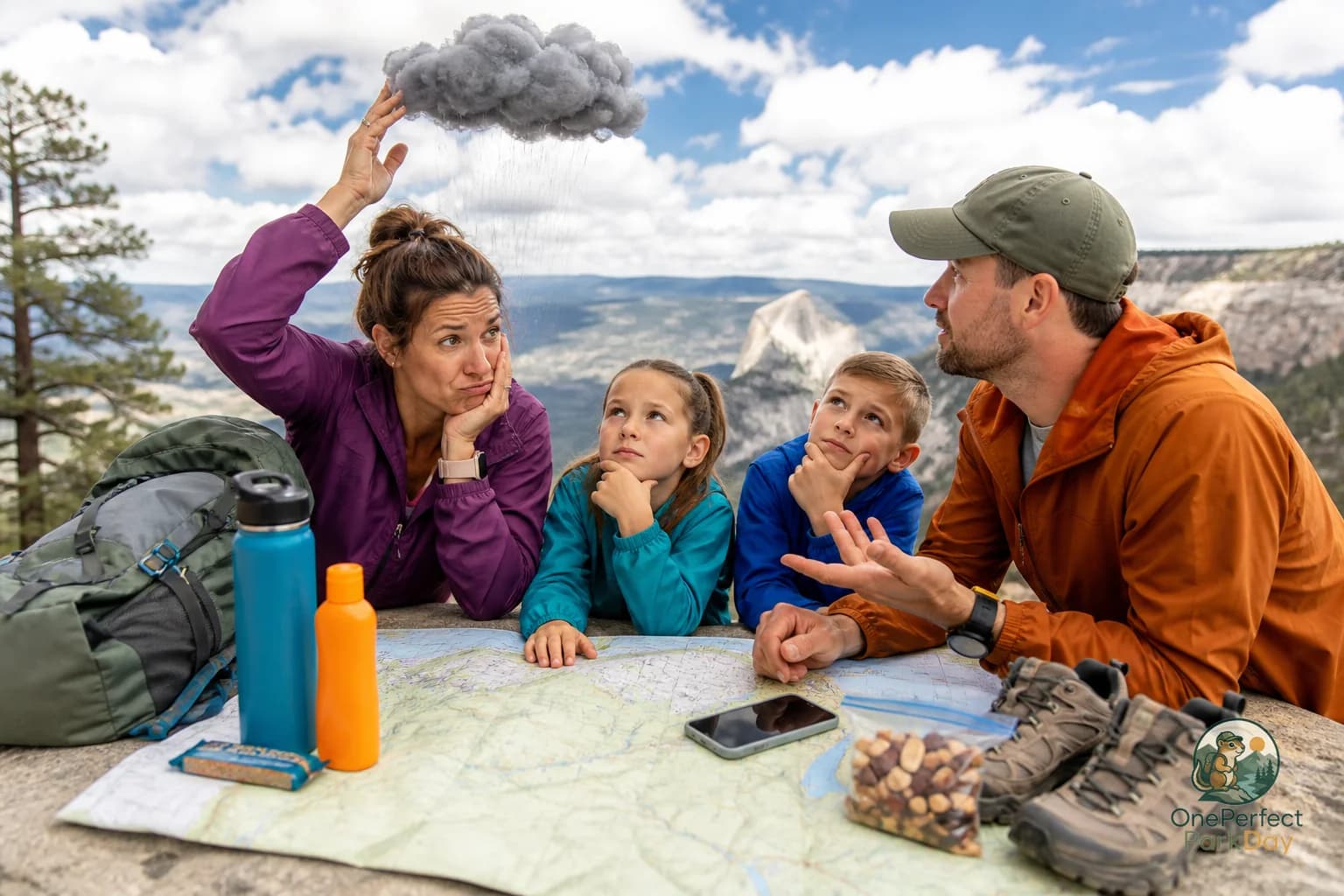
A one-day national park plan should not fall apart the first time a parking lot is full, a trail is hotter than expected, or someone in your group hits the wall at 1 p.m.
The point of a backup plan is not to squeeze in more. It is to protect the day from the most predictable ways it can go sideways.
The short answer
For one day in a US national park, build your backup plan around three choices:
- The one thing you most want to do if conditions cooperate.
- The easier alternative if that thing becomes unrealistic.
- The place you will pause, eat, or reset before making the next decision.
That is enough. You do not need a full second itinerary with ten replacement stops. You need a few calm decisions made before everyone is hungry, overheated, wet, annoyed, or staring at a closed road with no cell service.
A good plan B should handle common national park problems: full lots, changed trail access, afternoon storms, smoky or hazy views, shuttle delays, tired kids, altitude surprises, road construction, and the simple fact that scenic drives take longer when every pullout looks worth stopping for.
Before you go, always check current National Park Service alerts, road conditions, weather, and operating rules for the specific park. Treat any advice here as planning guidance, not a guarantee of access, parking, trail conditions, or safety.
What can knock your day sideways
Most one-day park plans fail for ordinary reasons, not dramatic ones.
You leave later than planned. The first parking area is already stressful. A short trail has more sun exposure than expected. A viewpoint is socked in. The shuttle line looks longer than your patience. A kid refuses another mile. An adult quietly does the same thing, just with better branding.
The trap is building your day as if every stop will work exactly as imagined. National parks do not owe you that. Weather changes, trails need maintenance, wildlife management can affect access, and summer heat can turn a modest plan into a slog.
If weather is your main concern, read How to plan a US national park day around changing weather. If your backup issue is shuttle timing or timed entry, pair this with How to plan a national park day around shuttles and timed entry.
Build your plan B around priority, not panic
Start with your main goal. Not five goals. One.
Maybe it is a famous overlook, a short signature trail, a scenic drive, a ranger desk stop, a sunrise viewpoint, or one family photo in the place everyone has talked about for months.
Then ask: what is the lower effort version of this same day?
If the main hike is too hot, the backup might be a shaded nature trail and two viewpoints. If the popular overlook parking is full, the backup might be a nearby pullout plus a picnic stop. If the scenic road is slower than expected, the backup might be turning around earlier instead of racing to the far end.
The best backups preserve the mood of the day. They do not have to match the original plan. A calmer, shorter, better fed version of the day usually beats a stubborn march through the original checklist.
Use this simple pattern:
- Main plan: the thing you hope works.
- Soft swap: the easier thing nearby.
- Reset stop: the place you can eat, refill, use restrooms, or sit.
- Cut line: the time or condition that tells you to stop pushing.
The cut line matters. Without it, people keep negotiating with a bad plan. Try something like: “If we are not parked by midmorning, we switch to the overlook loop,” or “If thunder is building, we leave the exposed trail and head for a visitor center or lower risk stop.” Adjust those lines to the park, the forecast, and your group.
Common mistakes
The biggest mistake is making the backup plan harder than the original. A second ambitious hike is not a backup. It is a sequel.
Another mistake is treating driving as automatic recovery time. Scenic roads can be wonderful, but they can also include traffic, construction delays, winding grades, limited pullouts, and tired passengers. If your backup is “we will just drive somewhere else,” check the actual distance and whether that road fits the time, weather, and group energy.
People also forget food. A meal plan is part of the backup plan. If the trail gets skipped, where do you eat? If the picnic area is full, do you have snacks in the car? If a restaurant outside the park is the fallback, will everyone be okay waiting that long?
Last mistake: waiting until the day feels bad to admit the plan has changed. Call the audible early. A graceful pivot at 10:30 a.m. feels smart. The same pivot at 3 p.m. after everyone is cooked feels like defeat.
Questions to check before you go
Ask these the night before and again before entering the park if conditions are changing:
- What is our one nonnegotiable priority, if conditions allow?
- What is the closest easier alternative?
- What part of the plan depends on parking, shuttle access, timed entry, or road access?
- What is our heat, storm, smoke, or cold weather limit?
- Where can we refill water or buy food, if available?
- Where is the easiest restroom break near the middle of the day?
- What stop can we skip without wrecking the day?
- What time do we want to be heading out or settling down?
- Does anyone in the group need a shorter walking day than the itinerary assumes?
These questions are not glamorous. They save the day in the boring ways that count.
Simple backup plan checklist
Use this before you leave your lodging or campsite:
- Check current NPS alerts for roads, trails, fires, closures, timed entry, and shuttle rules.
- Check the day’s weather by area of the park, not just the nearest town.
- Choose one main priority.
- Choose one lower effort swap near that priority.
- Mark one restroom and reset stop.
- Pack enough water and snacks for a slower day than planned.
- Save or screenshot maps if cell service may be limited.
- Decide what you will skip first if the day runs long.
- Set a turnaround time for longer walks or drives.
- Tell your group the backup plan before anyone is cranky.
For families or mixed ability groups, make the backup option sound like a real plan, not a consolation prize. “If the canyon trail is too hot, we will do the shaded loop, picnic by the river, and hit the overlook after lunch” lands better than “I guess we will just see what happens.”
A realistic way to end the day
A strong national park day is not the one where you force every planned stop. It is the one where the best parts get protected and the rough parts do not take over.
Your backup plan should feel almost boring: one priority, one easier swap, one reset stop, one clear reason to change course. That little bit of structure gives you room to enjoy the park you actually get that day, not the imaginary version you planned from the couch.
If you want help shaping a calmer one-day plan, start with One Perfect Park Day at oneperfectparkday.com.
Practical note
This article is general US National Park planning information. Park rules, hours, weather, trail conditions, road closures, shuttle service, accessibility procedures, permits, and crowd levels can change. Check the official National Park Service site or app before relying on any plan.