
Planning / 6 min read
How to plan a US national park day around changing weather
Plan a US national park day around changing weather with smarter clothing, timing, route choices, breaks, and backup plans that keep the day flexible.
July 23, 2026
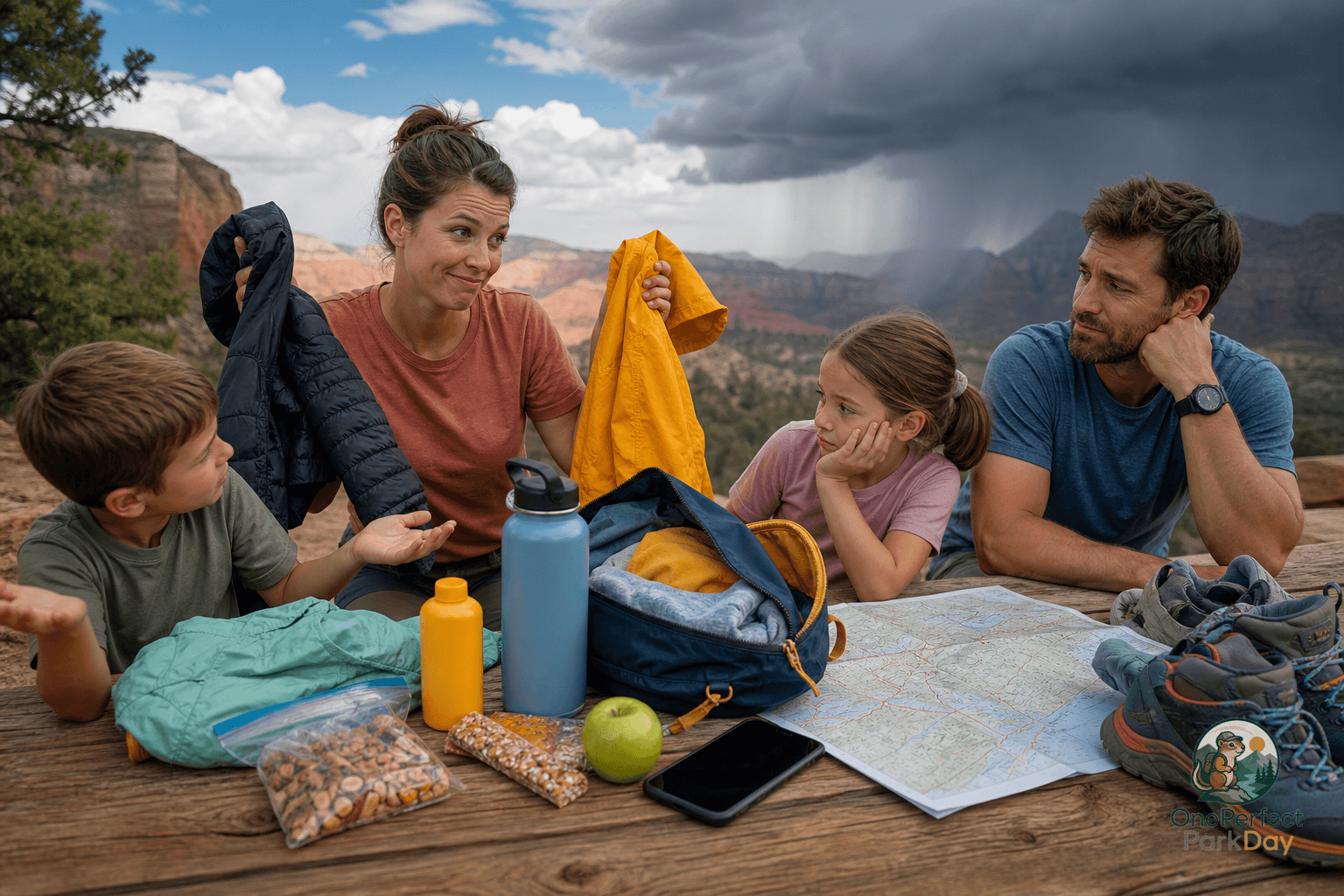
Weather is one of the easiest things to underestimate in a US national park, mostly because it does not feel like a planning decision until it starts messing with the day.
A cool morning can become a hot overlook crawl. A sunny trailhead can turn windy at a pass. A light rain can be fine for adults and miserable for a kid in cotton socks. The goal is not to outsmart the forecast. It is to build a day that can bend without falling apart.
The short answer
Plan your national park day around changing weather by making three choices before you arrive:
- What your group will wear and carry for sun, rain, wind, and temperature swings.
- Which stops are worth doing early if weather gets worse later.
- What shorter backup route you will switch to if the original plan stops sounding fun.
That is the whole game. Not panic packing. Not pretending the forecast is a contract. Just enough preparation that you are not making every decision from a parking lot while someone is cold, hungry, or done with walking.
If you are also sorting out food and drinks, pair this with How much food and water to bring for one day in a US national park. Weather changes how much people drink, how often they need breaks, and how patient everyone feels.
The context factors that actually change the plan
Start with the forecast, but do not stop there. A single temperature number can hide a lot.
Elevation matters. Many parks have scenic drives, overlooks, or trails that climb far above the entrance area. Higher spots can be colder, windier, or more exposed than the town where you slept.
Shade matters. A short walk across open slickrock, dunes, boardwalk, or alpine terrain can feel very different from the same distance in forest. Distance is not the only comfort variable.
Timing matters. Morning can be beautiful and cold. Midday can be bright and draining. Late afternoon can bring wind, storms, or faster temperature drops depending on the park and season.
Group tolerance matters. A solo adult who enjoys drizzle has a different day than a family with a stroller, a grandparent with stiff knees, or kids who melt down when socks get wet. Plan for the least weather tolerant person in the group, not the most optimistic one.
Current conditions matter. Before you commit to a trail, shuttle plan, road section, or backcountry style stop, check current National Park Service alerts and operating information for that specific park. Weather can affect access, services, trail conditions, and road timing.
What people get wrong
The first mistake is dressing for the car, not the park. If you step out of lodging at 7 a.m. and feel fine in shorts, that does not mean you will feel fine in wind, shade, rain, or high elevation later.
The second mistake is saving the most important stop for last. If the weather looks more stable in the morning, do the thing you care about most earlier. That might be the famous overlook, the short signature trail, or the visitor center stop your kids are excited about.
The third mistake is treating rain as the only weather issue. Sun exposure, heat, cold wind, dry air, and sudden temperature changes can drain a group just as fast.
The fourth mistake is packing heavy but not useful. Three extra outfits buried in the trunk are less helpful than one light layer, rain shell, hat, and dry socks that are easy to reach.
The fifth mistake is refusing to downgrade the plan. A shorter scenic loop with two dry viewpoints can beat a longer hike where everyone gets soaked, chilled, and annoyed by mile one.
Questions to check before you leave
Ask these before the day starts, not halfway through it:
- What is the forecast at the park area, not just the nearest city?
- Will we gain or lose meaningful elevation during the day?
- Are our must-see stops exposed, shaded, paved, rocky, muddy, or windy?
- What is our earliest reasonable arrival time if the best weather window is morning?
- Which stop can we cut without ruining the day?
- Where can we take a covered, indoor, or low effort break if needed?
- Does everyone have footwear that still works if the ground is wet or dusty?
- Do we have enough water and salty snacks if the day runs hotter than expected?
- Have we checked current park alerts, road notices, and operating updates?
If you have not picked priorities yet, use How to choose must-see stops for one national park day before you build the weather version of the day. A backup plan is much easier when you know what actually matters.
A practical changing weather checklist
Use this as a simple pre departure scan.
- Check the park forecast and current NPS alerts the night before.
- Check again the morning of your visit.
- Pack one light insulating layer per person if temperatures may swing.
- Bring a rain shell or poncho if showers are possible.
- Choose shoes that match the surface and likely conditions.
- Keep dry socks available, especially for kids.
- Bring sun protection even if the morning is cloudy.
- Carry water where you can reach it, not buried under everything.
- Pack snacks that will not be ruined by heat or light rain.
- Put the most important outdoor stop earlier if the forecast worsens later.
- Choose one shorter backup trail, overlook loop, or scenic drive segment.
- Identify one realistic break spot before anyone needs it.
- Leave room in the schedule to wait out weather if that is safe and allowed.
- Turn around before the group is miserable, not after.
A simple way to structure the day
For a messy forecast, build the day in three blocks.
Morning is for the priority. Do the overlook, short hike, scenic drive section, or photo stop you would be disappointed to miss. This is especially useful when afternoon heat, wind, or storms are possible.
Midday is for flexibility. Eat, refill water where available, use restrooms, visit a visitor center if it fits, or switch to a lower effort stop. Midday is often when bad clothing choices and poor snack planning start charging interest.
Afternoon is for the backup win. Pick something shorter, easier, or closer to the exit route. A final viewpoint, picnic area, nature trail, or partial scenic drive can leave the day feeling complete without forcing a tired group through the original plan.
A realistic way to end the day
Changing weather does not have to wreck a US national park visit. It just punishes rigid plans.
Bring enough comfort gear to handle the likely range, put your top priority in the best weather window you can, and give yourself permission to swap the plan when conditions change. That is not settling. That is how you keep one park day from turning into a stubborn march.
Want a calmer starting point for your next park day? Build your plan with One Perfect Park Day at oneperfectparkday.com.
Practical note
This article is general US National Park planning information. Park rules, hours, weather, trail conditions, road closures, shuttle service, accessibility procedures, permits, and crowd levels can change. Check the official National Park Service site or app before relying on any plan.