
Planning / 6 min read
How to plan breaks during one day in a US national park
Learn how to plan breaks during one US national park day so your group has better energy for overlooks, short hikes, meals, weather, and the ride home.
July 25, 2026
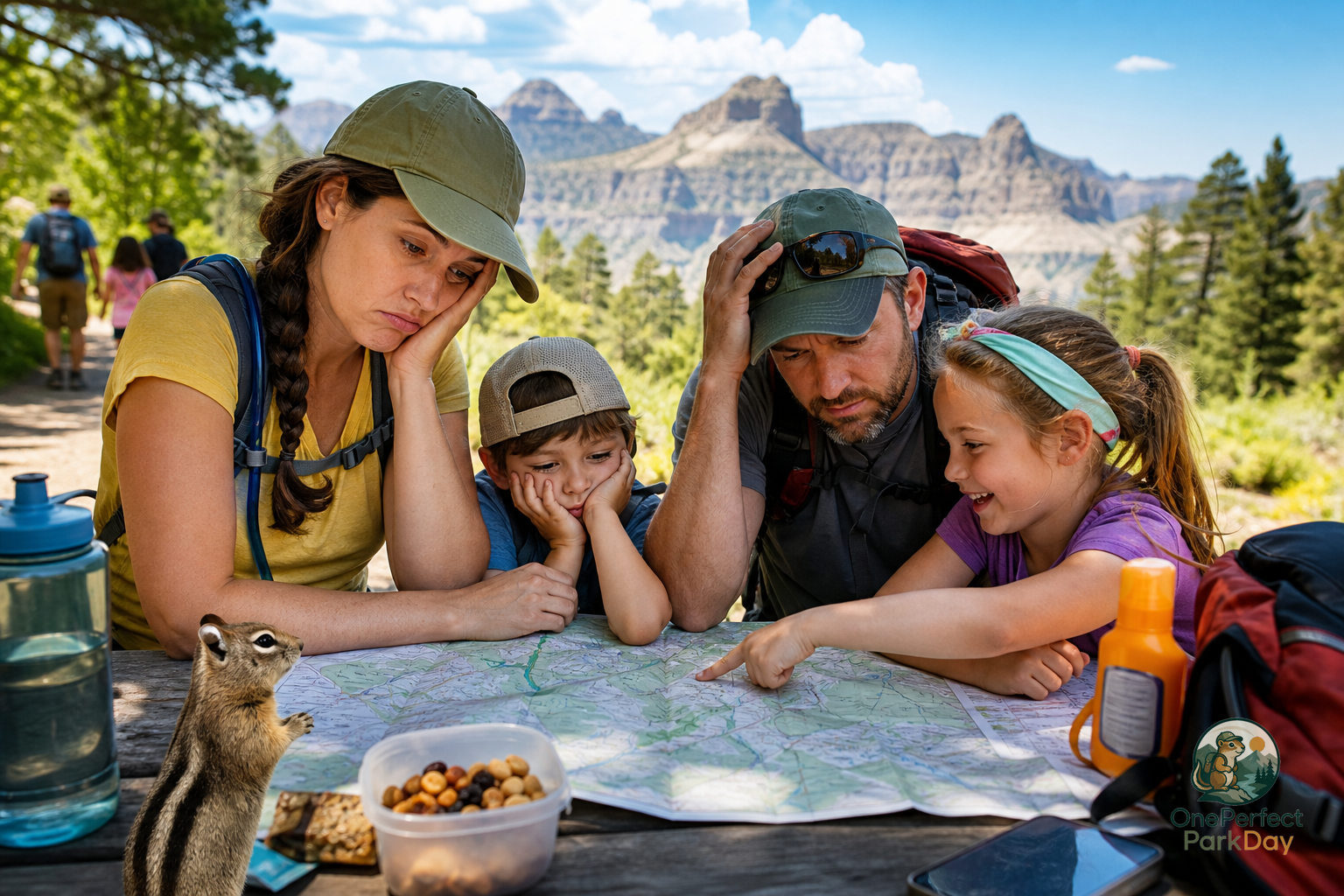
Most one day national park plans fail in a boring way: everyone tries to do too much before lunch, skips the first good rest spot, then wonders why the afternoon feels like punishment.
Breaks are not wasted time. In a US National Park, they are how you protect the rest of the day. They help kids reset, keep adults from making sloppy decisions, give everyone a chance to eat and drink, and make room for weather, traffic, shuttle timing, and slower walkers.
The short answer
For one day in a US National Park, plan a real break every 90 minutes to 2.5 hours, with at least one longer stop around the middle of the day.
That does not mean sitting for half the trip. It means building a rhythm:
- Start with your highest priority stop while energy is good
- Add a short reset before anyone is cranky
- Use lunch as an actual pause, not just food in motion
- Keep one easy afternoon stop in reserve
- Leave with enough energy for the drive out
The tradeoff is simple. If you refuse to stop, you may technically see more places. You will also enjoy fewer of them.
What changes your break plan
A break plan should match the park and your group. A cool, cloudy day on a scenic drive is different from a hot afternoon with exposed trails and kids in the back seat.
Start with these factors.
Heat and sun exposure. Parks with open viewpoints, desert sections, high elevation sun, or limited shade need more frequent pauses. A short trail can feel much longer when there is no relief from sun or wind.
Elevation. If your group is coming from lower elevation, take the first few hours seriously. Moving slower is not failure. It is often the difference between a good day and a headache fueled slog.
Driving time inside the park. Scenic drives look easy on a map, but pullouts, parking, bathroom stops, and slow traffic can stretch the day. If every break requires another parking gamble, choose fewer stops and make them count.
Kids and mixed abilities. Families usually need breaks before adults think they do. A child who is fine at the trailhead can be very done 20 minutes later. Older relatives, first time hikers, and anyone dealing with motion sickness or heat sensitivity need the same respect.
Food and water. Breaks work better when they are tied to snacks and hydration. If you are still guessing how much to bring, read How much food and water to bring for one day in a US national park before you finalize the plan.
Weather changes. Afternoon storms, smoke, heat, wind, or sudden temperature drops can turn a planned break into a needed reset. If the forecast looks unstable, pair this with How to plan a US national park day around changing weather.
Always check current National Park Service alerts, road status, trail conditions, shuttle rules, and local weather before you go. A break plan should adapt to the day you actually get.
Common mistakes that drain the day
Saving all rest for later. Later is when people are tired, parking is annoying, weather may be worse, and patience is thinner. A 10 minute pause in the morning can save a 45 minute meltdown in the afternoon.
Treating the car as a full break. Sitting in a car helps, but it is not always enough. People may need shade, bathrooms, stretching, sunscreen, dry socks, or a snack outside the vehicle.
Planning lunch too late. If lunch happens only after the big trail, the iconic overlook, and the visitor center stop, you may be asking hungry people to admire scenery they no longer care about.
Choosing only high effort stops. A day made entirely of hikes, stairs, viewpoints, and parking hunts can wear down even enthusiastic visitors. Mix in one low effort scenic stop, picnic area, visitor center area, or quiet pullout when available.
Ignoring the exit. The day is not over when the last viewpoint is done. You still have to drive out, feed people, return gear, or reach lodging. Leave some fuel in the tank, literally and mentally.
Questions to check before you lock the plan
Ask these before you commit to your route:
- Where is the first easy bathroom stop after arrival?
- Where can we sit in shade or shelter if we need 15 minutes?
- Which stop works as a low effort lunch location?
- What is our shortest acceptable version of the day?
- What stop gets cut first if the group is tired?
- Are we doing the hardest walk before the hottest part of the day?
- Do we have a backup if parking, shuttle timing, weather, or road work changes the plan?
- Who in the group is most likely to need the first break?
That last question sounds small. It is not. Plan for the person with the lowest energy margin, and the whole group usually has a better day.
A practical one day break rhythm
Use this as a starting point, then adjust for the park, season, weather, and your group.
Arrival to first priority stop: Keep this focused. Do not burn the best energy on random pullouts unless they are part of the plan.
After the first main stop: Take a 10 to 15 minute reset. Bathrooms, water, sunscreen, layers, snack, quick map check.
Late morning: Do a second meaningful stop or short walk. Avoid stacking three demanding stops in a row unless your group is genuinely up for it.
Midday: Plan a real lunch break. Sit if you can. Refill water where allowed and available. Reapply sunscreen. Check weather and current conditions again if service allows.
Early afternoon: Choose a flexible stop. This is a good place for a scenic drive segment, visitor center area, easy overlook, or shorter trail.
Late afternoon: Keep the final stop optional. If everyone is still happy, use it. If not, leave well. A calm exit beats a forced finale.
Simple break checklist
Before you head into the park, make sure your break plan includes:
- A first bathroom option
- A morning snack stop
- A shaded or sheltered pause if available
- A real lunch window
- Water refill options where available
- A cuttable afternoon stop
- A low effort backup activity
- A weather check point
- A group energy check before the hardest walk
- Enough time and patience for the drive out
You do not need to schedule every minute. You do need to stop pretending everyone will feel the same at 3 p.m. as they did at 8 a.m.
Leave room for the day to stay good
A one day national park visit is always a negotiation between ambition and energy. The goal is not to baby the schedule. The goal is to keep the day from tipping into stubbornness.
Pick the sights that matter most. Build in breaks before the group is fried. Keep one backup plan ready. Then let the park day breathe a little.
For help shaping a calmer one day plan, start with One Perfect Park Day.
Practical note
This article is general US National Park planning information. Park rules, hours, weather, trail conditions, road closures, shuttle service, accessibility procedures, permits, and crowd levels can change. Check the official National Park Service site or app before relying on any plan.