
Planning / 5 min read
How to plan meals for one day in a US national park
A practical meal planning guide for one day in a US national park, including timing, snacks, water, cooler strategy, kids, weather, and backup food.
August 17, 2026
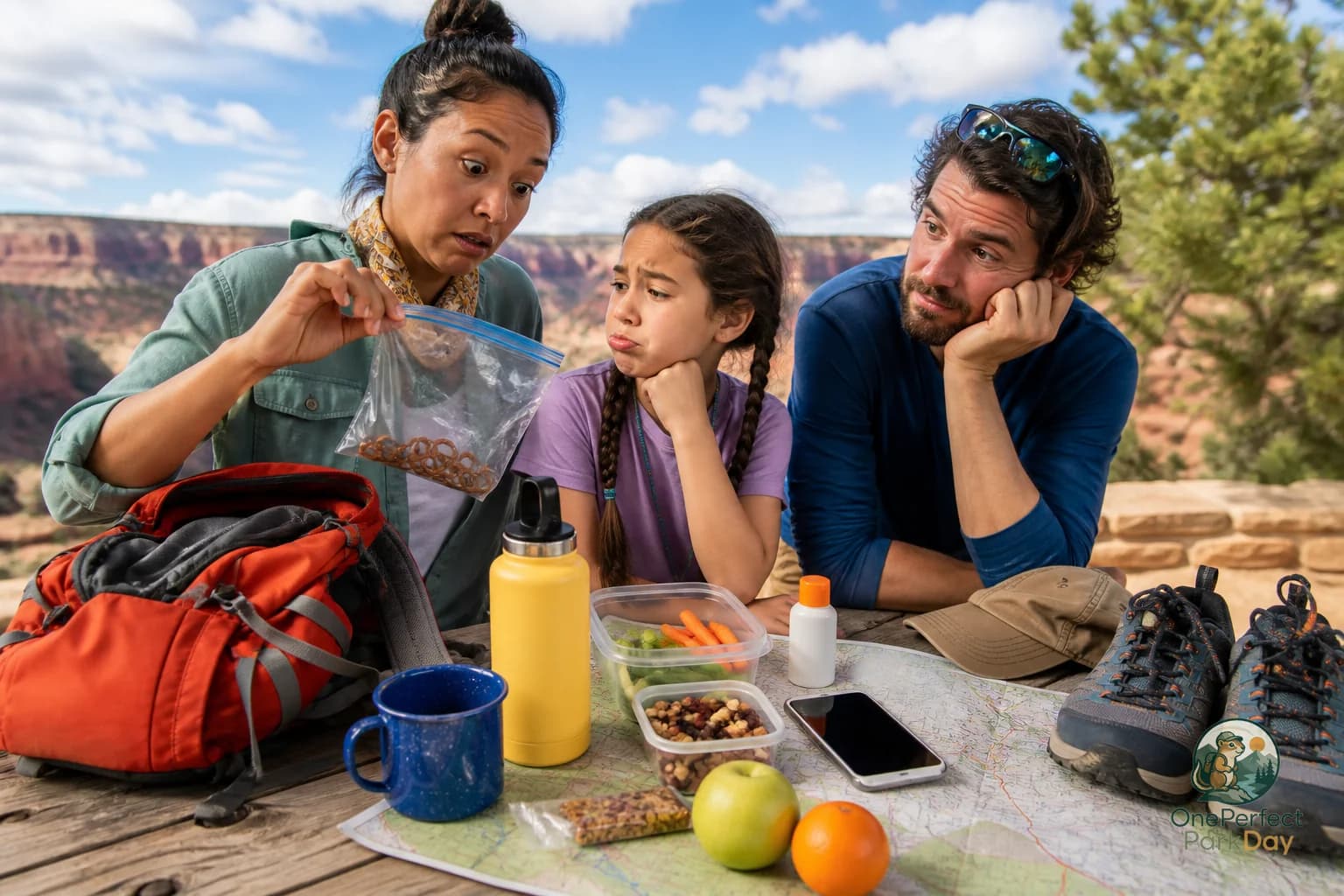
Food planning sounds minor until everyone is hungry, the car is twenty minutes away, and the next good place to sit is somehow always around one more bend.
A one-day US national park meal plan does not need to be cute. It needs to be boring in the right ways. Easy to carry. Easy to eat. Hard to crush. Flexible enough for weather, traffic, shuttle timing, tired kids, and the very normal reality that lunch may not happen exactly where you pictured it.
The short answer
For one day in a US national park, plan around four food moments:
- Breakfast before or near the entrance
- A midmorning snack that is easy to reach
- A lunch window, not a fixed lunch location
- A late day backup snack or simple meal
That is the whole structure. The mistake is treating food like one neat lunch stop in the middle of the day. Park days rarely behave that cleanly.
If you are already sorting out amounts, start with How much food and water to bring for one day in a US national park. This article is more about timing and where food fits into the day.
Context factors that change the meal plan
Your food plan should match the park day you are actually doing, not the tidy version on a map.
How spread out the park is. Some national parks keep major sights close together. Others turn every choice into a real drive. If your day includes long scenic stretches, assume food needs to be available in the car and in your daypack.
Whether you return to the same parking area. If you are doing a short loop from the car, a cooler lunch can work well. If you are using a shuttle, hiking away from the trailhead, or linking several stops, pack food you can carry comfortably.
Weather. Heat makes heavy, salty, dry food less appealing. Cold and wind make a real sit-down break feel more important. Rain can turn a picnic plan into a stand-under-the-hatchback plan. Check current conditions and current park alerts before you go.
Your group. Adults may tolerate a late lunch. Kids often do not. Grandparents, pregnant visitors, teens, and anyone managing medication or blood sugar may need food at more predictable times. Build the plan around the person least able to power through.
Food rules and wildlife concerns. US national parks vary in how they handle food storage, picnic areas, trash, and wildlife safety. Follow current park rules. Do not feed wildlife. Do not leave food loose at a viewpoint, trailhead, campsite, or open vehicle area.
Services inside or near the park. Some parks have cafes, lodges, stores, or nearby gateway towns. Some have very little. Even when services exist, hours, lines, closures, and seasonal schedules can change the usefulness of that option. Treat purchased food as a nice bonus, not the whole plan.
What people usually get wrong
The most common mistake is packing lunch but not packing access to lunch.
If all the food is buried under jackets, camera bags, and spare shoes, nobody wants to dig for it. If all the snacks are in the trunk while you are on a shuttle or trail, they might as well be at home.
Another classic error is making lunch too ambitious. A national park day is not the time for fragile containers, five condiments, food that needs assembly in the wind, or anything that creates a trash explosion. Simple wins.
People also wait too long. By the time everyone admits they are hungry, the group is already making worse decisions. The hike feels harder. The scenic drive gets quiet. The kids turn feral. Adults pretend they are fine, which is often just a slower way to become annoying.
Build food into the day before the mood drops.
If your group needs real pauses, pair your food plan with How to plan breaks during one day in a US national park. Food and rest usually belong together.
Questions to ask before you lock the plan
Use these before you pack, not while standing in a parking lot with one granola bar and five opinions.
Where will we probably be around 10:30 or 11? That is often when a snack saves the day.
Will lunch be near the car, on a trail, at a picnic area, or somewhere uncertain? If the answer is uncertain, pack a portable lunch.
Can everyone carry what they need for two to three hours? If not, simplify the route or redistribute the load.
Are we depending on park food service? If yes, what happens if it is closed, crowded, out of what your group wants, or not near your route?
What food will still sound good if it is hot, cold, windy, or raining? This question kills a lot of fantasy lunches, which is helpful.
Who gets hungry first? Plan around that person. Pride is not a meal strategy.
Where will trash go? Bring a small trash bag or zip bag. Pack out what you bring in unless you are using proper disposal where allowed.
A practical one-day national park meal checklist
Use this as a simple packing and timing check.
Before you leave
- Check current park alerts, weather, road updates, and food storage rules
- Eat breakfast before the first major stop if possible
- Fill water bottles before entering the park or before leaving your lodging
- Pack one lunch that does not require cooking or complicated setup
- Pack one backup food option for late afternoon
- Put snacks where people can reach them without unloading the car
- Bring a small trash bag or zip bag for wrappers and peels
- Keep any cooler food properly chilled and follow food safety basics
In the daypack
- Water for the next stretch of the day
- A snack per person for the first half of the day
- Something salty if the day is warm or active
- A kid-friendly or picky-eater-safe item if needed
- Any medical or dietary food your group cannot skip
In the car, if you will return to it
- Cooler lunch or extra drinks if appropriate
- Backup snacks for the drive out
- Napkins or wipes
- A dry bag or spare zip bag for trash
- Extra water if conditions and park rules make that practical
During the day
- Offer snacks before the group is visibly tired
- Do not save all the good food for the end
- Avoid opening food around wildlife
- Keep meals short if the weather is shifting
- Stop for water before starting another trail or scenic stretch
A realistic way to time meals
A simple national park food rhythm looks like this:
Breakfast before arrival or shortly after entering. Snack after the first main stop. Lunch sometime between late morning and early afternoon, wherever the plan naturally gives you a decent place to pause. Backup snack before the final scenic drive, shuttle ride, or last short walk.
That is more useful than saying lunch must happen at noon. Noon may find you circling a full lot, sitting on a shuttle, halfway into a trail, or driving through a section with no good place to stop. A lunch window gives you room to adjust without turning hunger into a crisis.
For families, move everything earlier. Kids often need food before adults think it is time. For long summer days, avoid pretending one big lunch will carry everyone to dinner. For cold weather, pack something that feels comforting and easy, even if it is not fancy.
Keep the plan simple enough to survive the park
The best one-day national park meal plan is not the prettiest one. It is the one your group will actually use when the trail takes longer, the wind picks up, the picnic tables are full, or the scenic overlook is too good to leave quickly.
Pack less drama. Put snacks within reach. Treat lunch as a window. Keep a backup. Check current park rules and conditions before you go.
That is how food supports the day instead of quietly wrecking it.
Want help turning the rest of the day into a flexible plan? Start with One Perfect Park Day.
Practical note
This article is general US National Park planning information. Park rules, hours, weather, trail conditions, road closures, shuttle service, accessibility procedures, permits, and crowd levels can change. Check the official National Park Service site or app before relying on any plan.