
Planning / 5 min read
How to plan one day in a US National Park when you are starting from scratch
A calm, practical way to plan one day in a US national park when you do not know the park yet, including priorities, timing, meals, weather, and backup choices.
August 13, 2026
Most one-day national park plans get too complicated before they get useful.
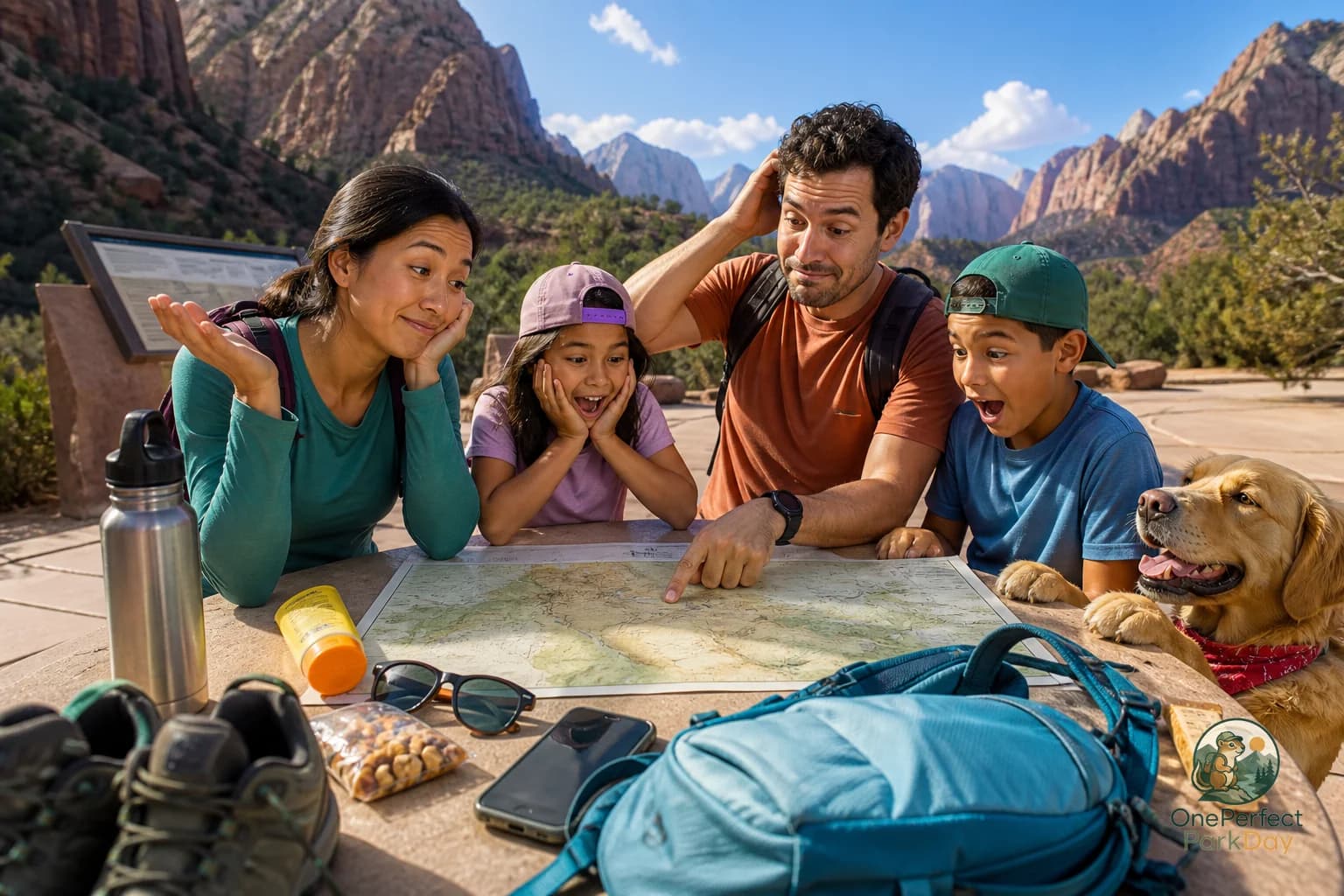
You open a map, save ten viewpoints, add three hikes, skim a few forum posts, notice a shuttle note, see a weather warning, and suddenly the day looks like a small military operation. That is not planning. That is collecting anxiety.
A better first draft starts with fewer decisions. You are not trying to solve the entire park. You are trying to build one good day that can survive normal park friction: parking delays, heat, tired legs, hungry kids, changing weather, road construction, and the very human need to sit down for a while.
Direct answer
If you are starting from scratch, plan one day in a US national park in this order:
- Pick the main kind of day you want.
- Choose one primary area of the park.
- Select one must-see stop or short activity.
- Add one flexible secondary stop nearby.
- Block time for food, water, bathrooms, and rest.
- Check current park alerts and operating rules before you finalize anything.
- Keep one lower effort backup plan ready.
That order matters. Most people start by stacking attractions. Then they try to force the day to fit. The better move is to decide what kind of day your group can actually enjoy, then let the itinerary serve that.
If you need help narrowing the big list, read How to choose must-see stops for one national park day. If timing is your biggest unknown, pair this with How early to arrive for one day in a US national park.
The factors that shape the day
Start with the boring constraints. They are what make or break the day.
First, look at your actual arrival window. Not the arrival time you would have if everyone woke up cheerful and the cooler packed itself. The real one. If you are staying outside the park, add the drive, entrance time, bathroom stop, and the time it takes to get oriented after you park.
Second, check whether the park has timed entry, shuttle systems, seasonal road closures, limited parking, or trail restrictions. Do not build a plan around access you have not confirmed. Park rules can change, and current National Park Service alerts should always beat old blog posts, old screenshots, and optimistic memories from someone else's trip.
Third, think about your group. A solo adult who likes long walks can plan differently than a family with a toddler, grandparents, or someone who gets carsick on winding roads. That does not mean the day has to be boring. It means the best version of the day has to match the people who are actually going.
Fourth, respect the weather. Heat, wind, rain, smoke, snow, and afternoon storms can turn a reasonable plan into a stubborn one. Build the day so you can move a hike earlier, swap a viewpoint for a visitor center, shorten a walk, or eat in the car if conditions get annoying.
Common mistakes that make the day feel harder
The first mistake is treating one day like a greatest hits album. National parks are not designed to be cleared. If the route crosses the entire park three times, the plan is probably showing off instead of helping.
The second mistake is hiding drive time inside the itinerary. A scenic road still takes energy. Pullouts take time. Parking takes time. Getting everyone out of the car takes time. If your plan says “quick stop” six times, you may have accidentally built a long day with no breathing room.
The third mistake is planning the meal too late. Hungry people make bad park decisions. They argue about trail choices, skip water, rush viewpoints, and then wonder why the day feels weird. Decide early whether you are packing lunch, buying food where available, or leaving the park for a meal.
The fourth mistake is saving the main priority for the end of the day. Sometimes that works. Often it turns the whole day into a chase. If there is one view, walk, drive, or area that would make the visit feel worthwhile, give it a strong part of the day instead of whatever time is left over.
The fifth mistake is assuming motivation will increase. It usually does not. Energy drops. Feet get sore. Kids melt down. Adults get quiet and pretend they are fine. Plan the day with the afternoon version of your group in mind, not just the morning version.
Questions to answer before you lock the plan
Ask these before you start arranging stops:
- What would make this day feel worth it if we only did one main thing?
- Are we more excited about views, a short hike, wildlife watching from a distance, geology, forests, water, history, or scenic driving?
- How much walking is realistic for this group in this weather?
- Do we need shade, indoor time, stroller friendly paths, or easier bathroom access?
- Is the main area reachable without a reservation, shuttle, or seasonal road opening?
- Where will we eat, refill water, and take a real break?
- What will we skip if parking is full, weather shifts, or someone is done earlier than expected?
Those questions are not meant to drain the fun out of the day. They protect it. A flexible plan feels calm because the tradeoffs are already named.
A simple one-day planning checklist
Use this as your first draft before you get fancy:
- Choose one primary park area for the day.
- Pick one main priority in that area.
- Add one nearby secondary stop if time and energy allow.
- Choose an arrival target that fits current access rules and your drive.
- Check the latest NPS alerts, road status, trail notes, and weather.
- Decide where lunch, snacks, and water refills will happen.
- Pack layers, sun protection, rain gear, and any needed medications.
- Add a real rest break before people are exhausted.
- Set a loose turnaround time for longer walks or drives.
- Keep one lower effort backup option ready.
- Decide what you are willing to skip.
That last line is the one people avoid. It is also the one that makes the day better. Skipping something on purpose feels very different from missing it while rushing.
Close the day with room to adjust
A good one-day national park plan should feel like a sturdy outline, not a contract. You want enough structure that you are not making every decision from a parking lot, but enough space that the day can respond to weather, mood, access, and energy.
Start with one main area. Give your top priority the best part of the day. Feed people before they are cranky. Take the easy stop when the group needs an easy win. Check current park information before you go. Then let the park be bigger than your itinerary.
That is not a weaker plan. It is usually the one people actually enjoy.
Want help turning a rough park idea into a calmer one-day plan? Start with One Perfect Park Day at oneperfectparkday.com.
Practical note
This article is general US National Park planning information. Park rules, hours, weather, trail conditions, road closures, shuttle service, accessibility procedures, permits, and crowd levels can change. Check the official National Park Service site or app before relying on any plan.