
Planning / 6 min read
How to plan the first and last hour of a US national park day
A practical guide to planning the first and last hour of a one day US National Park visit, so the day starts smoother and ends without a scramble.
August 1, 2026
Most one day US National Park plans obsess over the big middle of the day: the famous overlook, the trail everyone talks about, the scenic drive you do not want to miss.
That middle matters. But the first hour and the last hour often decide whether the day feels calm or chaotic.
The first hour sets the pace. The last hour protects the exit. Get those two bookends right and you can be much more flexible with everything between them.
The direct answer
For a one day US National Park visit, plan your first hour around one clear priority and your last hour around a calm exit.
Your first hour should answer three questions:
- Where are we going first?
- What do we need before we leave the car, shuttle stop, or visitor area?
- What is the one thing we want to do while everyone is still fresh?
Your last hour should not be treated as bonus time. It should include:
- A realistic final stop, not a major new mission
- Time for restrooms, water, snacks, layers, or tired kids
- A daylight and drive time buffer
- A clean way to leave without arguing in the parking lot
That sounds simple because it is. The mistake is trying to make both hours productive in the wrong way. The first hour is for direction. The last hour is for control.
If you are still deciding when to get there, pair this with How early to arrive for one day in a US national park.
What changes your first and last hour plan
The right bookend plan depends on the park, the season, your group, and current conditions. Do not copy someone else's exact schedule and expect it to fit your day.
Start with the park layout. Some parks have one main scenic road. Others have separate districts, long drive times, shuttle areas, or entrances that are nowhere near the sights people picture when they book the trip. In a spread out park, the first hour may need to be mostly driving. In a compact area, it might be the best time for a short trail.
Next, check the access rules. Timed entry, shuttle systems, seasonal road closures, construction, or full parking areas can change what is practical. Always check current National Park Service alerts and operating information before you commit to a route.
Weather matters too. In hot parks, the first hour may be the best window for walking. In stormy mountain parks, the last hour might need extra margin so you are not finishing exposed or tired when conditions shift.
Group energy is the other big factor. Adults often plan like energy is steady all day. It is not. Kids, older relatives, first time hikers, and anyone dealing with heat or altitude may be fine at 9 a.m. and done by 3 p.m. Build the final hour for the group you actually have, not the group you wish you had.
For longer days, your break plan affects the final hour more than you think. If you run everyone hard through lunch, the last hour becomes a negotiation. See How to plan breaks during one day in a US national park if your group tends to fade late.
Common mistakes with the first hour
The biggest first hour mistake is starting with admin by default. Visitor centers can be useful, but they are not automatically the best first stop. If your top priority is a popular overlook, short hike, shuttle area, or limited parking zone, spending the freshest hour browsing displays may cost you later.
Another mistake is leaving the first move vague. Saying you will decide when you get there sounds flexible. In practice, it often means someone is searching maps with weak signal while everyone else waits.
A third mistake is overloading the first hour. You do not need to complete three stops before breakfast to have a good day. Pick one strong first move. Make it easy to start. Let the day build from there.
Common mistakes with the last hour
The last hour gets abused because people do not want the day to end. That is understandable. It is also how families end up hungry, cold, late, cranky, or driving unfamiliar roads in the dark when they did not mean to.
Do not save the hardest hike, longest viewpoint detour, or most uncertain parking stop for the final hour unless you have a very clear turnaround plan. Late day ambition feels bold in the moment. It feels less charming when someone still needs dinner and the car is an hour away.
Another common miss is ignoring the exit sequence. Leaving a park is not just walking to the car. It can include shuttle waits, restroom stops, changing layers, filling water, loading gear, checking directions, and getting out of a crowded parking area.
Your last hour should make space for that unglamorous stuff. It is not wasted time. It is what keeps the day from ending in a scramble.
Questions to check before the day
Ask these before you finalize the plan:
- What is our first real destination inside the park?
- How long might it take to reach it from the entrance or shuttle stop?
- Do we need timed entry, shuttle access, or a parking backup?
- What should we do before leaving the car or main base area?
- What is the one thing we should do while everyone is fresh?
- What time do we want to be heading toward the exit?
- What is our final realistic stop if the day is going well?
- What is our final easy stop if the group is tired?
- Are we comfortable driving out after dark, or do we want daylight buffer?
- What current alerts, weather changes, or road conditions could affect the plan?
These questions do not make the day rigid. They keep you from making the most important decisions when everyone is already hot, hungry, or losing patience.
A simple first and last hour checklist
Use this as a quick planning pass the night before or the morning of your visit.
Before you arrive
- Check current NPS alerts, road status, weather, and operating rules
- Choose one first priority stop or activity
- Choose one easy final stop near your exit route
- Download or save maps if signal may be limited
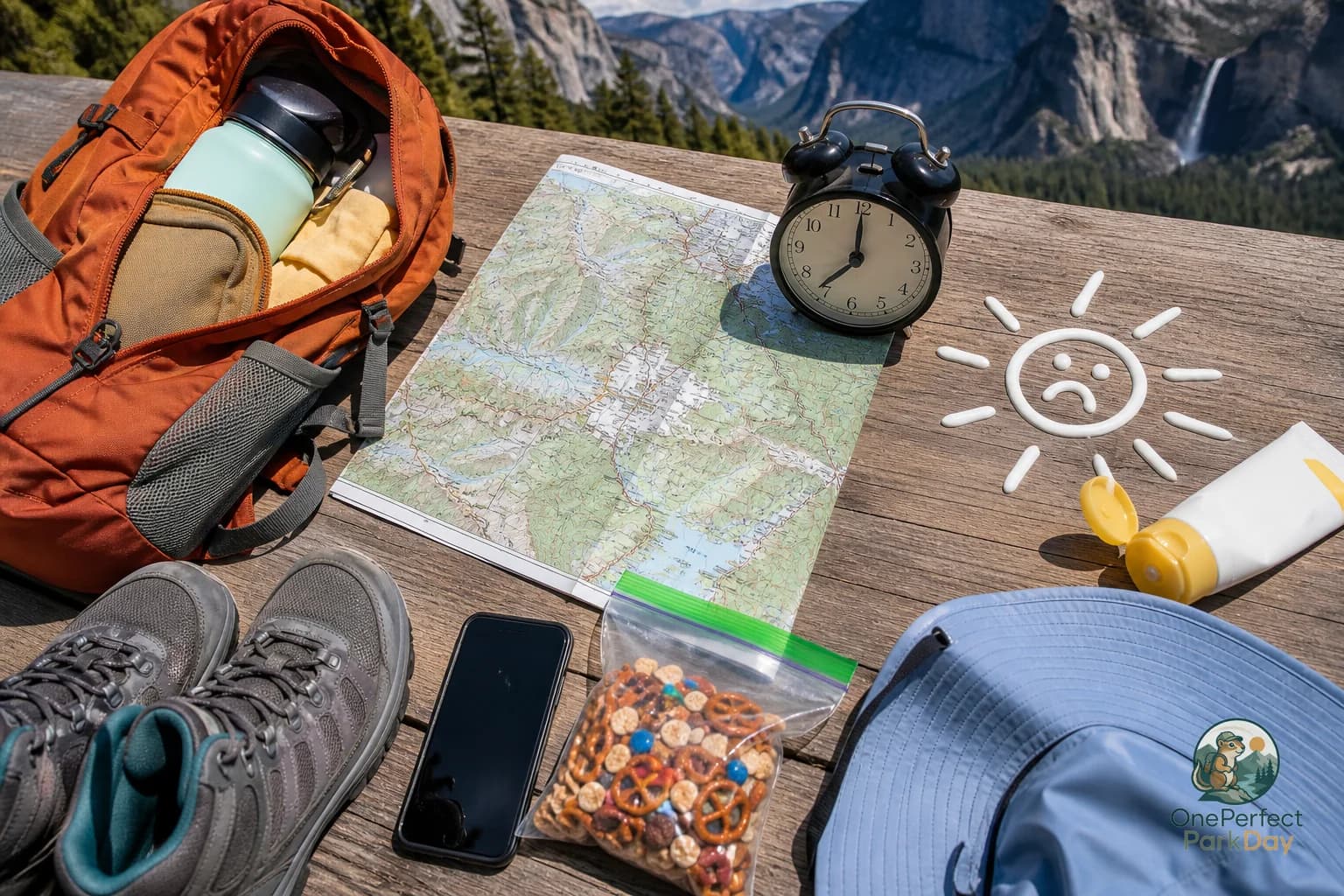
- Put water, snacks, layers, and sun protection where you can reach them
- Decide what time you want to be moving toward the exit
During the first hour
- Use the restroom if access may be limited later
- Confirm the route before you lose signal or split up
- Start with one clear stop, not a committee debate
- Handle layers, sunscreen, water, and snacks early
- Avoid turning the first hour into a rushed checklist
During the last hour
- Stop adding major new plans
- Check the group honestly: energy, hunger, weather, daylight
- Pick the easy version if people are fading
- Leave time for restrooms, shuttle movement, gear, and navigation
- Start exiting before the day feels out of control
A realistic way to think about the day
A good one day National Park plan is not about squeezing every possible minute out of the entrance fee. That mindset sounds efficient, but it often makes the day more brittle.
Think of the first hour as your launch and the last hour as your landing. You want both to be boring in the best way: clear, calm, and not dependent on luck.
The middle of the day can stay flexible. You can swap a trail for a drive, add a viewpoint, take a longer lunch, or skip something that no longer fits. But if the bookends are messy, the whole day feels harder than it needs to.
Plan the first hour so you know how to begin. Plan the last hour so you know how to leave. That is the kind of structure that gives you more freedom, not less.
For help shaping a smoother one day park plan, visit One Perfect Park Day.
Practical note
This article is general US National Park planning information. Park rules, hours, weather, trail conditions, road closures, shuttle service, accessibility procedures, permits, and crowd levels can change. Check the official National Park Service site or app before relying on any plan.