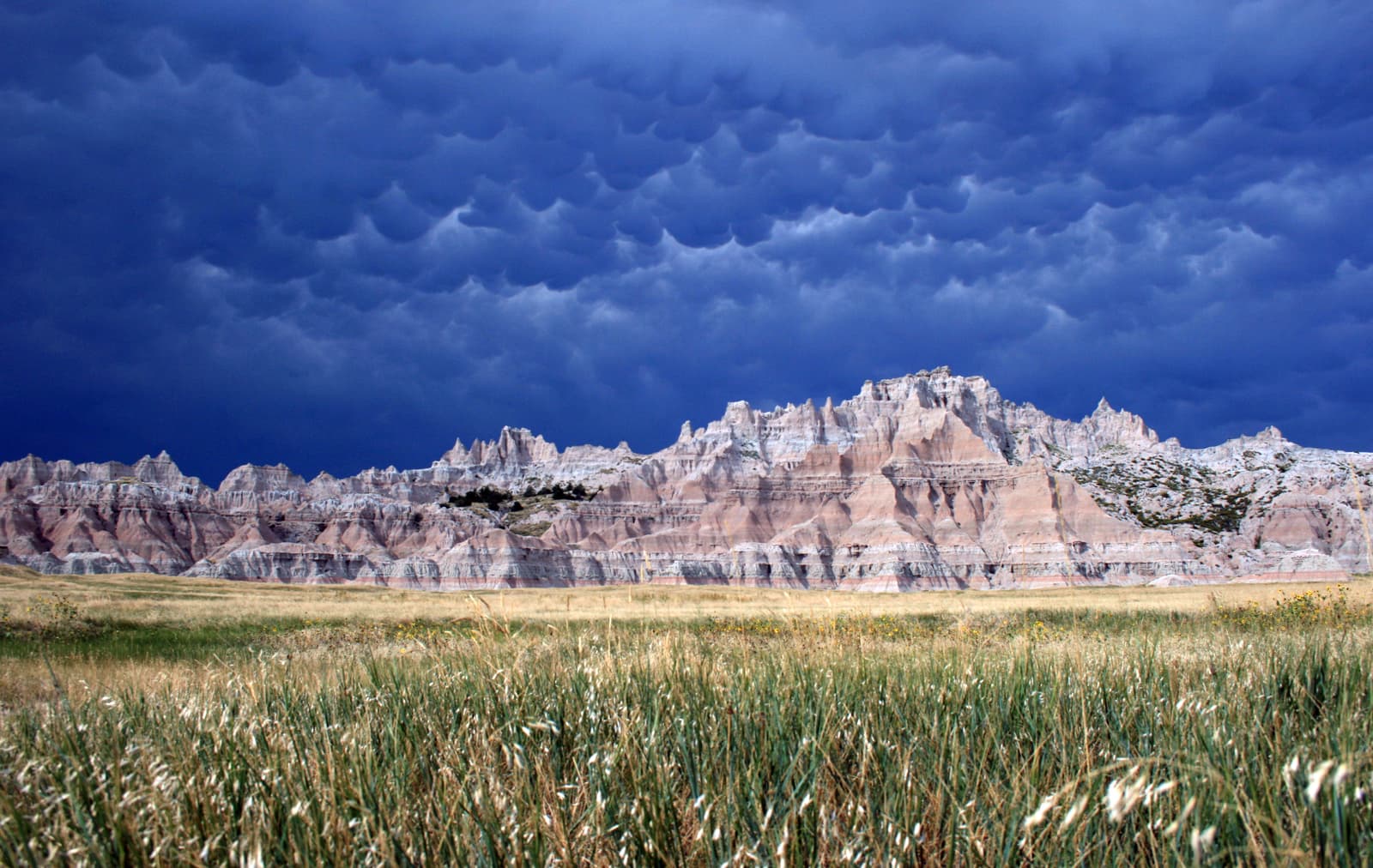

Planning / 7 min read
How to pack for one day in Badlands National Park around wind, sun, and long gaps
A practical one-day Badlands National Park packing plan built around wind, sun, water, food, road distance, short trails, overlooks, and realistic backup options.
September 17, 2026
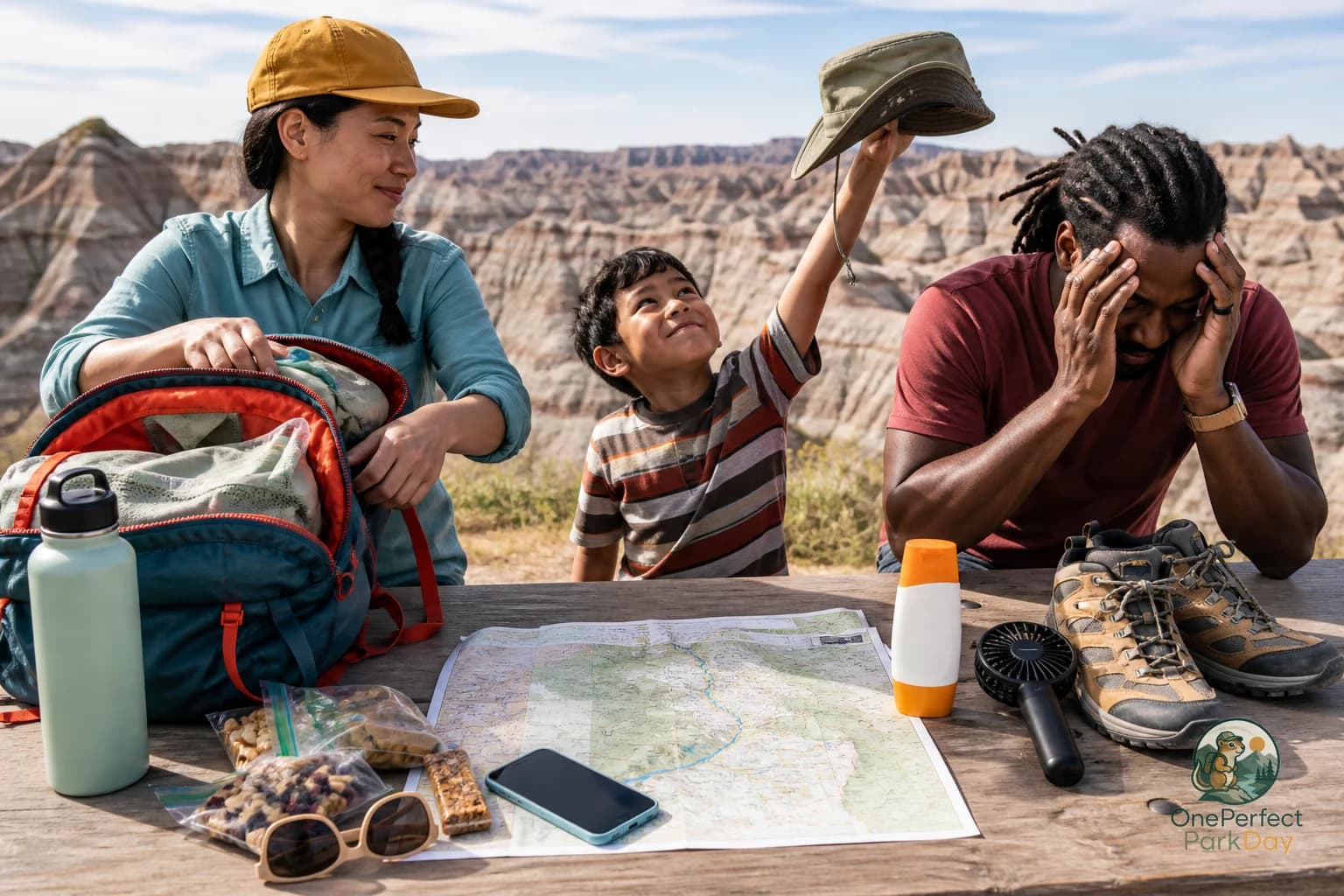
Badlands National Park is not the kind of place where a giant daypack automatically makes you smarter. Most one-day visitors are moving by car between overlooks, short trailheads, the visitor center area, and maybe a gravel road or longer walk if conditions line up.
The catch is that Badlands can feel exposed fast. Sun, wind, sudden weather, dry air, limited shade, and long gaps between easy services can turn a simple scenic drive into a cranky group management problem.
So the planning question is not just what should I bring? It is what should I bring so I can keep the day flexible without dragging half my house through the park?
The short answer
For one day in Badlands National Park, pack for exposure first and activities second.
That means water, sun protection, wind protection, snacks or lunch, comfortable shoes, a light layer, a small first aid kit, and a simple car backup kit. Then choose trail gear based on what your group is actually likely to do that day.
If your plan is mainly Badlands Loop Road, overlooks, Door Trail, Window Trail, and a few short stops, you do not need a heavy hiking setup. You need comfort items that keep everyone willing to get out of the car again.
If you are considering longer routes like parts of Castle Trail, Medicine Root Trail, or more time away from the road, you need a more serious water and weather plan. Do not let a short looking line on the map fool you. Exposure changes the math.
For broader packing help, use What to pack for one day in a US national park without carrying too much as the base. Badlands just tilts that list harder toward wind, sun, water, and car based backups.
What makes Badlands packing different
Badlands is a driving park for many one-day visitors, but it is not a passive day if you do it well. You will likely be in and out of the car often, dealing with glare, dust, wind, uneven surfaces, and temperature swings.
The big factors are:
- Exposure: Shade can be limited at overlooks and trailheads.
- Wind: A calm forecast in town does not always feel calm on an open overlook.
- Sun and glare: Pale formations and open sky can be rough on eyes and skin.
- Dry air: People can get behind on water before they feel obviously thirsty.
- Road spacing: Once you are moving across the park, doubling back for forgotten food or layers is annoying.
- Trail surfaces: Boardwalks, stairs, dirt, clay, and uneven routes ask for better shoes than flip flops.
- Weather changes: Rain, heat, cold wind, or muddy conditions can change what feels reasonable.
Before you rely on any plan, check current NPS alerts, road status, trail status, weather, visitor center hours, entrance information, permits if relevant, and any current operating rules. Badlands is usually planned as a self driving day, but you still want current information before assuming a road, trail, facility, or service will work the way you expect.
Pack the car and the daypack differently
A common mistake at Badlands is treating the daypack like the only storage system. For many groups, the car is the smarter base.
Put the heavy or just in case items in the car:
- Extra water
- Cooler or lunch bag
- Backup layers
- Spare socks
- Rain shell or wind shell
- Extra sunscreen
- Extra snacks
- Trash bag
- Paper map or downloaded map backup
- Basic first aid supplies
Then keep the walking pack light:
- Water for the stop you are doing
- Sunscreen and lip balm
- Sunglasses
- Hat
- Snack
- Phone or camera
- Small first aid basics
- Layer if wind or weather is shifting
This keeps short stops easy. Nobody wants to haul a loaded pack to every overlook just because one person packed for a wilderness expedition they are not taking.
Common mistakes that make the day harder
The first mistake is underpacking water because the route looks road based. Scenic drives still dehydrate people when they keep stepping into sun and wind. Bring more than you think you will want, and store extra in the car.
The second mistake is planning food too loosely. Badlands is not where you want your group decision making to collapse because everyone is hungry between stops. Bring real snacks, not just emergency granola that nobody likes. If meals are the weak point in your national park days, read How to plan meals for one day in a US national park.
The third mistake is dressing for the car instead of the park. You may feel fine while driving and uncomfortable five minutes after stepping out at a windy viewpoint. A light layer can save the mood.
The fourth mistake is packing for the fantasy itinerary. If your group has kids, older adults, mixed fitness levels, or low tolerance for heat, do not build the packing list around the longest possible hike. Build it around the day you are most likely to enjoy.
The fifth mistake is ignoring footwear. Badlands can be dusty, uneven, slippery when wet, or rough underfoot. You do not need mountaineering boots for every stop, but flimsy shoes can make even short walks feel dumb.
Questions to check before you finish packing
Ask these the night before and again before entering the park:
- What is the high temperature, and when does it peak?
- Is wind a comfort problem today?
- Is rain possible, and could trails or unpaved roads be affected?
- Are any roads, trails, overlooks, entrances, or visitor services affected by alerts?
- How much daylight do we actually have for stops, meals, and the drive out?
- Are we doing short overlooks only, short trails, or a longer hike?
- Does anyone in the group need easier surfaces, more shade breaks, medication timing, or a slower pace?
- Where will we eat, refill, use restrooms, and take a real break?
- What is our backup if the main trail feels too hot, windy, muddy, or crowded?
The packing list should answer those questions. If it does not, you are just carrying stuff.
A simple Badlands one-day packing checklist
Use this as a starting point, then adjust for season, forecast, group needs, and current park conditions.
- Water for each person, plus extra in the car
- Salty snacks and a real lunch or meal plan
- Sunglasses with good glare protection
- Brimmed hat or cap
- Sunscreen and lip balm with SPF
- Light wind layer or rain shell
- Comfortable closed toe shoes
- Extra socks if rain, mud, or longer walking is possible
- Small first aid kit with blister care
- Any personal medications
- Downloaded maps or a paper map
- Phone charger or power bank
- Trash bag for the car
- Hand wipes or sanitizer
- Camera or binoculars if your group will actually use them
- Warm layer for early morning, evening, or windy stops
- Kids comfort item, if that prevents a meltdown later
Do not pack every item into the daypack unless you are leaving the car for a long stretch. For a typical one-day Badlands visit, split the load between car backup and light carry.
How to use the list without overloading the day
Packing well should make your Badlands day calmer, not more ambitious.
Pick one main focus: the core Badlands Loop Road experience with overlooks and short trails works well for many first visits. Add one backup: if a trail is too hot or windy, switch to more overlooks, the visitor center area, or a shorter walk. Then add one optional extra only if the group still has energy, daylight, and road conditions on your side.
That optional extra might be a longer trail segment, more time at overlooks, or a drive toward another area of the park. It should not be treated as mandatory. Badlands rewards attention more than mileage.
A well packed group can stop when the light looks good, skip a walk when the wind is annoying, eat before everyone gets sharp with each other, and change plans without turning the day into a debate.
That is the point. Not a perfect day. A day with enough margin to stay enjoyable when the park acts like a real place.
If you want help turning that kind of flexible thinking into a one-day plan, start with One Perfect Park Day.
Practical note
This article is general US National Park planning information. Park rules, hours, weather, trail conditions, road closures, shuttle service, accessibility procedures, permits, and crowd levels can change. Check the official National Park Service site or app before relying on any plan.