
Planning / 7 min read
How to plan one day in Yellowstone National Park around geysers or wildlife
A calm one-day Yellowstone National Park planning guide for choosing between geysers, wildlife areas, backup stops, road timing, weather, food, breaks, and group energy.
September 7, 2026
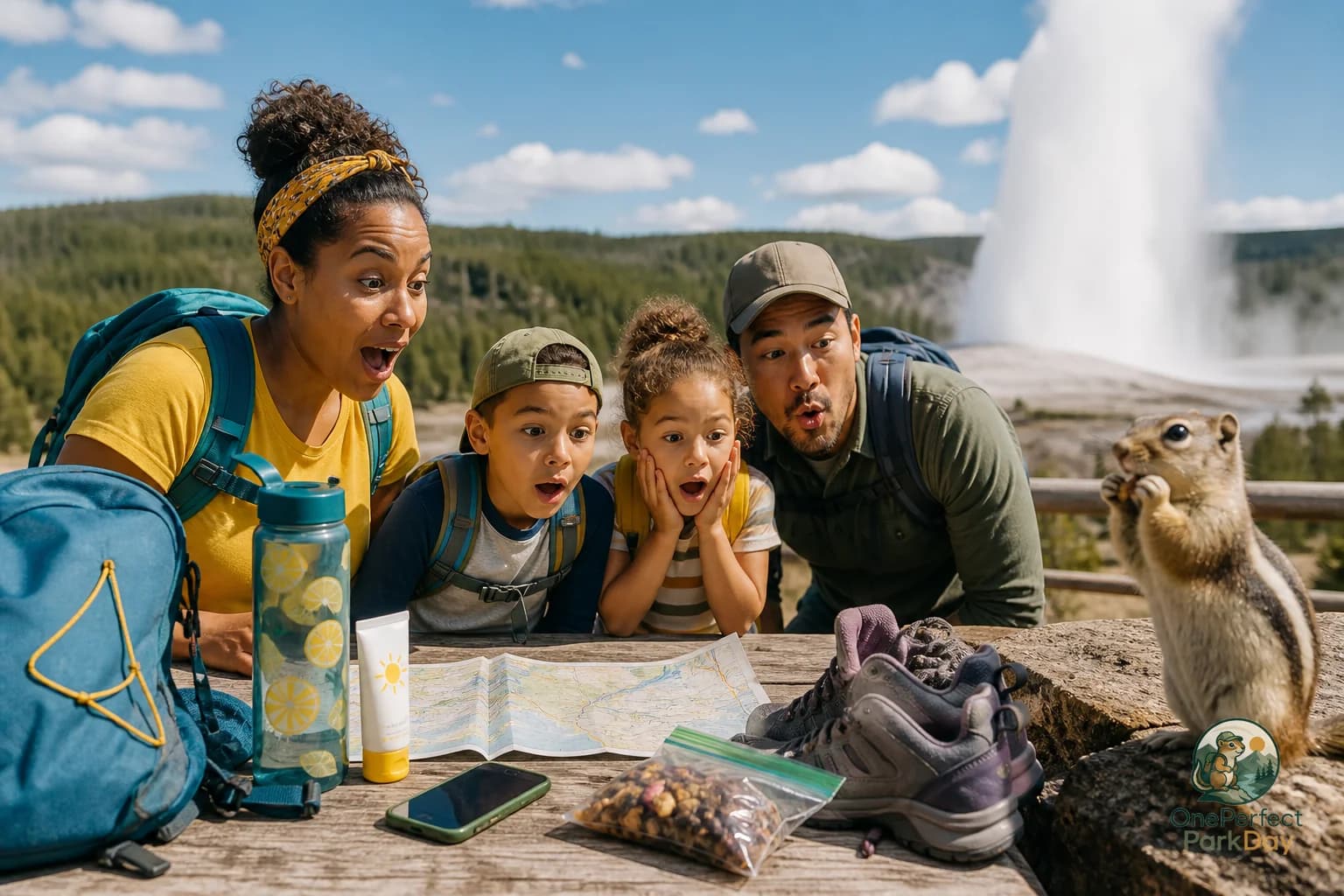
Yellowstone is not a park where you can casually collect every famous stop in one day. The map makes the loop roads look tidy. The clock disagrees.
For a one-day visit, the biggest decision is usually not which stop is prettiest. It is whether your day is mainly a geyser and thermal basin day, or mainly a wildlife and canyon scenery day. You can sometimes sample both, but treating both as equal priorities is how a good park day turns into a windshield marathon.
The short answer
For one day in Yellowstone National Park, pick one main lane: geysers and thermal features, or wildlife valleys and canyon scenery.
If this is your first Yellowstone visit and you are entering from the west or south, the most practical main lane is usually the geyser side: Old Faithful, Upper Geyser Basin, Midway Geyser Basin, and maybe one nearby backup such as Biscuit Basin, Black Sand Basin, or Norris if road timing and parking cooperate.
If you are entering from the north, northeast, or east, a wildlife and scenery day may make more sense: Lamar Valley or Hayden Valley, plus Grand Canyon of the Yellowstone, with thermal features treated as an optional add-on only if the drive still makes sense.
That tradeoff is not a downgrade. It is the price of making Yellowstone feel like a place you visited instead of a list you wrestled.
Before you rely on any plan, check current National Park Service alerts, road status, construction, fire or smoke conditions, weather, trail and boardwalk closures, permit requirements, food service status, and any current entry, reservation, shuttle, or operating rules.
The context that changes the day
Yellowstone is huge, and the famous stops are spread around a road system that can be slowed by construction, weather, parking backups, wildlife jams, and people making sudden scenic decisions from the driver seat.
The first context factor is your entrance. West Yellowstone makes geyser basins feel more natural. The South Entrance can also work well for Old Faithful and West Thumb, though the approach is longer. The North and Northeast entrances pull you toward Mammoth, Lamar Valley, and the northern road system. The East Entrance points more naturally toward Yellowstone Lake, Hayden Valley, and Canyon.
The second factor is daylight. A long summer day gives you more margin, but it does not remove driving distance. A shoulder season visit can bring fewer usable daylight hours, colder mornings, icy patches, limited services, or road closures. Yellowstone can feel like summer at lunch and jacket weather at breakfast.
The third factor is group energy. Boardwalks around thermal features can be easier than longer hikes, but they still require walking, patience, sun exposure, and attention. Wildlife viewing often rewards early or late timing, but that may clash with kids, meals, lodging check-in, or a tired driver.
The fourth factor is food and water. Do not assume your ideal lunch stop will line up with your hunger. Pack enough snacks and water to keep the group from making bad decisions at 2 p.m. Yellowstone is too big for a casual “we’ll grab something wherever” strategy.
If you need a broader planning frame, the area-based approach in How to group one US national park day by area fits Yellowstone especially well.
What people get wrong in Yellowstone
The classic mistake is trying to build a greatest hits loop: Old Faithful, Grand Prismatic, Norris, Canyon, Hayden Valley, Lamar Valley, Mammoth, and maybe Yellowstone Lake because it is “on the way.” It is not really on the way if everyone is tired and you still need to drive back out.
Another mistake is treating wildlife like a scheduled attraction. You can choose good habitat and good timing, but you cannot book an elk, wolf, bear, or bison sighting. Build wildlife time as a patient, flexible window, not as a guaranteed payoff.
People also underestimate parking friction at popular thermal areas. Even if a stop is only a short walk once parked, the arrival, circling, bathroom line, boardwalk pace, and return to the car can take longer than the map suggests.
One more mistake: skipping breaks because everyone “just wants to see one more thing.” That usually creates a worse final two hours. Yellowstone driving asks for alertness. A short reset with water, shade, bathrooms, and a snack is not wasted time.
Questions to check before you commit
Ask these before you lock the plan:
- Which entrance are we using, and where do we need to sleep tonight?
- Is our main lane geysers and thermal basins, or wildlife and canyon scenery?
- What road sections are open today, and are there construction delays?
- Are any boardwalks, overlooks, trails, or services closed?
- What is the forecast for morning cold, afternoon storms, heat, smoke, or wind?
- Do we have enough water, snacks, layers, sun protection, and patience?
- Where is our turnaround time if traffic or parking eats the schedule?
- What stop gets dropped first if the day starts running long?
For that last one, it helps to set a hard limit before the day gets emotional. See How to set a turnaround time for one day in a US national park if your group tends to add “just one more” stop until dinner becomes a gas station granola bar.
A simple one-day Yellowstone structure
Use this as a planning model, not a fixed itinerary.
Start with one main area. For a geyser day, that might be Old Faithful and Upper Geyser Basin, with Midway Geyser Basin if parking and energy cooperate. For a wildlife and canyon day, that might be Hayden Valley plus Grand Canyon of the Yellowstone, or Lamar Valley plus nearby northern stops.
Add one backup area close to the main area. This should be useful if parking is rough, weather changes, a boardwalk is closed, or the group needs something shorter. A backup is not another major region across the park.
Then add one optional add-on that you are emotionally prepared to skip. This is the stop that only happens if the day is moving well. If skipping it would ruin the day, it is not an add-on. It is secretly part of the main plan, and you need to cut something else.
Build meals and breaks into the route. Morning snack before the first big walk. Lunch before everyone is cranky. Afternoon reset before the exit drive. Yellowstone punishes heroic pacing.
Practical checklist
Before leaving lodging or camp, make sure you have:
- Current NPS alerts and road status checked
- Weather checked for the areas you plan to visit
- A main lane chosen: geysers or wildlife and canyon scenery
- One nearby backup area selected
- One optional add-on marked as skippable
- Offline map or saved directions
- Full fuel plan for the day
- Water for everyone
- Snacks and a realistic lunch plan
- Layers for cold, wind, rain, and sun
- Sun protection and comfortable walking shoes
- Binoculars if wildlife viewing matters to you
- A trash plan and a way to keep food secured
- A turnaround time for the farthest point
- A calm answer for “can we add one more stop?”
A realistic closing
A good one-day Yellowstone plan should feel slightly restrained on paper. That is usually a sign it might work in real life.
Pick the side of the park that matches your entrance, your group, and the current conditions. Give your main area enough time to breathe. Keep the backup close. Let the optional stop stay optional.
You may not see every famous thing. That is fine. Yellowstone is not built for completion in a day. It is built for attention.
For a calmer way to sketch your own route, start with the free planning tools at One Perfect Park Day.
Practical note
This article is general US National Park planning information. Park rules, hours, weather, trail conditions, road closures, shuttle service, accessibility procedures, permits, and crowd levels can change. Check the official National Park Service site or app before relying on any plan.