
Planning / 7 min read
How to pack for one US national park day around your actual plan
A practical way to pack for one US national park day by matching your day bag to your route, weather, meals, trails, breaks, and backup plan.
September 18, 2026
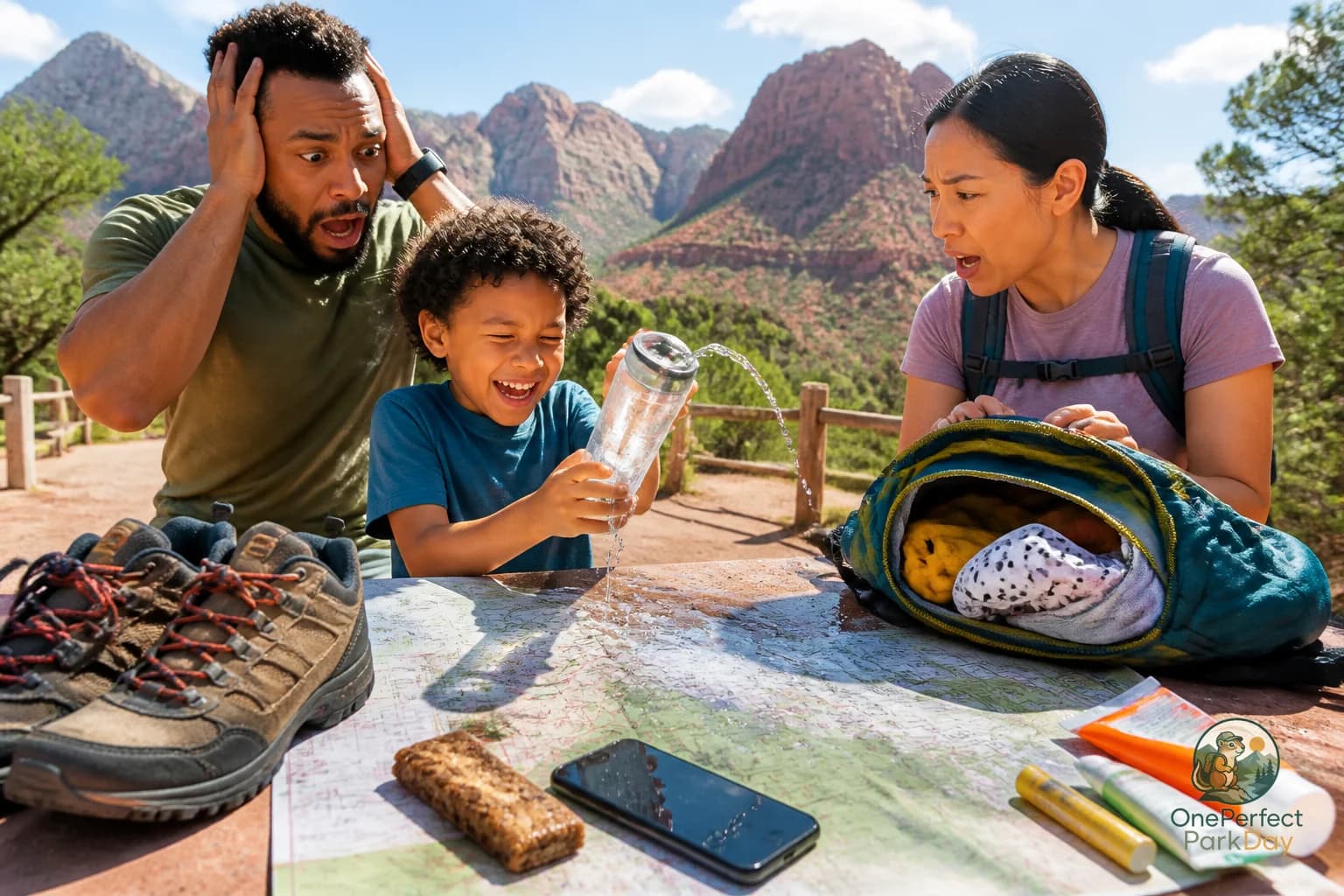
Packing for a US national park day is where people quietly overcomplicate the whole trip. They either bring half the garage because “you never know,” or they show up with a phone, one sad granola bar, and optimism.
Neither is a plan.
A good day bag should match the day you are actually attempting. Scenic drive with overlooks? Different bag. Two short hikes with kids? Different bag. Hot desert afternoon? Very different bag. The goal is not to carry everything. The goal is to avoid the dumb, fixable problems that derail a good park day.
The direct answer
Pack around five things: your route, your weather, your food and water gaps, your planned walking, and your exit options.
For most one-day US national park visits, that means a small daypack with water, snacks or lunch, sun protection, layers or rain gear, a basic first aid kit, navigation backup, a charged phone, and any group-specific items like kid gear, medication, or mobility support.
Then adjust from there.
If your day is mostly overlooks near the car, do not carry a backcountry-style load all day. If your plan includes exposed trails, long shuttle gaps, high elevation, heat, cold, or limited services, do not pretend a gas station coffee and a hoodie will cover it.
Packing is not a moral test. It is a tradeoff between comfort, risk, and how much weight your group will tolerate before everyone gets cranky.
Start with the day you are actually planning
Before you make a packing list, sketch the shape of the day.
Are you staying near one main area, or driving between distant sections? Are you eating inside the park, at the car, or after you leave? Are you walking from stop to stop, using a shuttle where available, or doing quick pullouts? Are your hikes shaded, exposed, steep, wet, sandy, or at elevation?
This is where broad packing lists fall apart. A single “national park packing list” cannot know whether your day is a mellow rim drive, a humid forest walk, a windy overlook crawl, or a high elevation morning followed by a hot afternoon.
A simple one-day plan helps you pack less and pack better. If you have not built the day yet, start with A simple one-day US national park itinerary formula. It gives your bag a job instead of turning it into a fear bucket.
Context factors that change what you bring
The same visitor can need a very different bag from park to park, and even from morning to afternoon. Check these before you pack.
Temperature swing. Mountains, deserts, canyons, coastlines, and high plateaus can feel like different seasons in one day. A light layer can be useless in extreme cold, but no layer at all can ruin an early start or windy overlook.
Sun exposure. Shade is not automatic in a national park. Open slickrock, dunes, beaches, alpine viewpoints, desert roads, and burned forest areas can make sunscreen, sunglasses, hats, and extra water more important than another gadget.
Food access. Some parks have food service in certain areas or seasons. Others have long gaps. Even when food exists, your timing may not line up. Plan meals before hunger makes the decisions. For a deeper pass, use How to plan meals for one day in a US national park.
Water access. Do not assume every stop has potable water. Check current park information before you go, especially in hot parks, remote areas, winter conditions, or places with seasonal closures.
Trail commitment. A short paved overlook walk is not the same as a rocky two-mile trail in heat or rain. Footwear, water, snacks, blister care, and layers should match the hardest thing you realistically plan to do.
Kids and group pace. Kids do not just need “snacks.” They need predictable breaks, spare patience, weather protection, and sometimes a change of socks or clothes. Adults are not immune either.
Service gaps. Cell service can be limited or unavailable. Download maps, save reservation details where needed, and keep your plan accessible offline.
Common packing mistakes
Packing for an imaginary expedition. If everything is within a few minutes of the car, carrying too much can make the day worse. Heavy bags shorten patience, especially with kids.
Packing only for the first hour. A cool morning can turn hot. A sunny forecast can still bring wind, rain, or sudden temperature drops depending on the park. Pack for the full day, not the parking lot moment.
Leaving food in the “we’ll figure it out” category. That usually works until the one cafe is far away, crowded, closed, seasonal, or simply not near your route.
Assuming the car solves everything. It helps, but only if you are near it. If your plan includes shuttles, longer walks, boat access, cave tours, or point-to-point movement, the daypack matters more.
Bringing delicate city shoes. You do not need technical boots for every short walk. You do need shoes that can handle dust, gravel, puddles, boardwalks, stairs, heat, or uneven ground without becoming the main story.
Ignoring the backup plan. A backup does not mean packing for disaster. It means having what you need if you cut a hike short, wait out rain, swap to overlooks, or eat lunch at the car.
Questions to check before you zip the bag
Ask these the night before, not when everyone is standing by the door.
- What is the longest stretch we may be away from the car?
- What is the hottest, coldest, wettest, or windiest part of the day likely to feel like?
- Where are we getting lunch, and what happens if that does not work?
- How much water does our group need before the next reliable refill?
- Are any trails exposed, steep, muddy, icy, sandy, or rocky?
- Do we need anything specific for kids, older adults, medical needs, or comfort?
- What current National Park Service alerts or operating rules could affect our plan?
- If our first-choice stop is too crowded, closed, smoky, stormy, or not worth it, what do we do instead?
That last question is the packing filter. If your backup is “shorter walks and lunch at the car,” pack for that. If your backup is “wait two hours for a shuttle,” pack for that too.
A practical one-day national park packing checklist
Use this as a starting point, then edit for the park, season, route, and group.
Carry in the daypack
- Water for the time you will be away from reliable refills
- Snacks with salt, protein, and something your group will actually eat
- Lunch if food access is uncertain or poorly timed
- Sunglasses, hat, and sunscreen
- Light layer, warm layer, or rain shell based on forecast and elevation
- Small first aid kit with blister care
- Any needed medication
- Phone with offline maps or saved route notes
- Portable battery if you rely on your phone for photos, maps, or reservations
- ID, payment card, park pass or entry details if applicable
- Trash bag or zip bag for wrappers and wet items
- Hand sanitizer or wipes
Keep in the car if you have one nearby
- Extra water
- Cooler or backup meal
- Spare socks or shoes
- Dry layer or warmer layer
- Extra sunscreen
- Simple picnic setup
- Towels, especially for rain, mud, snow, beach areas, or kids
- A printed or written version of the day plan
Add for kids
- More snacks than you think is elegant
- Spare clothes or socks
- Small activity for waits
- Comfort item if needed
- Kid-specific sun, rain, or cold gear
- A clear break plan so the day does not become one long negotiation
Consider for specific conditions
- Traction or warmer gear for winter conditions where appropriate
- Insect protection in buggy seasons and wet areas
- Extra electrolytes for hot days
- Trekking poles if your group already uses them and the terrain warrants it
- Waterproof bag or cover if rain is likely
Pack the backup plan, not your anxiety
The smartest national park day bag is usually boring. Water. Food. Layers. Sun protection. Footwear that can handle the plan. A few small things that prevent small problems from becoming the whole day.
Do not pack like you are trying to prove something. Pack so your group can enjoy the main thing you came to see, adapt when weather or timing changes, and still have enough energy for the ride out.
Check current National Park Service alerts, weather, road conditions, trail information, and operating rules before you go. Then make the bag match your real day, not someone else’s highlight reel.
Want help shaping the day before you pack the bag? Start with One Perfect Park Day at oneperfectparkday.com.
Practical note
This article is general US National Park planning information. Park rules, hours, weather, trail conditions, road closures, shuttle service, accessibility procedures, permits, and crowd levels can change. Check the official National Park Service site or app before relying on any plan.