
Planning / 7 min read
What to bring to a US national park for one day when the forecast is uncertain
A practical one-day US national park packing guide for uncertain weather, changing temperatures, short hikes, scenic stops, meals, water, and backup plans.
September 28, 2026
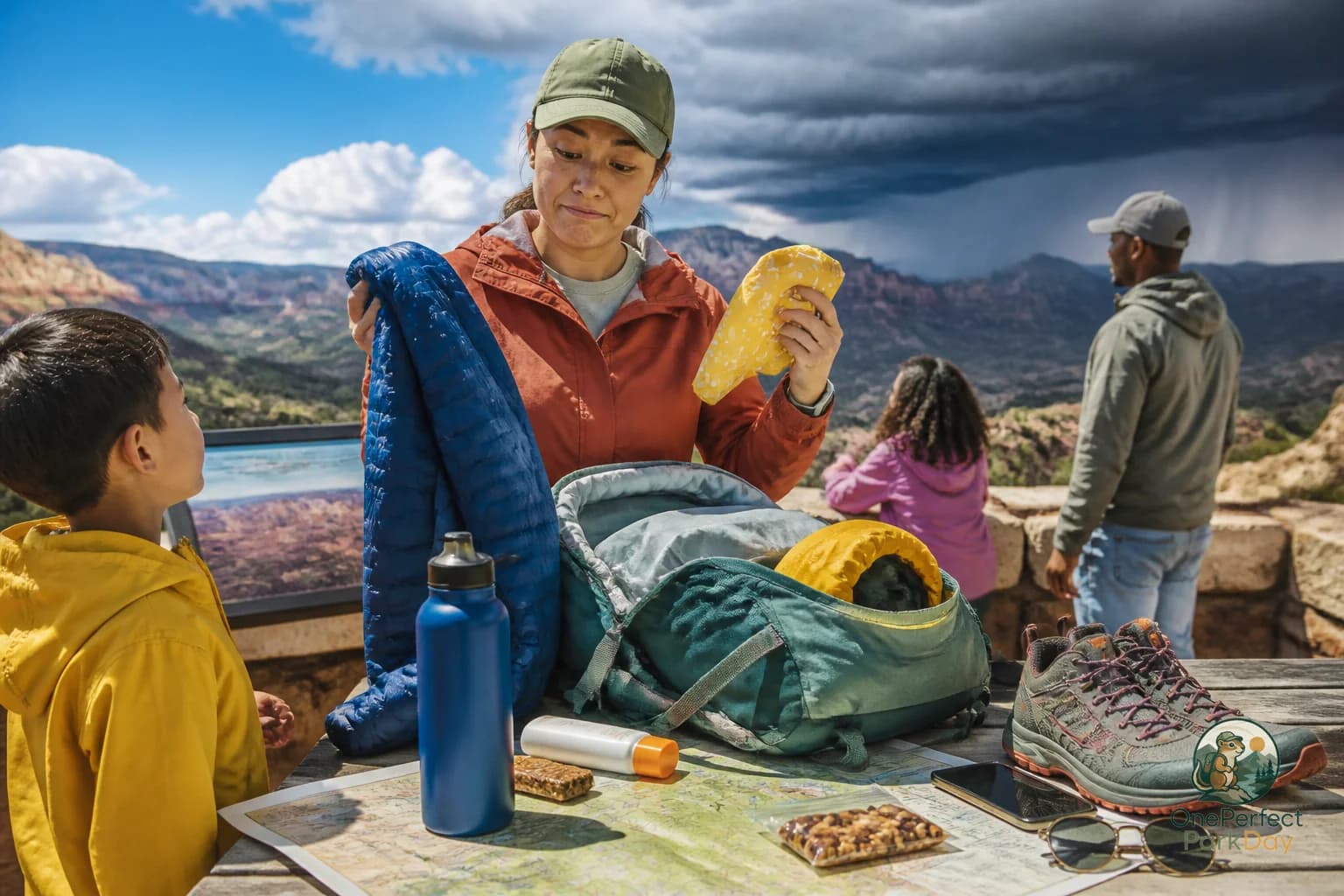
Most one-day US national park packing advice sounds like it was written for someone who owns a gear closet and enjoys sorting tiny bags. Casual visitors need something simpler: what keeps the day comfortable if the forecast changes, the overlook is windy, the trail is hotter than expected, or lunch takes longer than planned.
You do not need to pack for every possible disaster. You do need to pack for the parts of the day most likely to mess with your mood: sun, cold, wet clothes, hunger, thirst, tired kids, and a plan that takes longer than it looked on the map.
Short answer
For one day in a US national park with an uncertain forecast, bring a small daypack with water, snacks, sun protection, a light insulating layer, a rain shell if there is any real chance of weather, basic first aid, a charged phone, offline maps, and the few personal items your group actually needs.
Keep backup supplies in the car if you will return to it during the day: extra water, dry socks, a warmer layer, simple lunch food, trash bags, towels, and a change of clothes for kids. If you are relying on shuttles, boats, tours, or a long out and back route, assume the car stash does not exist once you leave it.
That is the tradeoff. A lighter bag feels better, but only if the important backup items are still reachable when the weather turns.
Start with the day you are actually planning
Packing should follow the itinerary, not the other way around.
A scenic drive with short overlook stops needs different gear than a day built around a longer hike. A shuttle based park day needs more self sufficiency than a car based day. A hot desert park asks for more water and sun coverage. A mountain park can swing from warm to cold fast, especially if you change elevation.
Before you pack, sketch the day in broad pieces:
- How long will you be away from the car at a time?
- Will you hike, walk boardwalks, ride a shuttle, take a boat, or mostly drive?
- Are food and water available inside the park, or should you assume they are not convenient?
- Will your group tolerate carrying layers, or will everything become your job?
- Is the forecast uncertain because of rain, heat, wind, cold, smoke, or afternoon storms?
If your itinerary is still fuzzy, use a flexible plan instead of a giant packing list. This guide pairs well with How to build a flexible one-day US national park plan.
Pack for discomfort, not fantasy emergencies
People often overpack for dramatic scenarios and underpack for the boring stuff that actually ruins a day.
The boring stuff wins. Wet socks. No shade. A kid who needed a snack 40 minutes ago. A cold wind at the viewpoint. A phone battery dying when you still need directions back to lodging. A beautiful trail that feels miserable because everyone wore the wrong layer.
For uncertain weather, think in systems:
- Water: enough for the route, temperature, and people in your group, plus more in the car if possible.
- Food: snacks you can eat without cooking, waiting in line, or unpacking half the vehicle.
- Sun: sunglasses, sunscreen, hats, and clothing coverage.
- Warmth: one light layer that works when the temperature drops or wind picks up.
- Rain: a real rain shell or poncho if wet weather is plausible.
- Feet: shoes that match the surface, plus backup socks if water, mud, or kids are involved.
- Navigation: downloaded maps and enough battery to use them.
This is not glamorous. It is just how you keep a good day from getting hijacked by small problems.
Common mistakes that make packing harder
The first mistake is packing one bag for the whole family, then letting that bag get too heavy. If one person carries all the water, food, layers, and kid supplies, that person becomes the pack mule and the pace setter. Split weight where it makes sense.
The second mistake is trusting the morning temperature. Many parks change quickly by elevation, shade, wind, cloud cover, and time of day. A mild parking lot can turn into a chilly overlook or a hot exposed trail.
The third mistake is packing lunch like you will definitely have a calm picnic. Maybe you will. Or maybe the picnic area is full, windy, buggy, closed, or too far from where you are when people get hungry. Bring food that works in the car, at a pullout, or on a bench.
The fourth mistake is putting the important layer in the car when your plan includes a long shuttle loop, boat ride, or point to point walk. Car supplies are useful only when the car is accessible.
The fifth mistake is forgetting the exit. By late afternoon, the group may be dusty, damp, tired, or done talking about scenery. A few dry supplies in the car can make the ride back much less cranky.
For pacing the day itself, read How to pace one day in a US national park without wearing everyone out.
Questions to check before you zip the bag
Use these before you leave your lodging, not after you reach the entrance station.
- If rain starts while we are away from the car, who gets wet first?
- If the sun is stronger than expected, does everyone have coverage?
- If lunch plans fail, can we still feed people without leaving the park right away?
- If the trail takes longer than expected, do we have enough water and snacks?
- If someone gets cold at an overlook or on a shuttle, where is the layer?
- If a phone dies, do we still have directions or a second device?
- If a child spills water, steps in mud, or gets carsick, what is the fix?
- If the official park alerts change the plan, do we have an easy backup?
That last question is important. Always check current National Park Service alerts, weather, road conditions, reservation rules, and operating updates for the specific park you are visiting. A packing list helps, but it does not replace current conditions.
A practical one-day checklist
Use this as a starting point, then cut or add based on the park, season, and group.
In the daypack:
- Water for the time away from the car
- Salty and easy snacks
- Sunscreen and lip balm
- Sunglasses and hats
- Light insulating layer
- Rain shell or poncho if weather is possible
- Basic first aid items and personal medications
- Phone with downloaded maps
- Portable charger and cable
- Small trash bag
- Hand sanitizer or wipes
- ID, pass, reservation proof, or timed entry confirmation if required
In the car if you will return to it:
- Extra water
- More substantial food or lunch supplies
- Dry socks
- Warmer layer
- Towels or seat cover
- Change of clothes for kids
- Extra sunscreen
- Cooler if food safety requires it
- Trash bag for wet or dirty items
For kids or mixed energy groups:
- More snacks than seems reasonable
- A comfort item for the drive or shuttle wait
- Simple activity for downtime
- Layers they can put on quickly
- A clear turnaround point before everyone is fried
Keep the list honest
The goal is not to carry the most prepared looking backpack in the parking lot. The goal is to keep your one park day flexible enough to handle normal changes without turning every stop into a negotiation.
Pack for the day you are actually doing. Keep the car stocked if it will be reachable. Carry the items that protect water, food, warmth, sun, rain, and navigation when you are away from it. Then let the plan breathe a little.
If you want help turning the packing list into a calmer route, One Perfect Park Day can help you shape one realistic day around timing, stops, breaks, meals, and backup options: start planning here.
Practical note
This article is general US National Park planning information. Park rules, hours, weather, trail conditions, road closures, shuttle service, accessibility procedures, permits, and crowd levels can change. Check the official National Park Service site or app before relying on any plan.