
Planning / 7 min read
What to pack for one day in arches national park when the heat runs the schedule
A practical one-day Arches National Park packing plan for heat, sun, short hikes, food, water, timed entry details, and backup stops without overloading your group.
September 15, 2026
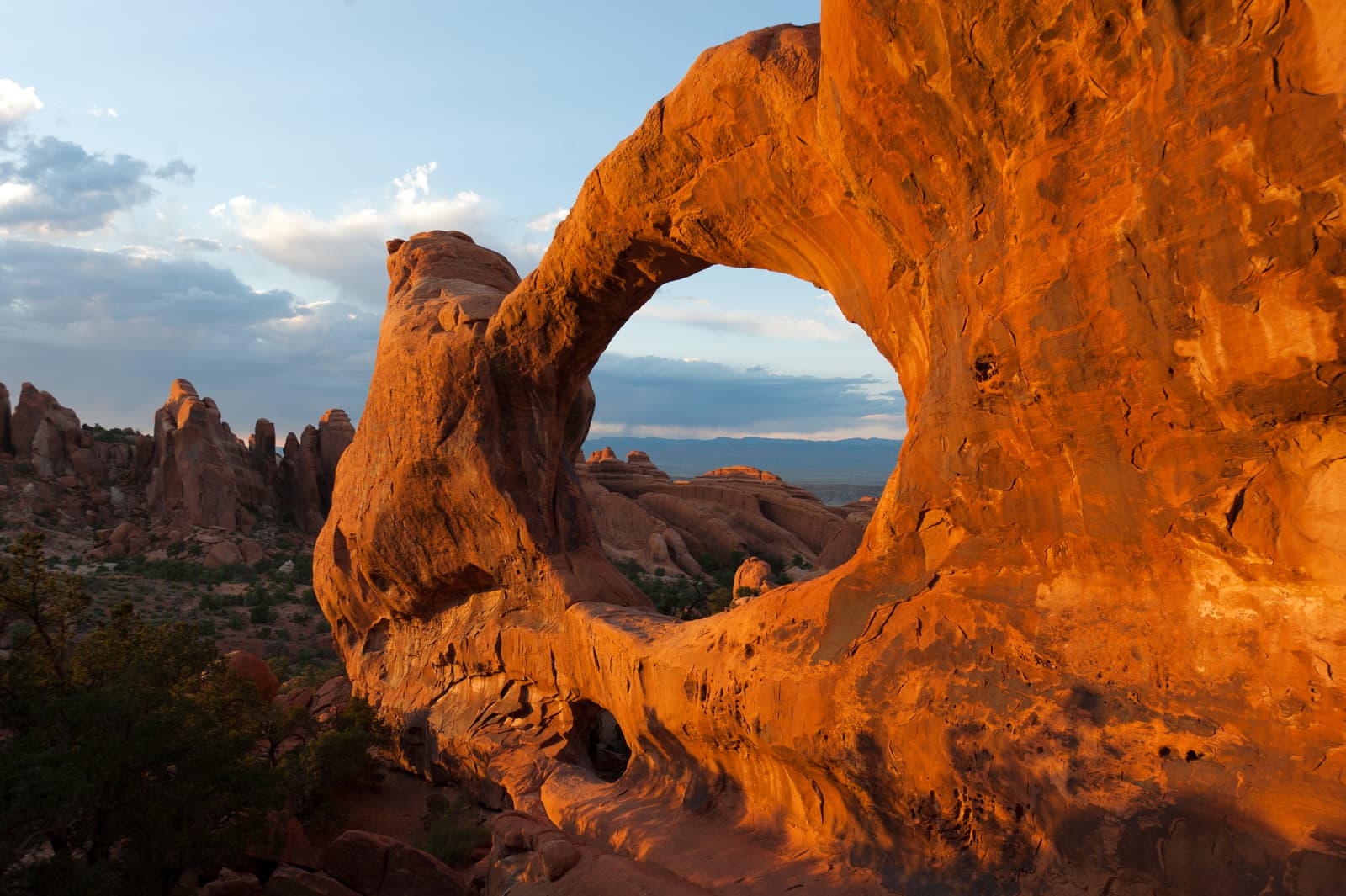
Arches National Park looks simple on a map. One main park road, famous arches, short stops, big views. That simplicity is a trap if your packing list is built for a casual scenic drive instead of a hot, exposed desert day.
The question is not “what can we fit in the backpack?” It is “what will keep the day from collapsing when the sun, parking, hunger, and group energy start making decisions for us?”
Before you rely on any plan, check current National Park Service alerts, timed entry or reservation rules, road and trail status, weather, fire restrictions, and any current closures. Arches can be straightforward, but it is not static.
The short answer
For one day in Arches National Park, pack for heat first, then food and water, then flexibility.
That means you want enough water for everyone, sun protection you will actually use, salty snacks, a simple lunch plan, shoes that can handle slickrock and sand, a small first aid kit, layers for early or late hours, offline maps, and a backup plan that does not require your group to rally for another exposed hike.
Do not pack like every stop will be easy and shaded. Pack like the best version of the day happens because you know when to stop pushing.
A good Arches daypack is not huge. The extra supplies can live in the car if you are returning to it between stops. The mistake is leaving the important stuff in Moab, not leaving it in the wrong pocket.
Why Arches changes the packing list
Arches is a desert park with limited shade on many popular stops. Even short trails can feel longer when the sun is high, the rock is reflecting heat, and your group has already done two “quick” walks.
The park also has a timing problem. If timed entry is in effect, your entry window may shape your whole morning. If you enter later, you may hit warmer conditions sooner. If you enter early, you may need breakfast, layers, and patience before everyone feels awake. Either way, packing is part of the schedule.
There is no need to turn one day into a survival expedition. But you should assume services are limited once you are in the park, cell signal may not help when you want it to, and driving back out for one forgotten item will cost more time than you think.
If you are still deciding how much your group can realistically handle, it may help to compare this with How to plan a one-day US national park itinerary by energy level. Arches rewards honest energy planning.
Context factors that should shape your bag
Start with the forecast, not the Instagram version of the park. Check the expected high, wind, chance of storms, sunrise and sunset, and any heat advisories. A cool morning can still become a rough afternoon.
Then look at your route. A day built around Delicate Arch asks more from the group than a day focused on viewpoints, the Windows Section, Balanced Rock, and shorter walks. A Devils Garden plan asks different questions than a scenic drive plan. Your packing list should match the hardest thing you are actually likely to do, not the hardest thing someone mentioned in the car.
Food matters more here than people admit. Hunger turns small parking frustrations into group politics. If you are planning to eat outside the park, know when that happens. If lunch is inside the park, keep it simple, pack it so it survives heat, and bring a trash plan.
For more help on that piece, see How to plan meals for one day in a US national park.
Accessibility and group needs matter too. If someone needs trekking poles, medication, cooling towels, a knee brace, extra shade, or more frequent breaks, those are not “extras.” They are the difference between a calm pivot and a miserable argument at the trailhead.
Common packing mistakes in Arches
The first mistake is treating water like a nice-to-have. Carry water with you on walks and keep extra in the vehicle. The right amount depends on weather, group size, trail choice, and personal needs, but “we will just drink when we get back” is weak planning in a hot desert park.
The second mistake is packing for the first stop only. Early light can be cool and pleasant. Midday can feel like a different park. If your bag has a jacket but no sun hat, no sunscreen, and no electrolyte or salty snack option, the packing list is upside down.
The third mistake is bringing the wrong shoes because the hikes look short. Slickrock, sand, uneven stone, and heat can make flimsy footwear annoying fast. You do not need mountaineering boots for most casual routes, but you do need shoes your feet trust.
The fourth mistake is assuming the car solves everything. It helps, but only if the supplies are in it: extra water, backup snacks, dry layers, a phone charger, and a cooler if you are carrying perishable food.
The fifth mistake is packing a day that requires perfect compliance from kids, grandparents, or tired adults. Nobody becomes a better version of themselves because the itinerary says “optional add-on.”
Questions to check before you finish packing
Ask these before you leave your lodging or campsite:
- Is timed entry, a reservation, or another entry rule in effect for our visit date?
- Are any roads, parking areas, or trails on our plan currently closed or restricted?
- What is the hottest part of the day expected to feel like for our group?
- Which stop is our main priority, and what are we willing to skip?
- Where will we eat lunch, and what happens if that timing slips?
- How much water do we need in the car, and how much needs to leave the car with us?
- Who in the group needs medication, mobility support, shade, or extra breaks?
- What is our low energy backup if the afternoon gets too hot or too crowded?
If you cannot answer those questions, the issue is not that you need a bigger bag. You need a simpler day.
Simple one-day Arches packing checklist
Use this as a starting point, then adjust for current conditions and your group.
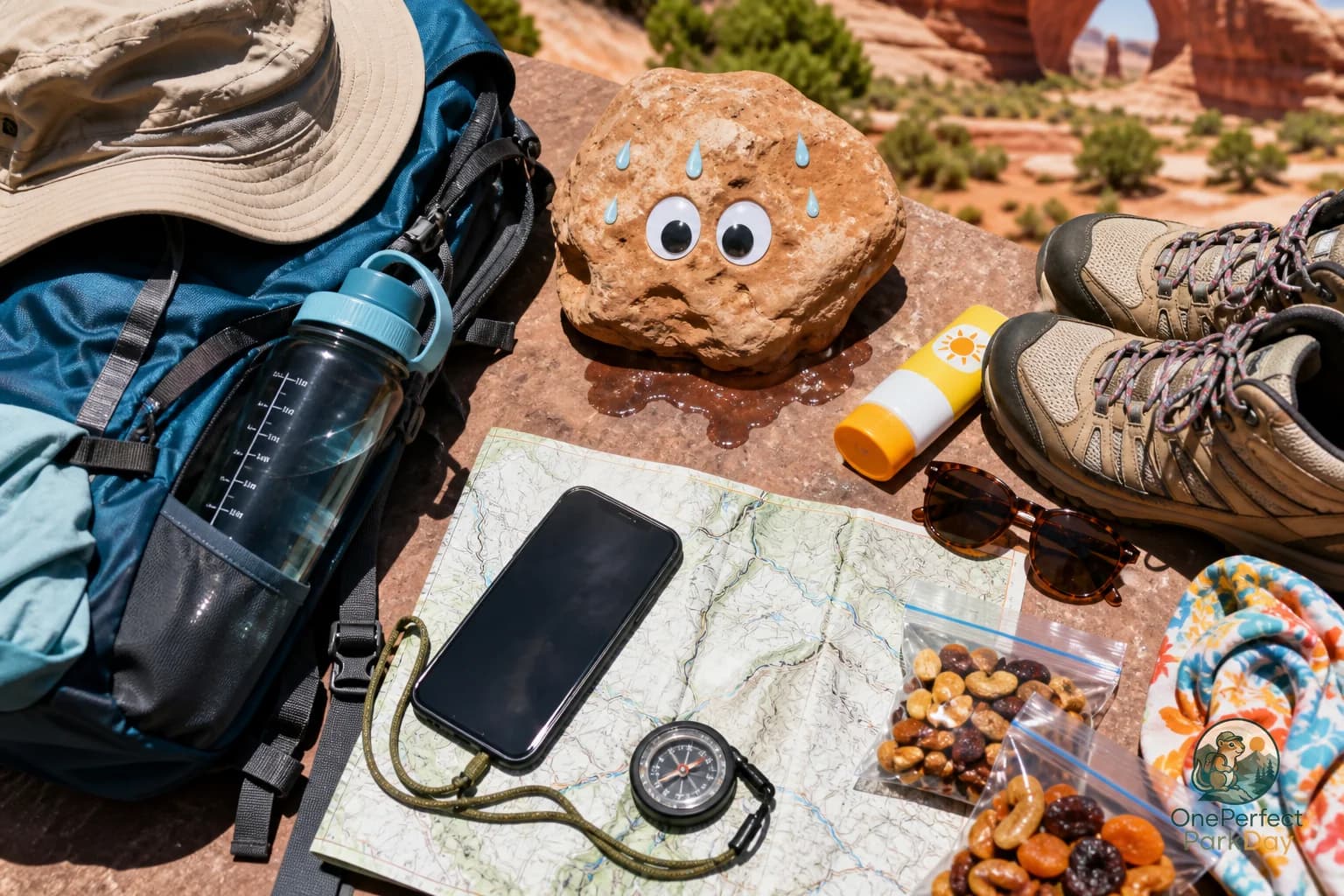
- Water for each person, plus extra in the vehicle
- Salty snacks and a simple lunch or clear meal plan
- Sunscreen, sunglasses, and a brimmed hat
- Comfortable walking shoes with grip
- Light layers for early morning, wind, or late day temperature changes
- Small first aid kit with blister care
- Personal medications and any kid or accessibility supplies
- Offline map or downloaded park information
- Fully charged phone and car charger or battery pack
- Timed entry details, reservation information, or pass details if required
- Trash bag for food wrappers and picnic waste
- Cooling towel or bandana in warm weather
- Headlamp or small flashlight if starting early or staying near sunset
- Camera or binoculars only if they will not crowd out water, food, or layers
The point is not to carry everything on every trail. Use the car as your base, then carry the essentials when you step away from it: water, sun protection, phone, small first aid basics, and whatever your group personally needs.
A realistic way to use the checklist
Pick one main area, one backup area, and one optional add-on before the day starts.
For example, your main area might be the Windows Section because it gives you several high reward stops close together. Your backup might be a shorter scenic stop if parking or heat changes the mood. Your optional add-on might be a later viewpoint or short walk if the group still has energy.
That structure keeps the packing list honest. You are not packing for every possible Arches hike. You are packing for the day you are most likely to have.
If the weather is hotter than expected, move slower and cut the optional piece first. If parking is frustrating, do not let one full lot hijack the whole day. If kids or adults start fading, use the snacks, water, shade, and backup plan before the day turns sour.
Arches does not need to become a checklist of famous rock formations. With one day, the win is leaving with a few strong stops, a group that still likes each other, and no preventable meltdown caused by heat, hunger, or wishful packing.
Want a calmer starting point for your own park day? Build your plan with One Perfect Park Day at oneperfectparkday.com.
Practical note
This article is general US National Park planning information. Park rules, hours, weather, trail conditions, road closures, shuttle service, accessibility procedures, permits, and crowd levels can change. Check the official National Park Service site or app before relying on any plan.