
Planning / 5 min read
How early should you arrive for one day in a US national park
A practical guide to choosing your arrival time for one day in a US national park without guessing, overdoing it, or wrecking the rest of the day.
September 10, 2026
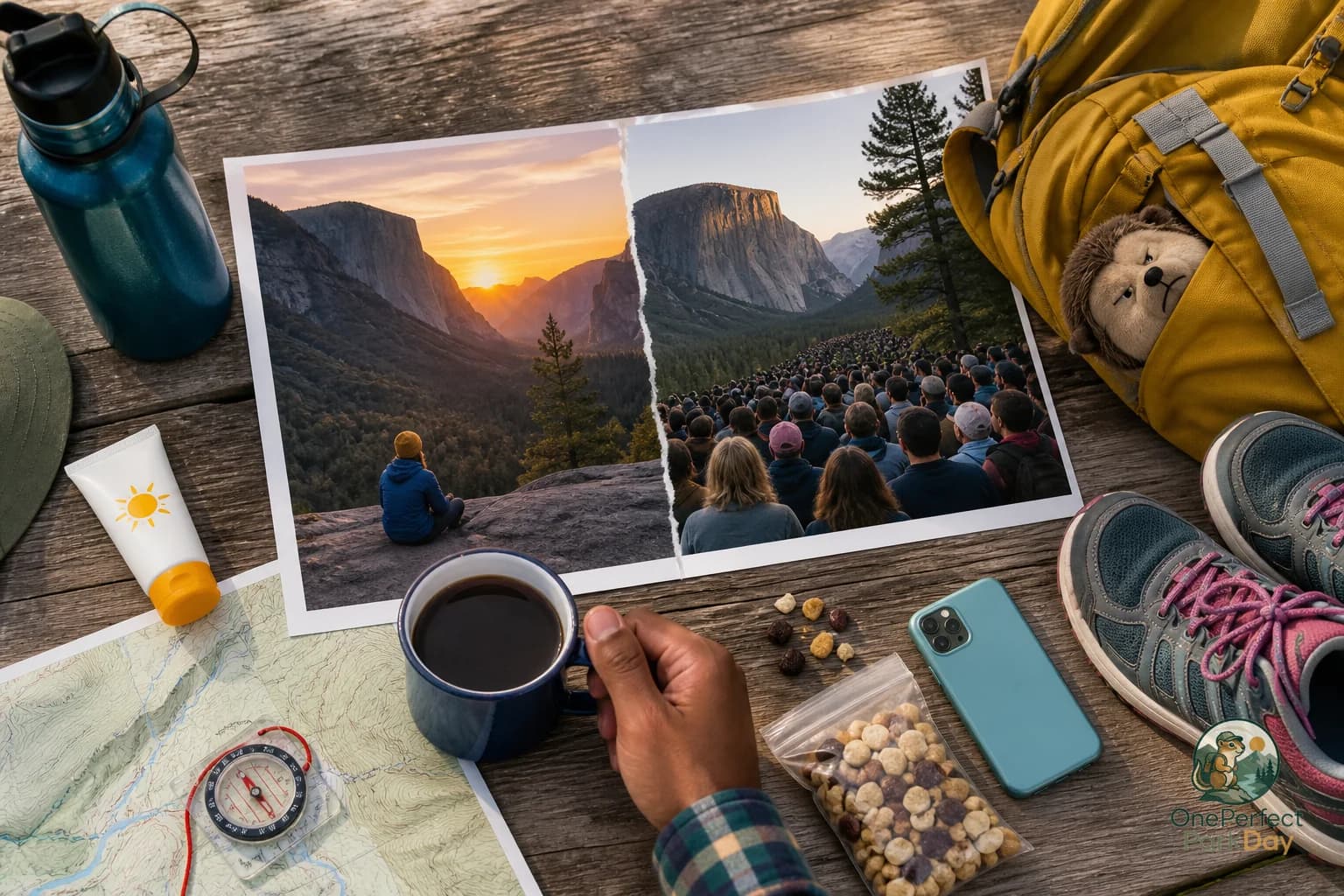
Getting there early is good advice. It is also incomplete advice.
For a one day US national park visit, arrival time is not just about beating crowds. It shapes your parking odds, trail comfort, meal timing, patience level, and whether the afternoon feels like a bonus or a slow collapse. The trick is not to wake up at a heroic hour for no reason. The trick is to arrive early enough for the day you are actually trying to have.
The short answer
For most one day national park visits, aim to be inside your chosen area early in the morning, not just pulling up to the entrance station.
That usually means planning backward from your first real stop: trailhead, shuttle lot, scenic overlook, visitor center, timed entry window, or popular parking area. If the drive from lodging to the park is 45 minutes, and the first parking area can fill early, “arrive at 8” may really mean leaving by 6:45 or 7.
But do not treat early arrival like a moral contest. A sunrise start can be great for heat, wildlife viewing from a distance, photography, and quiet trails. It can also be a mess if your group is underfed, underdressed, or exhausted before lunch.
A better target is this: arrive early enough to protect your highest priority stop, then plan the rest of the day around lower pressure choices.
If you only remember one thing, make it that.
What changes the right arrival time
Arrival timing depends on the park, the season, and your plan. A summer Saturday at a famous overlook is different from a shoulder season weekday with short roadside stops.
Start with these factors.
Parking pressure
Some parks have a few obvious choke points: small lots, famous trailheads, narrow scenic roads, or shuttle hubs. If your first stop depends on one of those, earlier matters more.
If your plan uses a less crowded area, a scenic drive, or several short overlooks, you may not need the same aggressive start. You still want buffer time, but you are not betting the whole day on one parking lot.
Heat and exposure
In hot parks, early arrival is often more about comfort than crowds. Open trails, desert landscapes, high glare, and limited shade can turn a modest walk into a grind by late morning.
If heat is the main issue, do your walking early, then save shaded stops, visitor centers, scenic drives, picnic breaks, or shorter overlooks for later.
Shuttle systems and timed entries
Some parks use shuttles, reservations, timed entry, road restrictions, or seasonal access rules. These change year to year and sometimes during the season, so check current National Park Service alerts and operating information before you go.
Do not build a plan that assumes you can casually show up and slide into the exact shuttle, road, or parking area you want. That is how a one day itinerary starts leaking time before breakfast.
Group energy
An early start with adults who packed the night before is one thing. An early start with kids, grandparents, new hikers, or a group that went to bed late is another.
You are planning a park day, not proving toughness. If a very early wake up will make everyone miserable by 10:30, choose a simpler first stop or a later, more realistic start.
For pacing help, see How to pace one day in a US national park without wearing everyone out.
Distance from lodging
People often say they will arrive at 7:30, then forget the layers between bed and the first stop: packing bags, loading the car, breakfast, gas, entrance lines, bathroom stops, and the drive inside the park.
Your arrival time should mean “ready to begin the first activity,” not “somewhere near the park boundary.”
What people get wrong about arriving early
The biggest mistake is chasing the earliest possible start without deciding what it is supposed to accomplish.
If you arrive early but spend the first hour debating where to go, standing in a bathroom line, repacking bags, or hunting for breakfast, you did not really gain much. You just moved the confusion earlier.
Another mistake is putting the most fragile stop too late. If the one thing your group truly cares about depends on parking, weather, visibility, shuttle timing, or heat, do not save it for after three “quick” stops. Quick stops are rarely quick when there are bathrooms, photos, snacks, and people moving at different speeds.
A third mistake is refusing to adjust. If you arrive later than planned, do not punish everyone by sprinting through the original itinerary. Cut the weakest stop and protect the best part of the day. That is usually the calmer move.
If you need a broader structure for deciding what stays and what goes, read What to leave out of a one-day US national park itinerary.
Questions to ask before choosing your arrival time
Use these before you set the alarm.
- What is the first stop we would be most disappointed to miss?
- Does that stop depend on limited parking, shuttle timing, reservations, or cooler temperatures?
- How long does it really take to get from lodging to that stop, including entrance time and the drive inside the park?
- Do we need breakfast before entering, or can we eat something simple on the way?
- Are we trying to hike, sightsee, picnic, photograph, or just sample the park?
- What will we do if we arrive 45 minutes later than planned?
- What is our first easy backup stop nearby?
- When does the group usually run out of patience?
That last question sounds soft. It is not. A national park day often breaks because the plan ignores humans.
A simple arrival timing checklist
Use this the night before your visit.
- Check current NPS alerts, road status, reservation rules, shuttle details, and weather.
- Pick one first priority area or stop.
- Estimate the drive from lodging to the park entrance.
- Estimate the drive from the entrance to the first real stop.
- Add time for parking, bathrooms, sunscreen, layers, and snacks.
- Pack the day bag before bed.
- Put water, breakfast, and first snacks somewhere easy to reach.
- Choose a backup first stop in the same general area.
- Decide what you will cut if the morning starts late.
- Set an arrival goal for the first activity, not just the gate.
For a casual one day visit, this is usually enough. You do not need a military schedule. You need a morning that does not waste your best conditions.
So how early is early enough?
Early enough means your first important stop still has a fair shot of working without turning the rest of the day into damage control.
For a popular trailhead in peak season, that may mean a very early start. For a scenic drive day with flexible overlooks, it may mean a normal breakfast and a cleaner plan. For a hot park, it may mean walking first and driving later. For a family day, it may mean choosing a less famous first stop so nobody starts the day in tears.
The tradeoff is simple. Earlier gives you more options, cooler temperatures in many parks, and more breathing room. Too early can cost sleep, patience, and afternoon energy. Later can be perfectly fine if your plan is built for it. Later is risky if your plan depends on high demand parking or heat sensitive trails.
Name the risk before you go. Then choose the arrival time that protects what you care about most.
If you want help turning that into a realistic one day plan, start with One Perfect Park Day at oneperfectparkday.com.
Practical note
This article is general US National Park planning information. Park rules, hours, weather, trail conditions, road closures, shuttle service, accessibility procedures, permits, and crowd levels can change. Check the official National Park Service site or app before relying on any plan.