
Planning / 7 min read
How many stops to plan for one day in a US national park
A realistic way to decide how many overlooks, hikes, scenic stops, meals, and breaks to plan for one day in a US National Park without turning the day into a forced march.
August 3, 2026
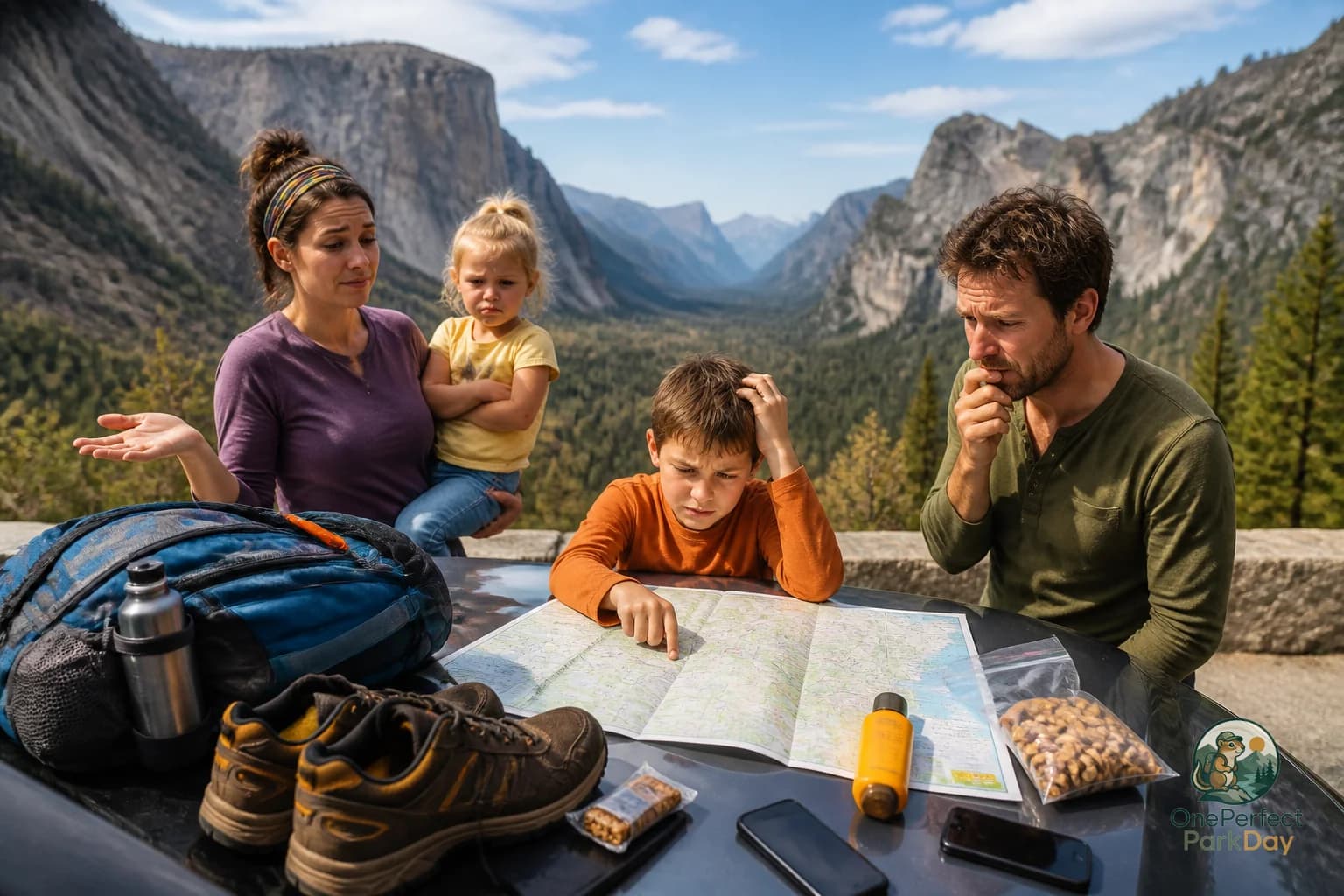
A one-day US National Park plan can go sideways fast when every overlook, trail, visitor center, scenic drive, picnic spot, and sunset viewpoint gets treated like a must-do.
The fix is not to stop caring. It is to stop pretending a park day has unlimited usable time.
Your goal is to choose enough stops to make the day feel full, but not so many that every bathroom break feels like a betrayal.
A good starting point
For most casual visitors, a realistic one-day US National Park plan has 3 to 5 planned stops, plus optional add-ons if the day is going well.
That does not mean only 3 to 5 things total. A stop can include several small pieces, like parking, walking to an overlook, taking photos, using the restroom, and eating a snack. The mistake is counting only the scenic moment and ignoring everything around it.
A simple structure looks like this:
- 1 early anchor stop, usually the most popular view, trail, or scenic area
- 1 late morning or midday stop with lower pressure
- 1 real break for food, shade, restrooms, or regrouping
- 1 afternoon stop that can be shortened if needed
- 1 final scenic stop only if energy, weather, daylight, and parking cooperate
If you are visiting a huge park, using shuttles, traveling with kids, hiking at elevation, or dealing with summer heat, lean closer to 3. If the park has short distances, easy overlooks, long daylight, and your group moves well, 5 may be comfortable.
What changes the number
Stop count is not just about ambition. It is about friction.
Driving distance matters. Ten miles inside a national park can take longer than expected when roads are winding, parking is tight, wildlife causes slowdowns, or every pullout has a view worth noticing.
Parking and shuttles change the math. A stop that looks quick on a map may require waiting, walking from an overflow lot, or timing a return shuttle. If your park uses shuttles or timed entry, build the day around those constraints instead of treating them like background details. For more on that, use How to plan a national park day around shuttles and timed entry.
Group speed matters more than group enthusiasm. Everyone may want to see five viewpoints in the morning. That does not mean everyone can happily load and unload from the car five times, walk in sun, wait for restrooms, and keep smiling.
Weather eats time. Heat, rain, wind, smoke, icy patches, and afternoon storms can all slow the day down. A shorter plan with a smart backup often beats a packed plan that collapses at the first weather shift.
Meals and restrooms are stops too. If lunch requires unpacking a cooler, finding shade, waiting for a table, or driving to a picnic area, count it. If your group includes kids, older adults, or anyone managing medication, hydration, or mobility needs, count those pauses with respect.
What people get wrong
The most common mistake is building the day from a list instead of from time.
A list says: overlook, short hike, visitor center, scenic drive, picnic, waterfall, sunset.
A real day says: park, walk, bathroom, sunscreen, photos, snack, drive, find the next lot, wait for someone to change shoes, check the sky, miss a turn, regroup.
Another mistake is treating every stop as equal. A five minute roadside viewpoint and a two hour waterfall hike are not both one item. If you want a cleaner plan, label each stop by weight:
- Light: overlook, restroom, quick photo, short boardwalk
- Medium: visitor center, picnic, short trail, shuttle transfer
- Heavy: longer hike, major scenic area, crowded parking zone, sunset location
A one-day plan can usually handle one heavy stop, one or two medium stops, and a few light stops. Two heavy stops can work for strong groups in the right park, but it leaves less room for weather, food, and fatigue.
People also forget that the best stop of the day may not be the most famous one. Sometimes the calmer overlook with easy parking becomes the memory because nobody is hungry, hot, or arguing about the schedule.
If you are still deciding what deserves priority, read How to choose must-see stops for one national park day.
Questions to check before you lock the plan
Before you settle on your stop count, ask these questions:
- What is the one stop we would regret missing most?
- Which stop is most sensitive to parking, shuttle timing, heat, storms, or daylight?
- How long is the longest drive between planned stops?
- Where do we eat if picnic tables are full or weather turns bad?
- Which stop can be cut without wrecking the day?
- Are we asking kids, grandparents, or tired adults to move too often?
- Do we have a turnaround time for the afternoon?
- Have we checked current park alerts, road status, weather, and operating rules before going?
That last one matters. A clean plan on paper still needs to bend to current conditions.
A simple stop-count checklist
Use this as a quick planning filter:
- Pick 1 main anchor stop for the day
- Add 1 or 2 supporting stops nearby or along the same route
- Count lunch, restrooms, and long shuttle transfers as real stops
- Mark each stop light, medium, or heavy
- Avoid stacking two heavy stops unless your group is prepared for it
- Keep 1 optional stop for later instead of forcing it into the core plan
- Choose the first stop based on crowd pressure, heat, or access limits
- Choose the final stop based on energy and daylight, not guilt
- Build in at least one planned pause where nobody has to perform
- Check current NPS alerts and local conditions before committing
A good one-day plan should have a point where you can say: if we only do this much, the day still works.
A realistic way to finish the day
The last stop should not be the place where the whole plan goes broke.
If everyone still has energy, the weather is holding, and daylight looks reasonable, use your optional stop. If not, end with an easier overlook, a slow drive, or a quiet picnic pullout. That is not quitting. That is reading the room.
The best national park days usually have shape, not squeeze. A strong morning, a sane middle, and an adjustable afternoon will beat a checklist marathon almost every time.
If you want help turning your must-see list into a calmer one-day plan, start with One Perfect Park Day at https://oneperfectparkday.com/?utm_source=mdx.
Practical note
This article is general US National Park planning information. Park rules, hours, weather, trail conditions, road closures, shuttle service, accessibility procedures, permits, and crowd levels can change. Check the official National Park Service site or app before relying on any plan.