
Planning / 7 min read
How to choose must-see stops for one national park day
A practical way to choose must-see stops for one day in a US national park without overloading your route, your schedule, or your group.
July 22, 2026
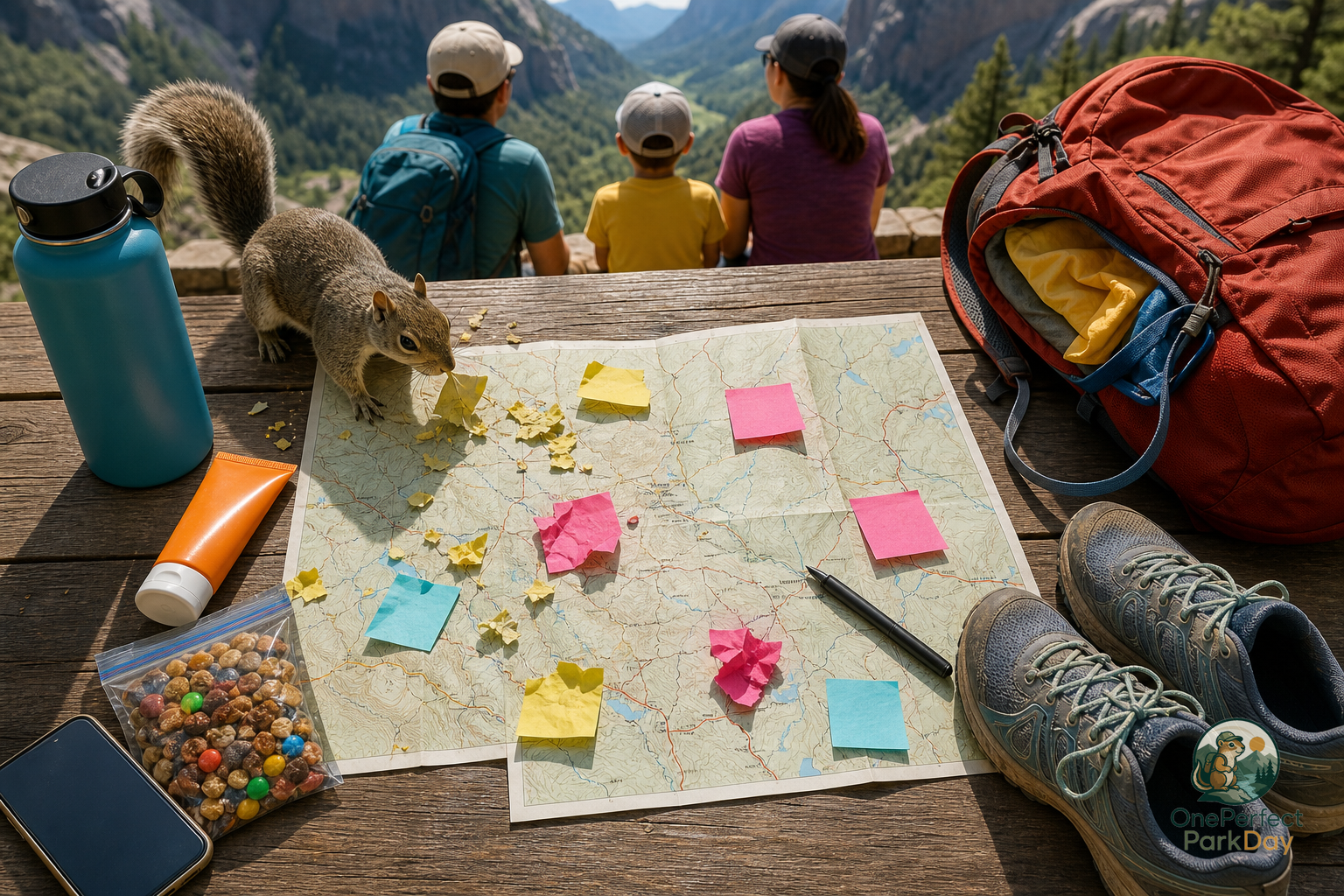
Most one day national park plans fail for a simple reason: the list is too long before the car even reaches the entrance station.
You see a scenic overlook, a waterfall, a visitor center, a famous trail, a historic area, a lake, a wildlife road, and three viewpoints that all look non negotiable. Then real life shows up. Parking takes longer. The first short hike is hotter than expected. Someone needs lunch. A storm builds over the ridge. Suddenly the day is not ruined, but the plan is.
Choosing must-see stops is not about lowering your standards. It is about protecting the parts of the day you actually care about.
The short answer
For one day in a US national park, choose three must-see anchor stops, two optional stops, and one easy bailout plan.
That is usually enough structure for a satisfying day without pretending you can bend daylight, shuttle timing, heat, kids, traffic, and your own legs to fit a fantasy route.
Your three anchor stops should include:
- One signature place you would regret missing
- One activity that gets you out of the car
- One quieter or easier stop that gives the day breathing room
The optional stops are bonus material. They are not moral obligations. If the day is going well, use them. If not, skip them without turning the afternoon into a guilt tour.
The bailout plan is the part people forget. It might be a shorter loop, an earlier scenic drive exit, a visitor center break, or a picnic area where everyone can reset before heading out.
What should shape your must-see list
Start with the park, but plan for your group.
A strong must-see list depends on five things.
First, entrance and travel time. If it takes 90 minutes just to reach the first viewpoint from your lodging, your day is shorter than it looks on paper.
Second, park layout. Some US national parks are built around one main road. Others are spread across separate districts that can take hours to connect. Two famous stops may be close on a map of the whole park and still awkward in real driving time.
Third, weather and season. A midday overlook can be brutal in summer heat. A waterfall trail may be slick after rain. A high elevation viewpoint may feel completely different from the town where you started. Check current NPS alerts and operating rules before you commit to a route.
Fourth, group energy. Adults overestimate how much they want to hike after lunch. Kids often do better with shorter bursts, snacks, shade, and something tactile, like rocks, water, sand, or a boardwalk.
Fifth, the cost of each stop. Every stop costs time, walking, parking effort, decision energy, and recovery. Even easy stops add up.
What people get wrong
The most common mistake is treating every famous place as equally important.
They are not.
Some stops are famous because they are genuinely special. Some are famous because they are easy to photograph. Some are famous because everyone else put them on the same list years ago and now nobody wants to be the person who skipped them.
Another mistake is stacking too many short stops. Ten quick viewpoints sounds efficient. In practice, it can mean ten parking searches, ten buckles and unbuckles, ten photo pauses, and zero real sense of being in the park.
People also forget meals and water until the schedule is already tight. If you are still sorting that part out, this guide on how much food and water to bring for one day in a US national park is a useful companion.
The final mistake is refusing to cut anything. A one day park plan needs a delete button. If everything is required, nothing is prioritized.
Questions to check before you lock the route
Ask these before you call something a must-see.
- Would we still care about this stop if the weather is cloudy, hot, smoky, wet, or windy?
- Is this stop different from the other stops on our list, or just another version of the same view?
- How much walking does it require, including the walk from parking or shuttle drop off?
- Is there a bathroom, shade, water refill, picnic area, or visitor center nearby?
- Does this stop work for the least flexible person in the group?
- What time of day would make this stop easier or more enjoyable?
- If we skip this, will we actually be disappointed tomorrow?
That last question is the sharp one. It separates the stops you want from the stops you added because a search result told you to.
A practical way to rank stops
Make a rough list of every place you are considering. Then give each stop one role.
Use these roles:
- Signature view
- Short hike
- Wildlife or quiet scenery
- Visitor center or ranger information stop
- Picnic or rest stop
- Scenic drive pullout
- Kid friendly reset
- Rain or heat backup
Now look for overlap. If you have four signature views and no rest stop, the day is lopsided. If you have three hikes and no easy scenic stop, you may be building a workout instead of a park day.
Pick one top stop from three different roles. Those become your anchors.
For many casual visitors, a balanced day looks like this:
- Morning: signature overlook or popular short trail
- Midday: visitor center, picnic, shaded walk, or scenic drive segment
- Afternoon: one easier viewpoint, lake, boardwalk, historic stop, or flexible short walk
That rhythm is not glamorous, but it works because it gives the day a pulse. Effort, rest, movement, reset.
Simple must-see checklist
Before your trip, write this down somewhere you can actually see it in the car.
- Our top anchor stop is:
- Our second anchor stop is:
- Our easy anchor stop is:
- Our two optional stops are:
- Our lunch or snack break location is:
- Our bathroom or visitor center stop is:
- Our bad weather backup is:
- Our too tired backup is:
- The stop we are allowed to skip without drama is:
That last line is weirdly powerful. It gives your group permission to adapt before anyone is cranky, overheated, carsick, or quietly done.
How to use the list on the actual day
Do the most important stop early if it is popular, weather sensitive, or parking limited. Do not save your main reason for coming until the end of the day unless the park layout truly favors it.
Keep your optional stops optional. If you are ahead of schedule and people are still having fun, add one. If not, let it go.
Watch for the point where your group stops enjoying new places and starts collecting them. That is usually when the better choice is food, shade, a restroom, or the drive out with the windows down.
A national park day does not need to be exhaustive to be worth it. It needs a few strong choices, enough margin to handle reality, and a group that still likes each other at the end.
If you want help shaping that kind of day, start with the planning tools at One Perfect Park Day and build a route around what your group can actually enjoy.
Practical note
This article is general US National Park planning information. Park rules, hours, weather, trail conditions, road closures, shuttle service, accessibility procedures, permits, and crowd levels can change. Check the official National Park Service site or app before relying on any plan.