
Planning / 6 min read
How to plan one national park day around decision points
Build a flexible one-day US national park itinerary by setting decision points for timing, weather, energy, meals, scenic stops, hikes, and backup plans.
August 21, 2026
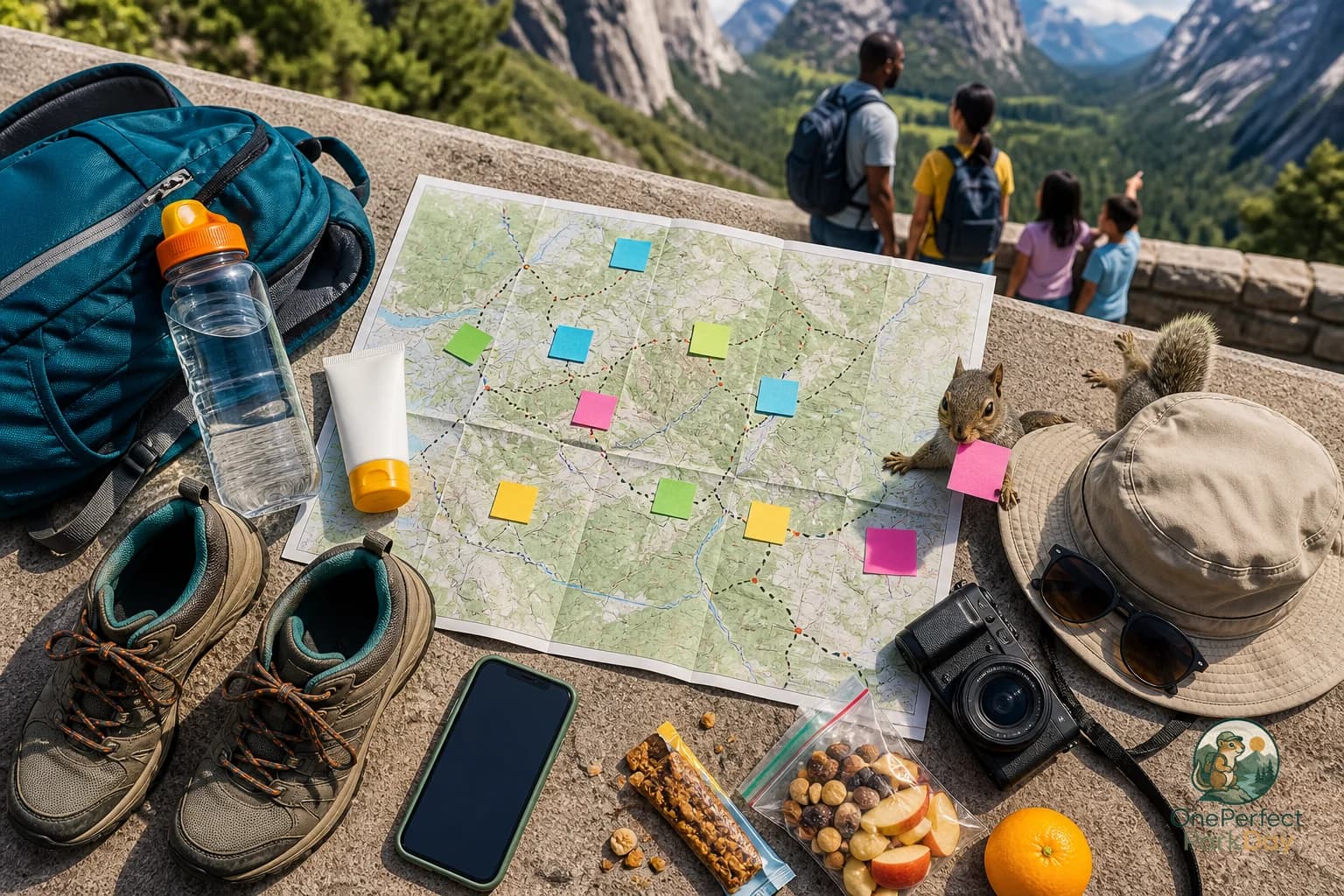
Most people try to plan a one-day US national park visit like a tidy calendar: 8:10 viewpoint, 8:45 trailhead, 10:20 visitor center, lunch at 12:15.
That can work on paper. It usually gets bullied by real life.
Parking takes longer. A kid needs the bathroom. A storm sits over the ridge. The scenic pullout you expected to love is packed, while the quiet stop five minutes later ends up being the highlight.
A better one-day plan is built around decision points. You still choose priorities. You still have a route. But instead of pretending you can control every minute, you decide ahead of time what you will do when the day changes.
The short answer
Plan your national park day around a few clear decision points: arrival, first priority, midmorning adjustment, lunch, afternoon energy check, turnaround time, and exit plan.
For each point, decide three things:
- What you hope to do
- What would make you change course
- What your easier backup is
That is the difference between a flexible itinerary and a loose wish list. A flexible itinerary has rules. A wish list just gets heavier as the day goes on.
If you only do one thing, choose your first major stop and your afternoon cutoff before you arrive. Those two decisions protect the whole day from turning into a scramble.
The decision points that shape the day
You do not need twenty decisions. You need the right ones.
Start with arrival. Are you trying to reach a popular trailhead, a scenic drive, a shuttle stop, or a visitor center first? Those are different mornings. If timed entry, shuttle systems, road work, or seasonal closures are in play, check current National Park Service alerts before treating your plan as final.
Next, choose your first priority. This should be the thing you would be most disappointed to miss if the day got messy. A short hike, major overlook, historic area, lake stop, scenic road segment, or ranger recommended area can all count. The point is not to pick the most famous stop automatically. The point is to pick the stop that fits your group and the day you actually have.
For help narrowing that list, read How to choose must-see stops for one national park day.
Then set a midmorning check. Around this point, you should know whether the plan is running smoothly or whether you are already borrowing time from the afternoon. This is where you cut a lower priority stop before everyone is tired, not after.
Lunch is another decision point, not just a meal. Eating too late is one of the easiest ways to wreck a national park day. Hungry people make dramatic itinerary choices. Pack enough food and water for your group, know whether services are limited, and assume the car may be your most reliable picnic table.
The afternoon energy check is where you decide whether to hike, drive, linger, or simplify. This is not quitting. It is editing.
Finally, set a turnaround time. Not a vague “we should probably head back soon.” A real time. If your group needs to be back at lodging, reach a park exit before dark, catch a shuttle connection, or avoid a long tired drive, the turnaround time matters more than squeezing in one more viewpoint.
What changes the plan fastest
Weather changes a national park day quickly. Heat, lightning risk, wind, smoke, rain, snow, icy trails, and poor visibility can all turn a reasonable plan into a bad one. You do not need to panic. You do need to have a lower exposure option: visitor center time, shorter paved paths, scenic pullouts, a lower elevation area, or an earlier meal break.
Group energy is just as powerful. Adults overestimate their stamina. Kids often do fine until they suddenly do not. Older relatives may be game for more than you expect, but need steadier pacing. The group moves at the speed of the person having the hardest day.
Distance also fools people. A stop that looks close on the map may involve slow park roads, construction delays, full parking lots, wildlife jams, shuttle waits, or winding mountain driving. Build your plan with breathing room.
Services matter too. Some national parks have limited food, fuel, water, bathrooms, cell service, or shade depending on the area and season. That does not mean the day has to be complicated. It means your plan should not depend on conveniences you have not confirmed.
Common mistakes that make one day harder
The biggest mistake is treating every famous stop as mandatory. That sounds ambitious. It usually creates a day where you see a lot and absorb very little.
Another mistake is putting the most important experience too late. If one trail, overlook, scenic road, or park area is the reason you came, do not leave it for the final hour unless conditions make that the smarter choice.
People also forget to plan the boring middle of the day. The first stop gets attention. Sunset gets attention. The messy stretch between lunch and late afternoon gets ignored, even though that is when heat, hunger, traffic, and fatigue usually show up.
A fourth mistake is having no cut line. Without a cutoff, every stop feels like a tiny yes. By late day, those tiny yeses become a tired drive, a rushed meal, or a group that no longer cares where they are.
If your day has a lot of moving parts, build a backup before you need it. This guide pairs well with How to build a backup plan for one day in a US national park.
Questions to check before you go
Ask these before the trip, not while everyone is standing in a parking lot staring at each other.
- What is our one non negotiable priority, if conditions allow?
- What is our easiest satisfying backup?
- What time do we need to arrive for the kind of morning we want?
- Where will we eat lunch if services are limited or crowded?
- What stop gets cut first if we are running behind?
- What is our turnaround time?
- What weather would change our plan?
- Does anyone in the group need extra time for elevation, heat, mobility, bathrooms, or rest?
- Are there current alerts, timed entry rules, shuttle requirements, road closures, or seasonal limits to check before we go?
These questions are not about making the day perfect. They are about removing the dumb surprises.
A simple decision point checklist
Use this as a quick planning pass the night before your visit.
- Choose one main priority for the day
- Pick two nice to have stops, not seven
- Check current NPS alerts and operating rules
- Confirm whether timed entry, permits, shuttles, or seasonal road access affect your plan
- Decide your target arrival window
- Pack food, water, layers, sun protection, rain gear as needed, and basic first aid
- Choose a lunch plan that does not depend on luck
- Set a midmorning check time
- Set an afternoon energy check time
- Write down the first stop you will cut
- Choose a lower effort backup activity
- Set a real turnaround time
- Download or carry an offline map where cell service may be limited
- Tell everyone the plan can change without the day being a failure
That last one is not fluff. If the group understands the plan is flexible from the start, changing course feels normal instead of disappointing.
A realistic way to think about one park day
A one-day national park itinerary should not be a dare.
It should help you spend your best energy on the best parts of the park for your group, on that specific day, under the conditions you actually get. Some days that means an early trail and a quiet picnic. Some days it means scenic drives, short walks, and a weather dodge. Some days the smartest move is skipping the famous thing because it would eat the whole afternoon.
That is not a lesser visit. That is a planned visit.
Build the day around decision points, and you give yourself permission to adjust without drifting. You know what matters. You know what can go. You know when to stop pushing.
For a calmer starting point, use One Perfect Park Day to shape a practical one-day plan for your park, timing, group, and conditions: https://oneperfectparkday.com/?utm_source=mdx
Practical note
This article is general US National Park planning information. Park rules, hours, weather, trail conditions, road closures, shuttle service, accessibility procedures, permits, and crowd levels can change. Check the official National Park Service site or app before relying on any plan.