
Planning / 6 min read
How to set a turnaround time for one day in a US national park
Learn how to set a realistic turnaround time for one day in a US national park so your group avoids late-day stress and overpacked plans.
July 31, 2026
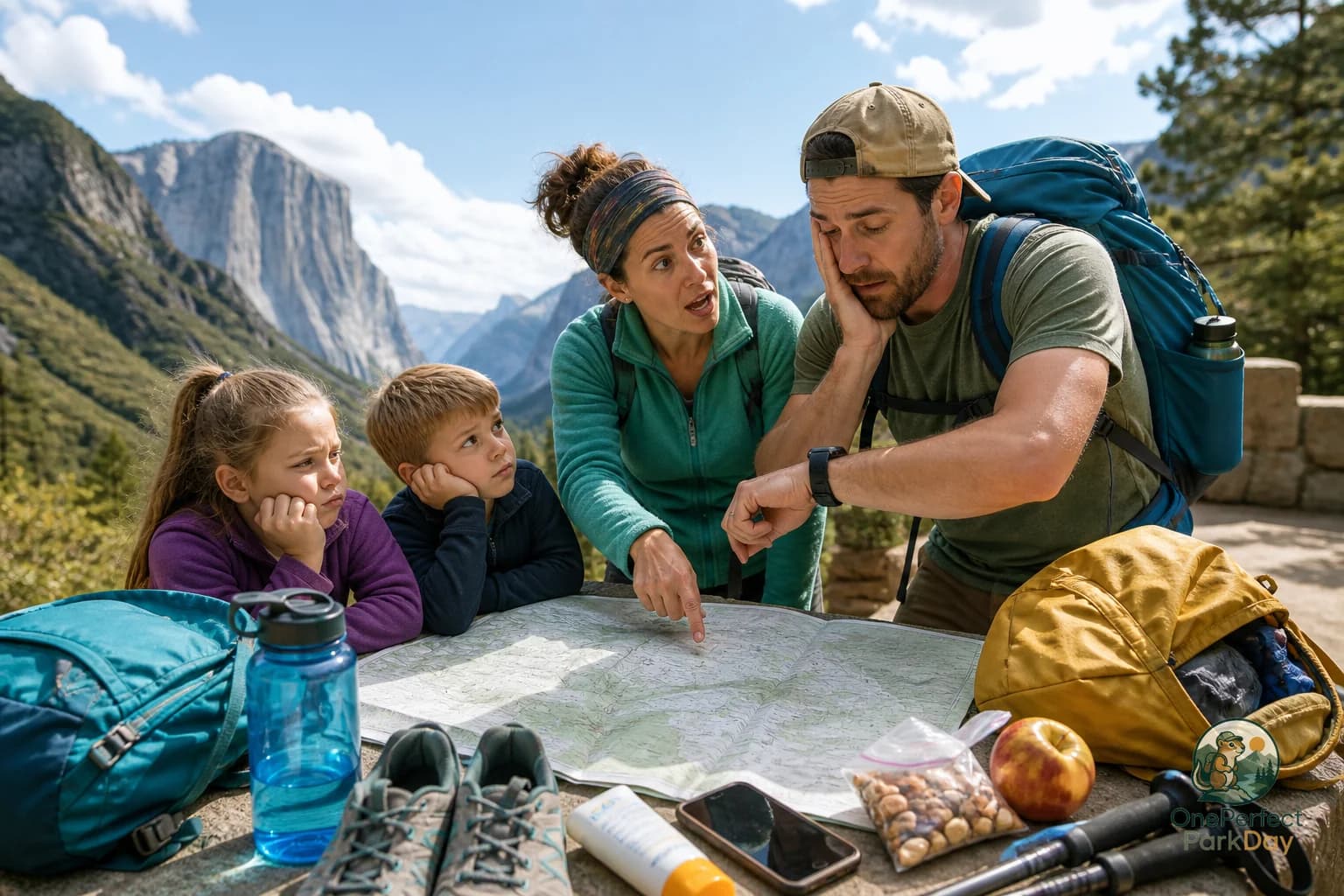
A one day national park plan can look great at breakfast and feel completely unreasonable by midafternoon. The problem is rarely one big mistake. It is usually five small yeses in a row: one more overlook, one more short trail, one more scenic pullout, one more photo stop, one more detour.
A turnaround time is the line that keeps your park day from slowly eating the rest of your trip. It does not need to be dramatic. It just needs to exist before everyone is tired, hungry, sun baked, cold, or pretending they are still having fun.
The direct answer
For one day in a US national park, set a turnaround time before you start your main activity or scenic drive. That time is when you stop pushing farther into the park and begin moving back toward your exit, lodging, shuttle stop, meal plan, or final must do stop.
A good turnaround time should protect three things:
- Your exit plan
- Your group’s energy
- Your daylight and weather margin
For many casual visitors, the smartest turnaround time is earlier than they expect. Not because the park is not worth more time, but because tired people make worse decisions, kids fade fast, and mountain, desert, coastal, and forest weather can shift the mood of the day quickly.
Think of it as a planning guardrail, not a punishment. You are not quitting the park. You are choosing not to turn a good day into a sloppy one.
Context factors that should shape your turnaround time
Start with daylight. Sunset time is not the same as useful hiking or driving light, especially if you are in a canyon, forest, valley, or mountain area where shadows arrive early. If your final stretch includes narrow roads, wildlife crossing areas, unfamiliar turns, or a long drive to lodging, give yourself more margin than your map app suggests.
Next, look at distance. A stop that is only 20 minutes farther into the park is not really 20 minutes. It is 20 minutes in, time at the stop, possible parking delay, bathroom time, photos, snack requests, and 20 minutes back. That little add-on can easily become an hour.
Group pace matters too. Adults who hike regularly, grandparents who prefer overlooks, toddlers who need resets, and teens who are done being impressed by rocks will all experience the same day differently. If your group moves slowly in the morning, do not assume the afternoon will magically speed up.
Weather deserves a vote. Heat, wind, rain, smoke, snow, and fast moving storms can turn a reasonable plan into a grind. If the forecast is unsettled, pair your turnaround time with a weather checkpoint. For broader planning, see How to plan a US national park day around changing weather.
Finally, account for your true must see list. If the last big priority of the day is near the entrance or near your lodging route, you need to turn around early enough to enjoy it instead of stumbling through it. A day with three good stops usually beats a day with seven rushed ones.
Common mistakes that make park days run too late
The first mistake is treating every short trail as harmless. Short does not always mean easy, quick, shaded, flat, or worth doing at the end of a long day. A one mile trail after six hours of sun and driving can feel very different from a one mile trail at 9 a.m.
The second mistake is refusing to cut a low priority stop. People often protect the wrong part of the plan because it was written down first. Your itinerary is not a contract. If a stop no longer fits the weather, mood, or timing, let it go.
The third mistake is waiting for someone to admit they are tired. Many groups do not say it clearly until the day has already gone sideways. Kids melt down. Adults get quiet. Drivers get tense. Someone snaps over where to eat. That is not a mystery. That is a turnaround time that came too late.
The fourth mistake is forgetting the boring logistics. Bathrooms, water refills, shuttle waits, parking lots, visitor center lines, and the walk back to the car all count. The park day is not just the scenic part.
If breaks are usually where your group loses time, it may help to pair this with How to plan breaks during one day in a US national park.
Questions to check before you keep going
Use these questions when your group is tempted to add another stop:
- If we go farther, what are we giving up later?
- Is this stop a true priority or just nearby?
- Do we still have enough water, snacks, layers, and patience?
- Will the driver be comfortable with the road and light on the way out?
- Are we depending on a shuttle, timed entry window, dining option, or gate schedule?
- Has the weather changed since we started?
- Would we enjoy this stop, or just collect it?
That last question is blunt on purpose. A national park day is not improved by turning every viewpoint into a chore.
A practical turnaround checklist
Before your park day, choose three times:
- Latest time to start your main hike or scenic drive
- Latest time to turn around from your farthest point
- Latest time to leave your final stop
Then write down what triggers an earlier turn:
- Thunder, heavy rain, high wind, smoke, heat, snow, or poor visibility
- Low water or food
- Someone in the group is dragging, limping, overheating, chilled, or unusually quiet
- Parking or shuttle timing is taking longer than expected
- You are still far from your exit route by midafternoon
- The next stop is nice to have, not must do
Pack the decision into the day instead of arguing about it later. For example: if we are not at the trailhead by 10:30, we switch to the overlook loop. If we are not past the canyon viewpoint by 2:00, we turn back. If storms build before lunch, we stay near shorter stops and visitor services.
This works especially well for families because it moves the pressure off the most tired person. Nobody has to be the one who ruins the plan. The plan already has a calmer version built in.
A realistic closing
A turnaround time is not about seeing less. It is about giving the best parts of the day enough space to be enjoyable.
US National Parks reward flexibility. The visitors who have the smoothest one day trips are not always the ones with the longest checklist. They are often the ones who know when to stop adding, start returning, and save enough energy to leave safely and happily.
Before you go, check current National Park Service alerts, local weather, road conditions, and operating rules for the specific park you are visiting. Then set your turnaround time like you actually expect the afternoon to matter.
For a calmer one day plan built around your group’s pace, priorities, and backup options, visit One Perfect Park Day.
Practical note
This article is general US National Park planning information. Park rules, hours, weather, trail conditions, road closures, shuttle service, accessibility procedures, permits, and crowd levels can change. Check the official National Park Service site or app before relying on any plan.