
Planning / 5 min read
How to pace one day in a US national park without wearing everyone out
Learn how to pace one day in a US national park with an early anchor, easier midday, smart breaks, and a calmer end that fits your group.
August 15, 2026
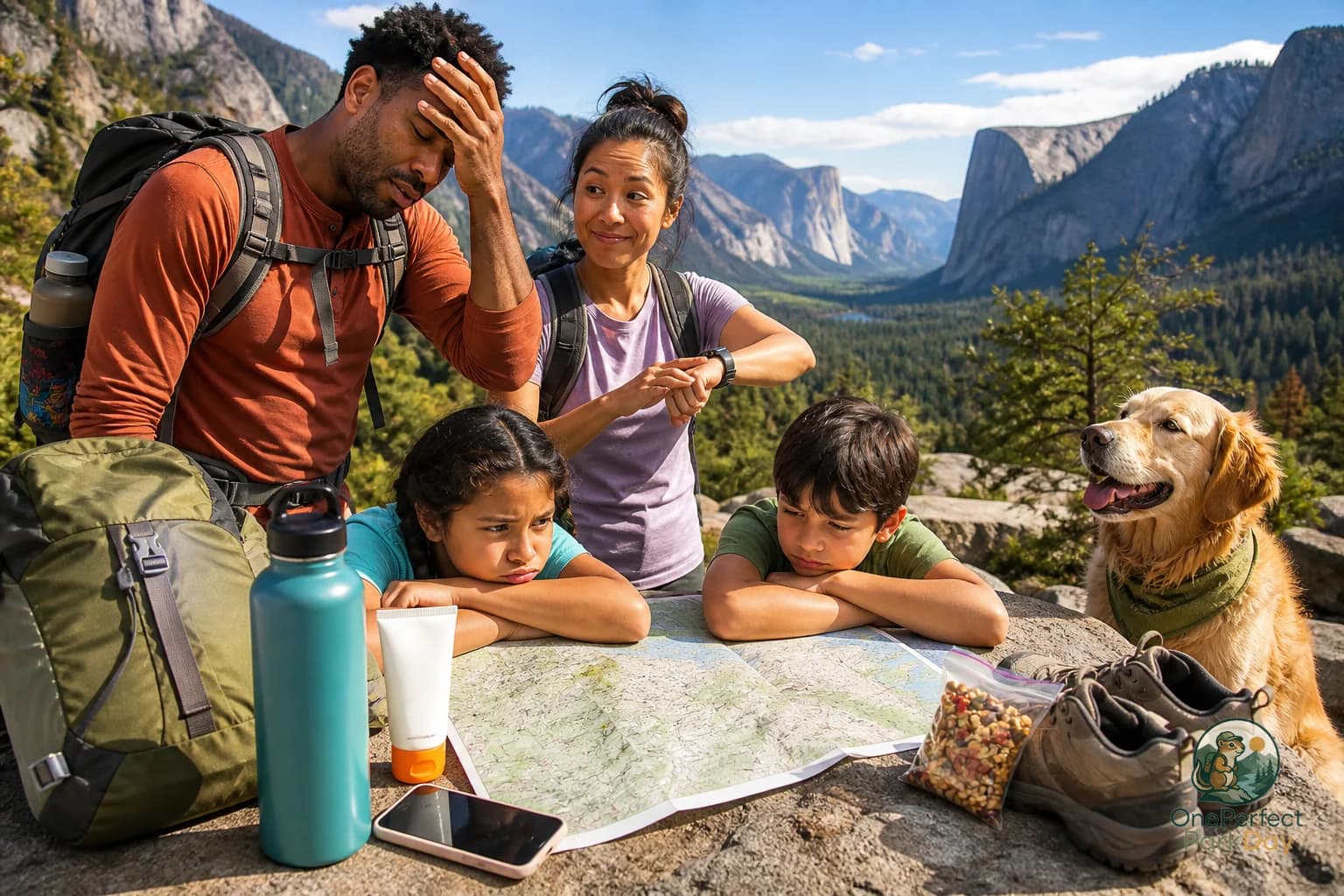
A packed park day can look efficient on paper and feel miserable by 2 pm. That is usually not because the sights were wrong. It is because the pace was wrong.
Most casual visitors do not need a heroic itinerary. They need a day that starts with purpose, softens before everyone gets cranky, and ends before the group is making bad decisions in a parking lot.
Short answer
Pace one day in a US national park in three parts: an early anchor, an easier middle, and a flexible finish.
The early anchor is the thing you care about most. That might be a short hike, a scenic overlook, a lake, a grove, a canyon viewpoint, or a visitor center stop that frames the rest of the day.
The middle should not be another full push. Use it for lunch, shade, bathrooms, scenic pullouts, a gentler walk, a shuttle transfer, or a longer drive between areas.
The finish should be optional by design. Choose something satisfying but not fragile. If the group has energy, do it. If weather rolls in, parking gets awkward, or kids are cooked, you can leave without feeling like the whole day failed.
That is the tradeoff. A slower middle can feel less ambitious, but it often saves the part of the day people actually remember.
What changes the pace of a park day
A one day national park plan is not just miles and stops. These factors change how fast the day really feels.
Distance between places. A 20 minute drive on a map can become much longer once you add parking, walking from the lot, bathrooms, photos, and getting everyone back into the car.
Shuttles, timed entry, and parking pressure. Some parks require more timing discipline than others. If your day depends on a shuttle, reservation window, or limited parking area, build around that first. For a deeper look, use How to plan a national park day around shuttles and timed entry.
Weather and exposure. Heat, wind, storms, wildfire smoke, snow patches, and elevation can all change what feels reasonable. A trail that looks short may still be a bad midday choice if it is exposed and your group is already fading.
Food and water friction. People underestimate this constantly. A park day with no real lunch plan becomes a snack raid, then a mood problem. If you are unsure how much to bring, start with How much food and water to bring for one day in a US national park.
Group speed. A solo adult, two active hikers, grandparents, and a family with young kids are not doing the same day, even if they are visiting the same park entrance.
A better shape for the day
Think of your itinerary as a rhythm, not a checklist.
Morning: do the anchor. Use your freshest energy on the most important stop. If you care about one specific overlook, trail, drive, or landmark, do not bury it after lunch. Morning is also when many groups have the most patience for parking, layers, cold starts, and figuring things out.
Late morning: add a nearby win. After the anchor, choose something close and easy. This can be a viewpoint, short nature trail, picnic area, visitor center, or scenic stop in the same general zone. The goal is momentum without turning the day into a forced march.
Midday: lower the intensity on purpose. This is where many plans go sideways. Heat builds, hunger shows up, kids lose interest, and adults start pretending they are fine. Use midday for lunch, shade, a scenic drive, a rest stop, or a short walk that does not require a big emotional commitment.
Afternoon: choose one flexible add on. Pick one thing that would make the day feel complete but can be skipped without drama. Avoid anything that requires perfect timing, a long return hike, or a tight connection to your exit plan.
End: leave before the wheels fall off. A calm exit is underrated. You still need to drive, eat dinner, check into lodging, or get everyone back to camp. Protect that part of the day instead of spending every last ounce of energy inside the park.
Common pacing mistakes
Running the whole day at morning speed. Early energy is deceptive. Just because everyone is cheerful at 8 am does not mean the same plan will feel smart at 3 pm.
Treating scenic drives as automatic rest. A drive can be restful for some people and draining for others, especially on winding roads, in traffic, or with frequent parking stops.
Saving the main thing for late afternoon. Sometimes that works. Often it creates pressure. If weather changes, parking fills, a shuttle line slows down, or someone gets tired, the main reason you came is now at risk.
Adding a hard stop after lunch. Lunch is not a reset button for every group. If people are hot, low on water, or already sore, a big post lunch hike may be the wrong flex.
Confusing a lighter plan with a wasted day. You are not getting a refund for exhausting yourself. A national park day can be rich with fewer stops if the stops are chosen well.
Questions to check before you lock the plan
Ask these before you commit to the day:
- What is the one thing we would regret missing most?
- Is that stop better early, late, or flexible?
- Where will we eat lunch if picnic tables are full or weather changes?
- Which part of the day is most exposed to heat, storms, or cold?
- Are we relying on a shuttle, timed entry window, ferry, road status, or limited parking area?
- What is the easiest good stop near our main anchor?
- What can we skip without making the day feel ruined?
- How much energy do we need left for the drive out?
Also check current National Park Service alerts and operating rules for the specific park before you go. Conditions, closures, reservation systems, and services can change.
Simple one day pacing checklist
Use this as a quick filter while building your itinerary:
- Choose one main anchor for the day.
- Put the anchor when your group is most likely to handle it well.
- Add one nearby easy win after the anchor.
- Plan lunch before hunger becomes the plan.
- Make midday easier than the morning.
- Keep one afternoon stop optional.
- Avoid starting a demanding trail late unless your group is prepared.
- Check current park alerts, weather, road status, and operating rules.
- Bring enough water, snacks, layers, sun protection, and patience.
- Leave room for the exit drive, dinner, and tired people.
A realistic finish beats a dramatic one
A good US national park day does not need to peak every hour. It needs a few strong choices, enough margin, and a pace your group can actually live with.
If you get the anchor right, feed people before they unravel, and let the afternoon breathe, you will usually have a better day than the group sprinting from viewpoint to viewpoint just to prove they used every minute.
Want help shaping a calmer route for your own trip? Build your own One Perfect Park Day.
Practical note
This article is general US National Park planning information. Park rules, hours, weather, trail conditions, road closures, shuttle service, accessibility procedures, permits, and crowd levels can change. Check the official National Park Service site or app before relying on any plan.